


Abstract Globally, collapse of ecosystems—potentially irreversible change to ecosystem structure, composition and function—imperils biodiversity, human health and well‐being. We examine the current state and recent trajectories of 19 ecosystems, spanning 58° of latitude across 7.7 M km 2 , from Australia's coral reefs to terrestrial Antarctica. Pressures from global climate change and regional human impacts, occurring as chronic ‘presses’ and/or acute ‘pulses’, drive ecosystem collapse. Ecosystem responses to 5–17 pressures were categorised as four collapse profiles—abrupt, smooth, stepped and fluctuating. The manifestation of widespread ecosystem collapse is a stark warning of the necessity to take action. We present a three‐step assessment and management framework (3As Pathway Awareness , Anticipation and Action ) to aid strategic and effective mitigation to alleviate further degradation to help secure our future.
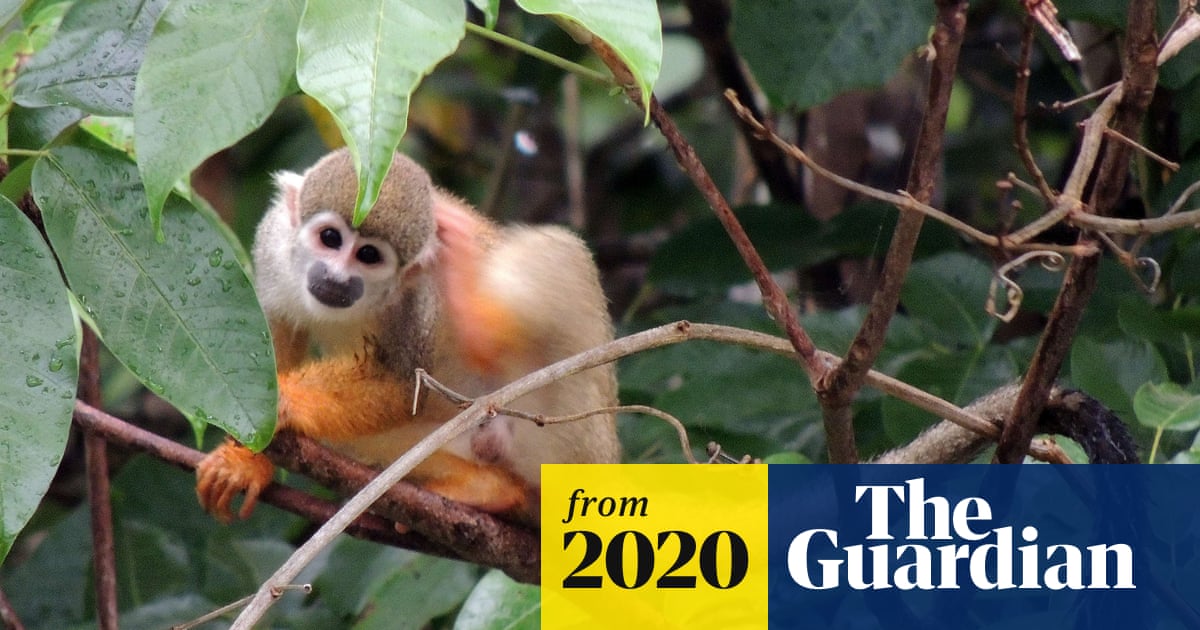
Wildlife destruction 'not a slippery slope but a series of cliff edges'
New study finds ocean ecosystems likely to collapse in 2020s and land species in 2040s unless global warming stemmed
Manage derailment risks to avoid Hothouse Earth
The risk of a ‘Hothouse Earth’ trajectory has become increasingly prominent in debates about Earth system stability and climate overshoot. Existing analyses primarily focus on biophysical feedbacks that may amplify warming beyond direct anthropogenic forcing. We argue the concept has not previously incorporated how social destabilisation lowers the effective threshold at which biophysical tipping dynamics become self-sustaining, independently of further anthropogenic forcing and so undermines the capacity for planetary stewardship. We define ‘derailment risk’ as the possibility that escalating Earth system disruption weakens the social, political, and economic conditions required to sustain mitigation, adaptation, and ecological restoration. Such risks emerge when climate impacts contribute to a wide range of challenges, including debt crises, institutional erosion, political fragmentation, supply-chain instability, and declining public support for environmental action. These reinforcing feedbacks may reduce humanity’s capacity to respond even before biophysical tipping thresholds are crossed. We therefore extend the Hothouse Earth framework by incorporating social dynamics into the Earth system stability landscape. We propose a three-stage framework for assessing and managing derailment risks: conceptual mapping of socio-biophysical feedbacks; anticipatory resilience-building interventions; responsive governance strategies for periods of escalating instability. We conclude that planetary stewardship should prioritise maintaining and expanding collective agency under worsening Earth system stress.
Underestimating the Challenges of Avoiding a Ghastly Future
We report three major and confronting environmental issues that have received little attention and require urgent action. First, we review the evidence that future environmental conditions will be far more dangerous than currently believed. The scale of the threats to the biosphere and all its lifeforms — including humanity — is in fact so great that it is difficult to grasp for even well-informed experts. Second, we ask what political or economic system, or leadership, is prepared to handle the predicted disasters, or even capable of such action. Third, this dire situation places an extraordinary responsibility on scientists to speak out candidly and accurately when engaging with government, business, and the public. We especially draw attention to the lack of appreciation of the enormous challenges to creating a sustainable future. The added stresses to human health, wealth, and well-being will perversely diminish our political capacity to mitigate the erosion of ecosystem services on which society depends. The science underlying these issues is strong, but awareness is weak. Without fully appreciating and broadcasting the scale of the problems and the enormity of the solutions required, society will fail to achieve even modest sustainability goals.

Climate regulating ocean plants and animals are being destroyed by toxic chemicals and plastics, accelerating our path towards ocean pH 7.95 in 25 years which will devastate humanity.
Marine plants and animals should be thriving in ocean waters because of the current high concentrations of carbon dioxide and nutrients along with slightly elev

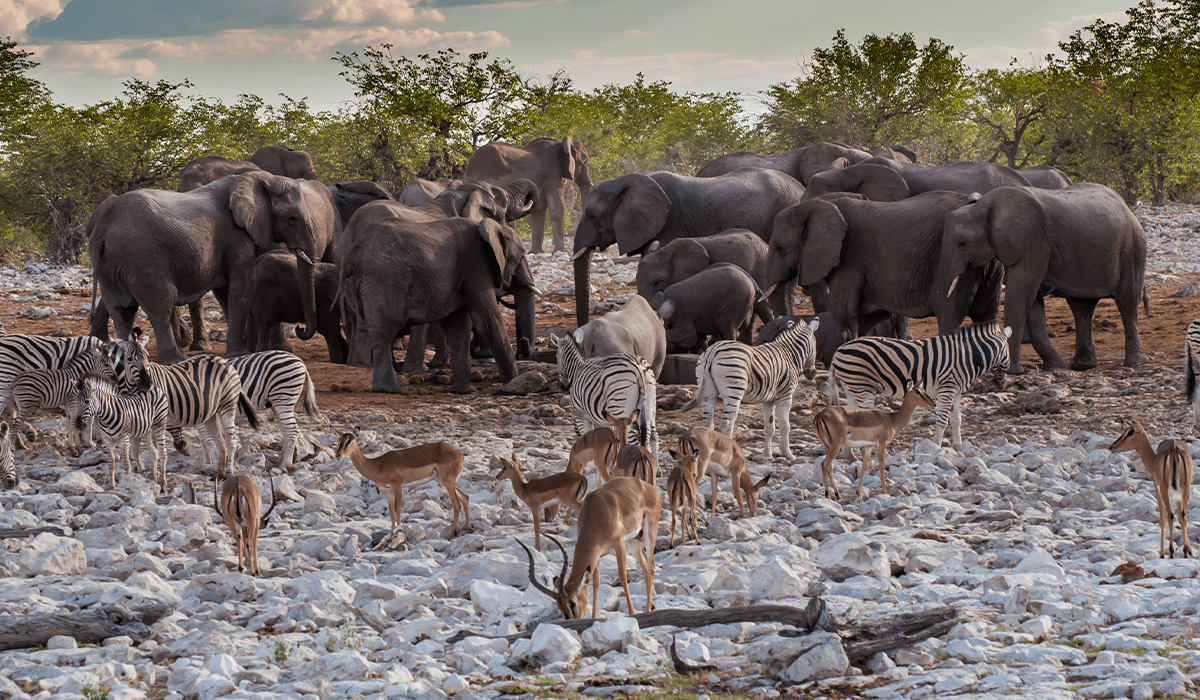
10 Vital ecosystem services: sustaining life on Earth
Discover the importance of 10 vital ecosystem services that sustain life on Earth, mostly provided by forests, for a resilient and sustainable future.
Global assessment report on biodiversity and ecosystem services of the Intergovernmental Science-Policy Platform on Biodiversity and Ecosystem Services
IPBES is to perform regular and timely assessments of knowledge on biodiversity and ecosystem services and their interlinkages at the global level. Also addressing an invitation by the Conference of the Parties of the Convention on Biological Diversity (CBD) to prepare a global assessment of biodiversity and ecosystem services building, inter alia, on its own and other relevant regional, subregional and thematic assessments, as well as on national reports. The overall scope of the assessment is to assess the status and trends with regard to biodiversity and ecosystem services, the impact of biodiversity and ecosystem services on human well-being and the effectiveness of responses, including the Strategic Plan and its Aichi Biodiversity Targets. It is anticipated that this deliverable will contribute to the process for the evaluation and renewal of the Strategic Plan for Biodiversity and its Aichi Biodiversity Targets. The IPBES Global Assessment on Biodiversity and Ecosystem Services is composed of 1) a Summary for Policymakers (SPM), approved by the IPBES Plenary at its 7th session in May 2019 in Paris, France (IPBES-7); and 2) a set of six Chapters, accepted by the IPBES Plenary.
Kelp Forest Restoration in Australia
Kelp forests dominate the rocky coasts of temperate Australia and are the foundation of the Great Southern Reef. Much like terrestrial forests, these marine forests create complex habitat for diverse communities of flora and fauna. Kelp forests also support coastal food-webs and valuable fisheries and provide a suite of additional ecosystem services. In many regions of Australia and around the world, kelp forests are in decline due to ocean warming, overgrazing, and pollution. One potential tool in the conservation and management of these important ecosystems is habitat restoration, the science and practice of which is currently undergoing substantial expansion. We summarise the present state of Australian kelp forests and emphasise that consideration of the initial drivers of kelp decline is a critical first step in restoration. With a focus on Australian examples, we review methods, implementation and outcomes of kelp forest restoration, and discuss suitable measures of success and the estimated costs of restoration activities. We propose a workflow and decision system for kelp forest restoration that identifies alternative pathways for implementation and acknowledges that under some circumstances restoration at scale is not possible or feasible. As a case study, we then apply the Society of Ecological Restoration’s 5-star evaluation to Operation Crayweed, Australia’s primary example of kelp forest restoration. Overall, no single method of kelp forest restoration is suitable for all situations, but outcomes can be optimised by ameliorating the driver(s) of kelp decline and achieving ongoing natural recruitment of kelp. Whilst scalability of kelp forest restoration to the seascape-scale remains a considerable challenge, the present review should provide a platform for future restoration efforts. However, it is also crucial to emphasise that the challenges of restoration place a high value on preventative conservation and protection of existing kelp forest ecosystems – prevention is invariably better than cure.

Assessing nature's contributions to people
Recognizing culture, and diverse sources of knowledge, can improve assessments , A major challenge today and into the future is to maintain or enhance beneficial contributions of nature to a good quality of life for all people. This is among the key motivations of the Intergovernmental Science-Policy Platform on Biodiversity and Ecosystem Services (IPBES), a joint global effort by governments, academia, and civil society to assess and promote knowledge of Earth's biodiversity and ecosystems and their contribution to human societies in order to inform policy formulation. One of the more recent key elements of the IPBES conceptual framework ( 1 ) is the notion of nature's contributions to people (NCP), which builds on the ecosystem service concept popularized by the Millennium Ecosystem Assessment (MA) ( 2 ). But as we detail below, NCP as defined and put into practice in IPBES differs from earlier work in several important ways. First, the NCP approach recognizes the central and pervasive role that culture plays in defining all links between people and nature. Second, use of NCP elevates, emphasizes, and operationalizes the role of indigenous and local knowledge in understanding nature's contribution to people.

‘Simply mind-boggling’: world record temperature jump in Antarctic raises fears of catastrophe
An unprecedented leap of 38.5C in the coldest place on Earth is a harbinger of a disaster for humans and the local ecosystem
Metrics for biodiversity and health policy integration
Despite over a decade of progressive commitments from parties to the Convention on Biological Diversity (CBD), integrated biodiversity and health indicators and monitoring mechanisms remain limited, hampering achievement of the sustainable development goals and improvements in health and well-being. Adoption of the Kunming-Montreal Global Biodiversity Framework (2022) and the Global Action Plan on Biodiversity and Health (2024) provide a renewed entry point to shape the way governments approach health and wellbeing and address the environmental burden of disease. This is a critical opportunity that scholars at the health-environment nexus should not miss. This Perspective outlines building blocks to mobilize the field, starting with essential terminology and a scope of metrics needed by governments. We then evaluate elements to be considered in the construction of integrated metrics, including concepts, overarching challenges, a review of scientific hypotheses from an ecological perspective, as well as a set of principles and characteristics for indicators. To raise awareness across parallel communities of practice working at the health-environment nexus, we then briefly examine four approaches to integrated metrics developed by: conservationists, Indigenous scholars, One Health experts, and planetary health experts. We conclude with actionable steps to enhance governance, mobilize funding, and apply integrated indicators in national and global strategies. A broad science community is needed to support national governments to meet global commitments to address biodiversity loss and the environmental burden of disease concurrently. The overall aim of this paper is to contribute to addressing biodiversity loss by effectively linking policy and transdisciplinary practice at the health-environment nexus.

IPBES Transformative Change Assessment : Full report
Thematic assessment of the underlying causes of biodiversity loss, determinants of transformative change and options for achieving the 2050 Vision for Biodiversity of the Intergovernmental Science-Policy Platform on Biodiversity and Ecosystem Services (IPBES) is composed of 1) a Summary for Policymakers (SPM), and 2) a set of five Chapters. All products of the assessment are available on Zenodo. Find all the links on the side bar "has part"
Toward a New Global Security Paradigm. Task Force 06: Strengthening Multilateralism and Global Governance
Amidst increasing global connectivity and accelerating global change, the global security framework has become insufficient, contributing to a crippling dysfunctionality in international cooperation. The current security framework, focused almost exclusively on a narrow notion of military security, is insufficient to address escalating ‘threats without enemy,’ such as climate change, biodiversity loss, and pollution, which increasingly endanger the lives and dignity of all populations. This policy brief recommends a global social-ecological security framework, rooted in the science informed understanding of social and biophysical realities, to address the evolving needs and challenges of the 21st century. Our recommendations to operationalise this paradigm include: a reinvigorated commitment to multilateralism and peace as a pre-requisite; public participation in shaping the new inclusive international governance framework; development aid and green finance as key levers; a focus on building resilience (especially food security); and, strengthening anticipation of and response to interconnected global shocks. We propose a G20-initiated formation of a high-level working group to catalyse the creation of this new framework. Such a process must involve relevant stakeholders, leveraging new possibilities afforded by technological tools (such as AI). Implementing this ambitious agenda will be challenging, but continuing on a business as- usual trajectory is a ‘lose-lose’ spiral likely to trigger social and ecological crises. Bold leadership from the G20 is needed more than ever to reinvent multilateralism and thus ensure sustainable well-being for all.
IPBES Transformative Change Assessment: Summary for Policymakers
Summary for Policymakers of the Thematic Assessment Report on the Underlying Causes of Biodiversity Loss and the Determinants of Transformative Change and Options for Achieving the 2050 Vision for Biodiversity of the Intergovernmental Science-Policy Platform on Biodiversity and Ecosystem Services. The IPBES Transformative Change Assessment was initiated following a decision from the IPBES Plenary at its eigth session (IPBES-8, June 2021), and has been approved by the IPBES Plenary at its eleventh session (IPBES-11, Windhoek, 2024). It is composed of a Summary for Policymakers and five Chapters. IPBES is an independent intergovernmental body established by Governments in 2012, IPBES provides policymakers with objective scientific assessments about the state of knowledge regarding the planet’s biodiversity, ecosystems and the contributions they make to people, as well as options and actions to protect and sustainably use these vital natural assets.
Marine Biodiversity Observation Network
A global collaborative initiative contributing to the effective management of marine biodiversity and ecosystem services. A thematic node of GEO BON.
Biodiversity strategy to 2045: tackling the nature emergency - draft
This draft biodiversity strategy sets out our clear ambition for Scotland to be Nature Positive by 2030, and to have restored and regenerated biodiversity across the country by 2045.

Global water crisis leaves half of world food production at risk in next 25 years
Landmark review says urgent action needed to conserve resources and save ecosystems that supply fresh water
