Abstract I focus on the crucial links between the discovery of nonhuman primates by Westerners, discussions on our place in nature, the chain of being, racism, and the history of primate comparative anatomy and of so‐called “anatomical human racial studies.” Strikingly, for more than a millennium humans knew more about the internal anatomy of a single monkey species than about that of their own bodies. This is because Galen used monkeys to infer human anatomy, in line with the human‐animal continuity implied by the Greek notion of scala naturae . With the rise of Christianity, nonhuman primates were increasingly seen in a negative way. A more positive view emerged in the 14th century when nonhuman primates were directly studied/seen by Europeans, culminating in Tyson's 1699 work showing that chimps share more gross anatomical similarities with humans than with monkeys. However, the discomfort caused by this human‐chimp similarity then led to a new idea of animal‐human discontinuity, now related not to anatomy but to “civilization”: between Europeans vs. non‐Europeans + other primates. Moreover, Linnaeus' Systema Naturae and the emergence of “anatomical racial studies” influenced by Camper's craniology then led to even more extreme ideas, such as the notion that Europeans were both mentally and morphologically “ideal.” Unfortunately the biased and often incorrect “results” of such studies, combined with ideas based on Darwin's “struggle for survival”, became crucial in propaganda that lead to the rise of eugenics in the end of the 19th/first half of 20th centuries and that culminated in Nazism. Since the 1950s there has been an emphasis on the continuity/unity between all human groups and other primates, in great part influenced by what happened during World War 2. Reviews such as this one are, therefore, particularly necessary to illuminate and guard against attitudes against “the Other” and racist ideologies that are re‐emerging in modern political discourse across the globe.
Sapiens [Tenth Anniversary Edition]: A Brief History of Humankind
New York Times Readers’ Pick: Top 100 Books of the 21st CenturyThe tenth anniversary edition of the internationally bestselling phenomenon that cemented Yuval Noah Harari as one of the most prominent historians of our time—featuring a new afterword from the author.One hundred thousand years ago, at least six human species inhabited the earth. Today there is just one. Us. Homo sapiens. How did our species succeed in the battle for dominance? Why did our foraging ancestors come together to create cities and kingdoms? How did we come to believe in gods, nations, and human rights; to trust money, books, and laws; and to be enslaved by bureaucracy, timetables, and consumerism? And what will our world be like in the millennia to come?In Sapiens, Professor Yuval Noah Harari spans the whole of human history, from the very first humans to walk the earth to the radical—and sometimes devastating—breakthroughs of the Cognitive, Agricultural, and Scientific Revolutions. Drawing on insights from biology, anthropology, paleontology, and economics, and incorporating full-color illustrations throughout the text, he explores how the currents of history have shaped our human societies, the animals and plants around us, and even our personalities. Can we ever free our behavior from the legacy of our ancestors? And what, if anything, can we do to influence the course of the centuries to come?Bold, wide-ranging, and provocative, Sapiens integrates history and science to challenge everything we thought we knew about being human: our thoughts, our actions, our heritage...and our future.
The Secret of Our Success: How Culture Is Driving Human Evolution, Domesticating Our Species, and Making Us Smarter
How our collective intelligence has helped us to evolve and prosperHumans are a puzzling species. On the one hand, we struggle to survive on our own in the wild, often failing to overcome even basic challenges, like obtaining food, building shelters, or avoiding predators. On the other hand, human groups have produced ingenious technologies, sophisticated languages, and complex institutions that have permitted us to successfully expand into a vast range of diverse environments. What has enabled us to dominate the globe, more than any other species, while remaining virtually helpless as lone individuals? This book shows that the secret of our success lies not in our innate intelligence, but in our collective brains—on the ability of human groups to socially interconnect and learn from one another over generations.Drawing insights from lost European explorers, clever chimpanzees, mobile hunter-gatherers, neuroscientific findings, ancient bones, and the human genome, Joseph Henrich demonstrates how our collective brains have propelled our species' genetic evolution and shaped our biology. Our early capacities for learning from others produced many cultural innovations, such as fire, cooking, water containers, plant knowledge, and projectile weapons, which in turn drove the expansion of our brains and altered our physiology, anatomy, and psychology in crucial ways. Later on, some collective brains generated and recombined powerful concepts, such as the lever, wheel, screw, and writing, while also creating the institutions that continue to alter our motivations and perceptions. Henrich shows how our genetics and biology are inextricably interwoven with cultural evolution, and how culture-gene interactions launched our species on an extraordinary evolutionary trajectory.Tracking clues from our ancient past to the present, The Secret of Our Success explores how the evolution of both our cultural and social natures produce a collective intelligence that explains both our species' immense success and the origins of human uniqueness.
Culture on the Ground - Tim Ingold, 2004
Classical accounts of human evolution posit a progressive differentiation between the hands as instruments of rational intelligence and feet as ...

Anthropeum
A daily game that challenges our understanding of human cultures. Ten objects. 5,000 years of human history. Guess where and when each artifact was made. See how you rank.
The Color of Reason: The Idea of'Race'in Kant's Anthropology
Anthropology and Physical Geography. They were popular lectures attended by people from the general public. The present manual contains my lectures on anthropology. As to Physical Geography, however, it will not be possible, considering my age, to

Ramin Saadat, Reasoning: From Biological Foundations to the Hidden Thread of Shared Understanding - PhilArchive
This paper investigates the nature and origins of human reasoning by synthesizing insights from classical philosophy, evolutionary biology, and contemporary neuroscience. Moving beyond the Aristotelian definition of zoon logon echon, which ...

Darwin the abolitionist
The theory of evolution is regarded as a triumph of disinterested scientific reason. Yet, on the 150th anniversary of "On the Origin of Species," new research reveals that Darwin was driven to the idea of common descent by a great moral cause
Tools for Thought as Cultural Practices, not Computational Objects
On seeing tools for thought through a historical and anthropological lens
Theorizing the Human Sciences in the Age of Absolute Disruption: Historical Criticism and Its Remainders | The Journal for Cultural and Religious Theory | JCRT
Adam DJ Brett reads Jason Ānanda Josephson-Storm’s trilogy — The Myth of Disenchantment, Metamodernism, and The Genealogy of Genealogy — as one project asking whether a thing exists, how it arose, what grounds our claims

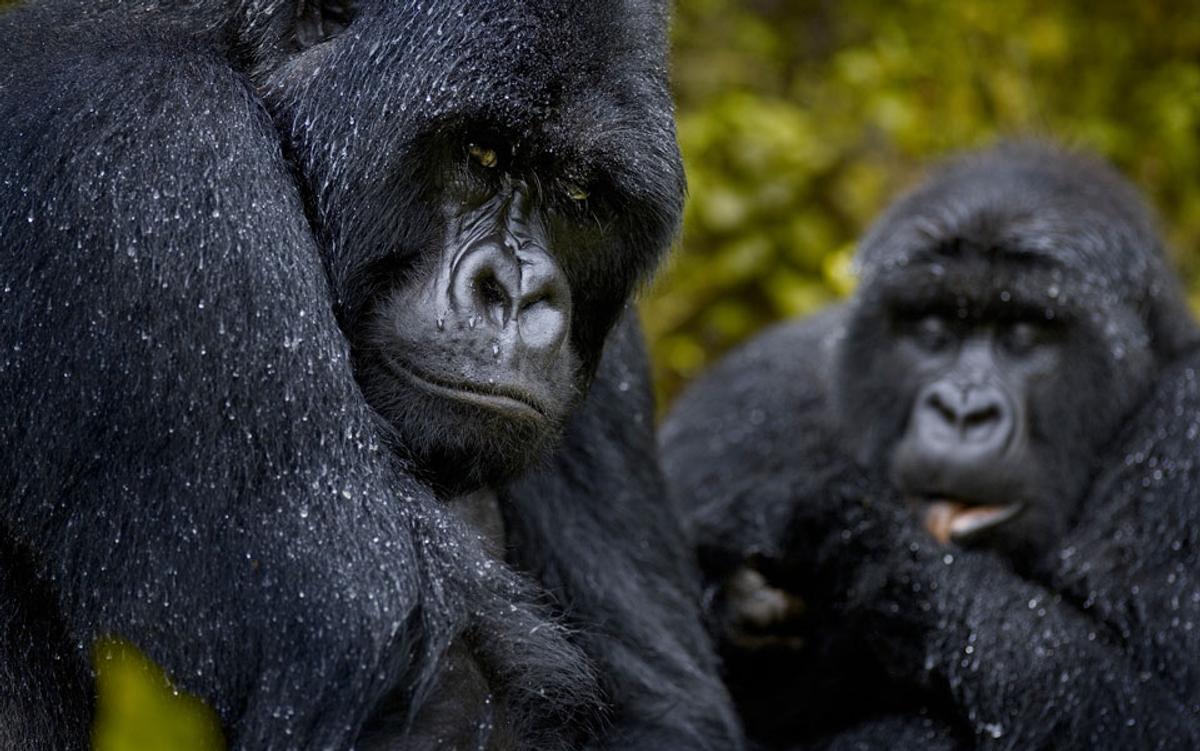
I feel therefore I am: on holiday with my ape cousins | Aeon Essays
The more we learn about the emotions shared by all mammals, the more we must rethink our own human intelligence
Edouard Joseph d’Alton’s Illustrations of Animal Skeletons (1821–1838)
Meticulous illustrations from an atlas of animal bones, including those of the tiny squirrel and the tall giraffe, the domesticated camel and the extinct giant ground sloth.

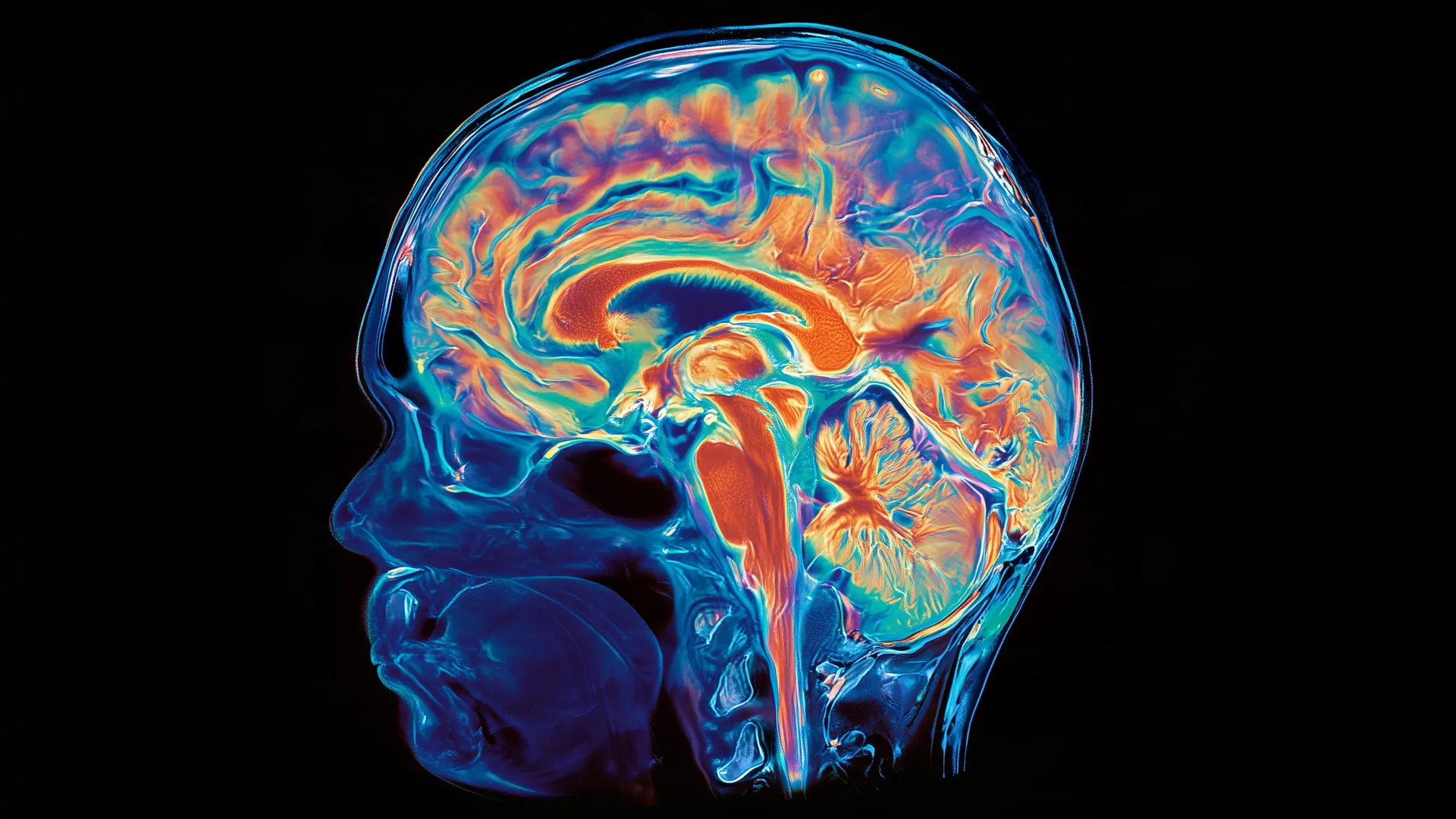
Stanford scientists discover the human brain may actually be two separate organs
Scientists have found that the human brain develops from two distinct cellular systems, suggesting that evolution fused together two ancient nervous systems with very different jobs. The discovery also allowed researchers to grow human hindbrain neurons in the lab, opening new possibilities for studying ALS, spinal muscular atrophy, and other brainstem diseases.