


Abstract In healthy middle-aged men, raloxifene treatment was associated with increased serum estradiol and decreased biochemical markers of bone turnover in subjects with estradiol levels below a threshold of 101.8 pM. Introduction: We investigated the effects of the selective estrogen receptor modulator raloxifene on bone remodeling in healthy middle-aged men. Materials and Methods: Forty-three healthy eugonadal men (mean age, 56 years; range, 49-70 years) were enrolled in a randomized placebo-controlled, double-blind, two-sequence crossover study. The subjects received either raloxifene 120 mg/day or placebo for 6 weeks, followed by a 2-month washout period, before crossing over. To predict changes of urinary total deoxypyridinoline/creatinine on raloxifene treatment, we used a logistic regression model to determine cut-off values of sex hormones for highest sensitivity and specificity. Results: In the whole group, raloxifene treatment was associated with an increase in serum sex hormones, that is, total testosterone (+13%, p < 0.01), bioavailable testosterone (+11%, p = 0.02), total estradiol (+11%, p < 0.002), and bioavailable estradiol (+11%, p = 0.035), and with a decrease in serum osteocalcin (−13%, p < 0.05) and serum total alkaline phosphatase (−6%, p < 0.05). Other biochemical markers of bone turnover remained unchanged. Using a logistic regression model to predict changes in urinary deoxypyridoline, we calculated thresholds for total (101.8 pM) and bioavailable (4.79 pM) estradiol, as well as for total (19.4 nM) and bioavailable (0.35 nM) testosterone. Raloxifene treatment was associated with an increase in serum estradiol and decrease in biochemical markers of bone turnover in men with estradiol values below these estradiol thresholds, without any significant change in subjects with values above them. Similarly, raloxifene treatment was associated with an increase in serum testosterone and a decrease in biochemical markers of bone turnover in those with baseline testosterone values below the testosterone thresholds. The association between antiresorptive effects of raloxifene and low sex hormone levels was more pronounced for estradiol than for testosterone. Conclusions: The antiresorptive effect of raloxifene was only detectable in men with low baseline estradiol levels. Unlike in postmenopausal women, the increase of estradiol may contribute to the antiresorptive effect of raloxifene in men.
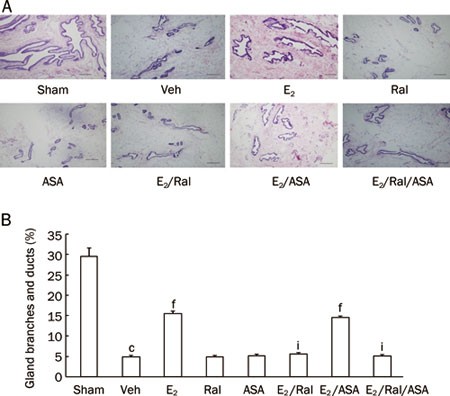
Combination of raloxifene, aspirin and estrogen as novel paradigm of hormone replacement therapy in rabbit model of menopause
To assess a novel hormone replacement therapy (HRT) paradigm using raloxifene, aspirin combined with estrogen in rabbit model of menopause.
Critical Role of Estrogens on Bone Homeostasis in Both Male and Female: From Physiology to Medical Implications
Bone is a multi-skilled tissue, protecting major organs, regulating calcium phosphate balance and producing hormones. Its development during childhood determines height and stature as well as resistance against fracture in advanced age. Estrogens are key regulators of bone turnover in both females and males. These hormones play a major role in longitudinal and width growth throughout puberty as well as in the regulation of bone turnover. In women, estrogen deficiency is one of the major causes of postmenopausal osteoporosis. In this review, we will summarize the main clinical and experimental studies reporting the effects of estrogens not only in females but also in males, during different life stages. Effects of estrogens on bone involve either Estrogen Receptor (ER)α or ERβ depending on the type of bone (femur, vertebrae, tibia, mandible), the compartment (trabecular or cortical), cell types involved (osteoclasts, osteoblasts and osteocytes) and sex. Finally, we will discuss new ongoing strategies to increase the benefit/risk ratio of the hormonal treatment of menopause.

Estrogen therapy for osteoporosis in the modern era
Menopause predisposes women to osteoporosis due to declining estrogen levels. This results in a decrease in bone mineral density (BMD) and an increase in fractures. Osteoporotic fractures lead to substantial morbidity and mortality, and are considered one of the largest public health priorities by the World Health Organization (WHO). It is therefore essential for menopausal women to receive appropriate guidance for the prevention and management of osteoporosis. The Women’s Health Initiative (WHI) randomized controlled trial first proved hormonal therapy (HT) reduces the incidence of all osteoporosis-related fractures in postmenopausal women. However, the study concluded that the adverse effects outweighed the potential benefits on bone, leading to a significant decrease in HT use for menopausal symptoms. Additionally, HT was not used as first-line therapy for osteoporosis and fractures. Subsequent studies have challenged these initial conclusions and have shown significant efficacy of HT in various doses, durations, regimens, and routes of administration. These studies support that HT improves BMD and reduces fracture risk in women with and without osteoporosis. Furthermore, the studies suggest that low-dose and transdermal HT are less likely associated with the adverse effects of breast cancer, endometrial hyperplasia, coronary artery disease (CAD), and venous thromboembolism (VTE) previously observed in standard-dose oral HT regimens. Given the need for estrogen in menopausal women and evidence supporting the cost effectiveness, safety, and efficacy of HT, we propose that HT should be considered for the primary prevention and treatment of osteoporosis in appropriate candidates. HT should be individualized and the once “lowest dose for shortest period of time” concept should no longer be used. This review will focus on the prior and current studies for various HT formulations used for the prevention and treatment of osteoporosis, exploring the safety profile of low-dose and transdermal HT that have been shown to be safer than oral standard-dose HT.
Application of a mechanism-based disease systems model for osteoporosis to clinical data
A recently proposed mechanism-based disease systems model for osteoporosis (Schmidt et al., J Pharmacokinet Pharmacodyn 38:873–900, 2011) was applied to clinical data from post-menopausal women (n = 767) receiving various doses of the selective estrogen receptor modulator tibolone. Plasma bone-specific alkaline phosphatase activity and urinary N-telopeptide were used as biomarkers reflecting the activity of osteoblasts (bone forming cells) and osteoclasts (bone removing cells), respectively. These data were analyzed in conjunction with data on osteocalcin and on bone mineral density (BMD) (both lumbar spine and total hip), which reflect the activity of both cell types. While the dynamics of bone turnover markers changes rapidly, closely following changes in the activity of bone cells, changes in BMD are slower and have their own dynamics. Application of the mechanism-based disease systems model to the clinical data allowed for an adequate description of the data and yielded parameter estimates that are consistent with physiological values reported in the literature (Lemaire et al., J Theor Biol 229:293–309, 2004). The fitted model enabled characterization of (i) the critical time scales involved in disease progression, (ii) the dynamics of the system during onset and offset of the therapeutic intervention, and (iii) the distinction between responders and low-responders to tibolone treatment.

The 2022 hormone therapy position statement of The North American Menopause Society
Abstract “The 2022 Hormone Therapy Position Statement of The North American Menopause Society” (NAMS) updates “The 2017 Hormone Therapy Position Statement of The North American Menopause Society” and identifies future research needs. An Advisory Panel of clinicians and researchers expert in the field of women’s health and menopause was recruited by NAMS to review the 2017 Position Statement, evaluate new literature, assess the evidence, and reach consensus on recommendations, using the level of evidence to identify the strength of recommendations and the quality of the evidence. The Advisory Panel’s recommendations were reviewed and approved by the NAMS Board of Trustees. Hormone therapy remains the most effective treatment for vasomotor symptoms (VMS) and the genitourinary syndrome of menopause and has been shown to prevent bone loss and fracture. The risks of hormone therapy differ depending on type, dose, duration of use, route of administration, timing of initiation, and whether a progestogen is used. Treatment should be individualized using the best available evidence to maximize benefits and minimize risks, with periodic reevaluation of the benefits and risks of continuing therapy. For women aged younger than 60 years or who are within 10 years of menopause onset and have no contraindications, the benefit-risk ratio is favorable for treatment of bothersome VMS and prevention of bone loss. For women who initiate hormone therapy more than 10 years from menopause onset or who are aged older than 60 years, the benefit-risk ratio appears less favorable because of the greater absolute risks of coronary heart disease, stroke, venous thromboembolism, and dementia. Longer durations of therapy should be for documented indications such as persistent VMS, with shared decision-making and periodic reevaluation. For bothersome genitourinary syndrome of menopause symptoms not relieved with over-the-counter therapies in women without indications for use of systemic hormone therapy, low-dose vaginal estrogen therapy or other therapies (eg, vaginal dehydroepiandrosterone or oral ospemifene) are recommended.
Estrogens and Androgens in Skeletal Physiology and Pathophysiology
Estrogens and androgens influence the growth and maintenance of the mammalian skeleton and are responsible for its sexual dimorphism. Estrogen deficiency at menopause or loss of both estrogens and androgens in elderly men contribute to the development of osteoporosis, one of the most common and impactful metabolic diseases of old age. In the last 20 years, basic and clinical research advances, genetic insights from humans and rodents, and newer imaging technologies have changed considerably the landscape of our understanding of bone biology as well as the relationship between sex steroids and the physiology and pathophysiology of bone metabolism. Together with the appreciation of the side effects of estrogen-related therapies on breast cancer and cardiovascular diseases, these advances have also drastically altered the treatment of osteoporosis. In this article, we provide a comprehensive review of the molecular and cellular mechanisms of action of estrogens and androgens on bone, their influences on skeletal homeostasis during growth and adulthood, the pathogenetic mechanisms of the adverse effects of their deficiency on the female and male skeleton, as well as the role of natural and synthetic estrogenic or androgenic compounds in the pharmacotherapy of osteoporosis. We highlight latest advances on the crosstalk between hormonal and mechanical signals, the relevance of the antioxidant properties of estrogens and androgens, the difference of their cellular targets in different bone envelopes, the role of estrogen deficiency in male osteoporosis, and the contribution of estrogen or androgen deficiency to the monomorphic effects of aging on skeletal involution.

Bone Remodeling in Post-menopausal Osteoporosis
Bone mass in the skeleton is dependent on the coordinated activities of bone-forming osteoblasts and bone-resorbing osteoclasts in discrete bone multi-cellular units. Remodeling of bone in these units is important not only for maintaining bone mass, but also to repair microdamage, to prevent accumulation of too much old bone, and for mineral homeostasis. The activities of osteoblasts and osteoclasts are controlled by a variety of hormones and cytokines, as well as by mechanical loading. Most importantly, sex hormones are very crucial for keeping bone mass in balance, and the lack of either estrogen or testosterone leads to decreased bone mass and increased risk for osteoporosis. The prevalence of osteoporotic fractures is increasing dramatically in the Western part of the world and is a major health problem in many countries. In the present review, the cellular and molecular mechanisms controlling bone remodeling and the influence of sex hormones on these processes are summarized. In a separate paper in this issue, the pathogenesis of post-menopausal osteoporosis will be compared with that of inflammation-induced bone remodeling, including the evidence for and against the hypothesis that concomitant post-menopausal osteoporotic disease influences the progression of periodontal disease.

Effects of raloxifene on body fat distribution and lipid profile in healthy post-menopausal women
The aim of our prospective, randomised, controlled and open-label clinical study was to evaluate in healthy post-menopausal women the effects of raloxifene (RLX) on body fat distribution and lipids, and the correlations between these parameters. The fat distribution, by dual energy X-ray absorptiometry, and lipids were evaluated at baseline and after 1 yr in 50 postmenopausal women: 25 were treated with RLX 60 mg/die, while 25 served as control group (CG). After 1 yr, we observed in RLX-users a slight reduction of fat mass in trunk and central region and an increase in legs and, in relation to CG, significantly lower values of adiposity in trunk and abdominal region (p<0.05). At the same time, HDL-cholesterol (HDL-C) and apolipoprotein A1 (ApoA1) were significantly increased in relation to baseline values and CG (p<0.05) and apolipoprotein B (ApoB), total cholesterol/HDL-C, LDL cholesterol/HDL-C, and ApoB/ApoA1 ratios significantly decreased compared to baseline values and CG (p<0.05). No correlation was underlined among lipids and regional fat distribution. These results highlight the positive effect of RLX on lipids and suggest, for the first time, that RLX promotes the shift from android to gynoid fat distribution, and prevents the uptrend of abdominal adiposity and body weight compared with untreated women.

Disease Systems Analysis of Bone Mineral Density and Bone Turnover Markers in Response to Alendronate, Placebo, and Washout in Postmenopausal Women
A previously established mechanism‐based disease systems model for osteoporosis that is based on a mathematically reduced version of a model describing the interactions between osteoclast (bone removing) and osteoblast (bone forming) cells in bone remodeling has been applied to clinical data from women ( n = 1,379) receiving different doses and treatment regimens of alendronate, placebo, and washout. The changes in the biomarkers, plasma bone‐specific alkaline phosphatase activity (BSAP), urinary N‐telopeptide (NTX), lumbar spine bone mineral density (BMD), and total hip BMD, were linked to the underlying mechanistic core of the model. The final model gave an accurate description of all four biomarkers for the different treatments. Simulations were used to visualize the dynamics of the underlying network and the natural disease progression upon alendronate treatment and discontinuation. These results complement the previous applications of this mechanism‐based disease systems model to data from various treatments for osteoporosis.

Clinical Data for Parametrization of In Silico Bone Models Incorporating Cell-Cytokine Dynamics: A Systematic Review of Literature
In silico simulations aim to provide fast, inexpensive, and ethical alternatives to years of costly experimentation on animals and humans for studying bone remodeling, its deregulation during osteoporosis and the effect of therapeutics. Within the varied spectrum of in silico modeling techniques, bone cell population dynamics and agent-based multiphysics simulations have recently emerged as useful tools to simulate the effect of specific signaling pathways. In these models, parameters for cell and cytokine behavior are set based on experimental values found in literature; however, their use is currently limited by the lack of clinical in vivo data on cell numbers and their behavior as well as cytokine concentrations, diffusion, decay and reaction rates. Further, the settings used for these parameters vary across research groups, prohibiting effective cross-comparisons. This review summarizes and evaluates the clinical trial literature that can serve as input or validation for in silico models of bone remodeling incorporating cells and cytokine dynamics in post-menopausal women in treatment, and control scenarios. The GRADE system was used to determine the level of confidence in the reported data, and areas lacking in reported measures such as binding site occupancy, reaction rates and cell proliferation, differentiation and apoptosis rates were highlighted as targets for further research. We propose a consensus for the range of values that can be used for the cell and cytokine settings related to the RANKL-RANK-OPG, TGF-β and sclerostin pathways and a Levels of Evidence-based method to estimate parameters missing from clinical trial literature.

Estrogen and the skeleton
Estrogen is the major hormonal regulator of bone metabolism in women and men. Therefore, there is considerable interest in unraveling the pathways by which estrogen exerts its protective effects on bone. Although the major consequence of the loss of estrogen is an increase in bone resorption, estrogen deficiency is associated with a gap between bone resorption and formation, indicating that estrogen is also important for maintaining bone formation at the cellular level. Direct estrogen effects on osteocytes, osteoclasts, and osteoblasts lead to inhibition of bone remodeling, decreased bone resorption, and maintenance of bone formation, respectively.

Application of a Systems Pharmacology‐Based Placebo Population Model to Analyze Long‐Term Data of Postmenopausal Osteoporosis
Osteoporosis is a progressive bone disease characterized by decreased bone mass resulting in increased fracture risk. The objective of this investigation was to test whether a recently developed dise...

Modeling osteoporosis to design and optimize pharmacological therapies comprising multiple drug types
For the treatment of postmenopausal osteoporosis, several drug classes with different mechanisms of action are available. Since only a limited set of dosing regimens and drug combinations can be tested in clinical trials, it is currently unclear whether common medication strategies achieve optimal bone mineral density gains or are outperformed by alternative dosing schemes and combination therapies that have not been explored so far. Here, we develop a mathematical framework of drug interventions for postmenopausal osteoporosis that unifies fundamental mechanisms of bone remodeling and the mechanisms of action of four drug classes: bisphosphonates, parathyroid hormone analogs, sclerostin inhibitors, and receptor activator of NF-κB ligand inhibitors. Using data from several clinical trials, we calibrate and validate the model, demonstrating its predictive capacity for complex medication scenarios, including sequential and parallel drug combinations. Via simulations, we reveal that there is a large potential to improve gains in bone mineral density by exploiting synergistic interactions between different drug classes, without increasing the total amount of drug administered.

Mathematical Model of Bone Remodeling Captures the Antiresorptive and Anabolic Actions of Various Therapies
A better understanding of the molecular pathways regulating the bone remodeling process should help in the development of new antiresorptive regulators and anabolic regulators, that is, regulators of bone resorption and of bone formation. Understanding the mechanisms by which parathyroid hormone (PTH) influences bone formation and how it switches from anabolic to catabolic action is important for treating osteoporosis (Poole and Reeve in Curr Opin Pharmacol 5:612–617, 2005). In this paper we describe a mathematical model of bone remodeling that incorporates, extends, and integrates several models of particular aspects of this biochemical system (Cabal et al. in J Bone Miner Res 28(8):1830–1836, 2013; Lemaire et al. in J Theor Biol 229:293–309, 2004; Peterson and Riggs in Bone 46:49–63, 2010; Raposo et al. in J Clin Endocrinol Metab 87(9):4330–4340, 2002; Ross et al. in J Disc Cont Dyn Sys Series B 17(6):2185–2200, 2012). We plan to use this model as a bone homeostasis platform to develop anabolic and antiresorptive compounds. The model will allow us to test hypotheses about the dynamics of compounds and to test the potential benefits of combination therapies. At the core of the model is the idealized account of osteoclast and osteoblast signaling given by Lemaire et al. (J Theor Biol 229:293–309, 2004). We have relaxed some of their assumptions about the roles of osteoprotegerin, transforming growth factor $$\upbeta $$, and receptor activator of nuclear factor $$\upkappa $$B ligand; we have devised more detailed models of the interactions of these species. We have incorporated a model of the effect of calcium sensing receptor antagonists on remodeling (Cabal et al. in J Bone Miner Res 28(8):1830–1836, 2013). We have also incorporated a basic model of the effects of vitamin D on calcium homeostasis. We have included a simple model of the mechanism proposed by Bellido et al. (2003), Ross et al. (J Disc Cont Dyn Sys Series B 17(6):2185–2200, 2012), of the influence of PTH on osteoblast apoptosis, a mechanism that accounts for the anabolic response to pulsatile PTH administration. Finally, we have devised a simple model of the administration and effects of bisphosphonates. The biomarkers in the model are procollagen type 1 amino-terminal propeptide and C-terminal telopeptide. Bone mineral density is the model’s principal endpoint.

Predicting Nonlinear Changes in Bone Mineral Density Over Time Using a Multiscale Systems Pharmacology Model
A mathematical model component that extends an existing physiologically based multiscale systems pharmacology model (MSPM) of calcium and bone homeostasis was developed, enabling prediction of nonlinear changes in lumbar spine bone mineral density (LSBMD). Data for denosumab, a monoclonal antibody osteoporosis treatment, dosed at several levels and regimens, was used for fitting the BMD component. Bone marker and LSBMD data extracted from the literature described on/off‐treatment effects of denosumab over 48 months [Miller, P.D. et al . Effect of denosumab on bone density and turnover in postmenopausal women with low bone mass after long‐term continued, discontinued, and restarting of therapy: a randomized blinded phase 2 clinical trial. Bone 43, 222–229 (2008)]. An indirect model linking bone markers to LSBMD was embedded in the existing MSPM, reasonably predicting nonlinear increases in LSBMD during treatment (24 months); LSBMD declines following discontinuation and increases upon treatment reinstitution. This study demonstrates the utility of MSPM extension to describe a phenomena of interest not originally in a model, and the ability of this updated MSPM to predict nonlinear longitudinal changes in the clinically relevant endpoint, LSBMD, with denosumab treatment. CPT: Pharmacometrics & Systems Pharmacology (2012) 1, e14; doi: 10.1038/psp.2012.15 ; advance online publication 14 November 2012

Translational Significance of Selective Estrogen Receptor Modulators in Psychiatric Disorders
Accumulating data from various clinical trial studies suggests that adjuvant therapy with ovarian hormones (estrogens) could be effective in reducing cognitive deficit and psychopathological symptoms in women with psychiatric disorders. However, estrogen therapy poses serious limitations and health issues including feminization in men and increased risks of thromboembolism, hot flashes, breast hyperplasia, and endometrium hyperplasia when used for longer duration in older women (aged ≥ 60 years) or in women who have genetic predispositions. On the other hand, selective estrogen receptor modulators (SERMs), which may (or may not) carry some risks of hot flashes, thromboembolism, breast hyperplasia, and endometrial hyperplasia, are generally devoid of feminization effect. In clinical trial studies, adjuvant therapy with tamoxifen, a triphenylethylene class of SERM, has been found to reduce the frequency of manic episodes in patients with bipolar disorder, whereas addition of raloxifene, a benzothiophene class of SERM, to regular doses of antipsychotic drugs has been found to reduce cognitive deficit and psychological symptoms in men and women with schizophrenia, including women with treatment refractory psychosis. These outcomes together with potent neurocognitive, neuroprotective, and cardiometabolic properties suggest that SERMs could be the potential targets for designing effective and safer therapies for psychiatric disorders.
