

Window: open() method - Web APIs | MDN
The open() method of the Window interface loads a specified resource into a new or existing browsing context (that is, a tab, a window, or an iframe) under a specified name.

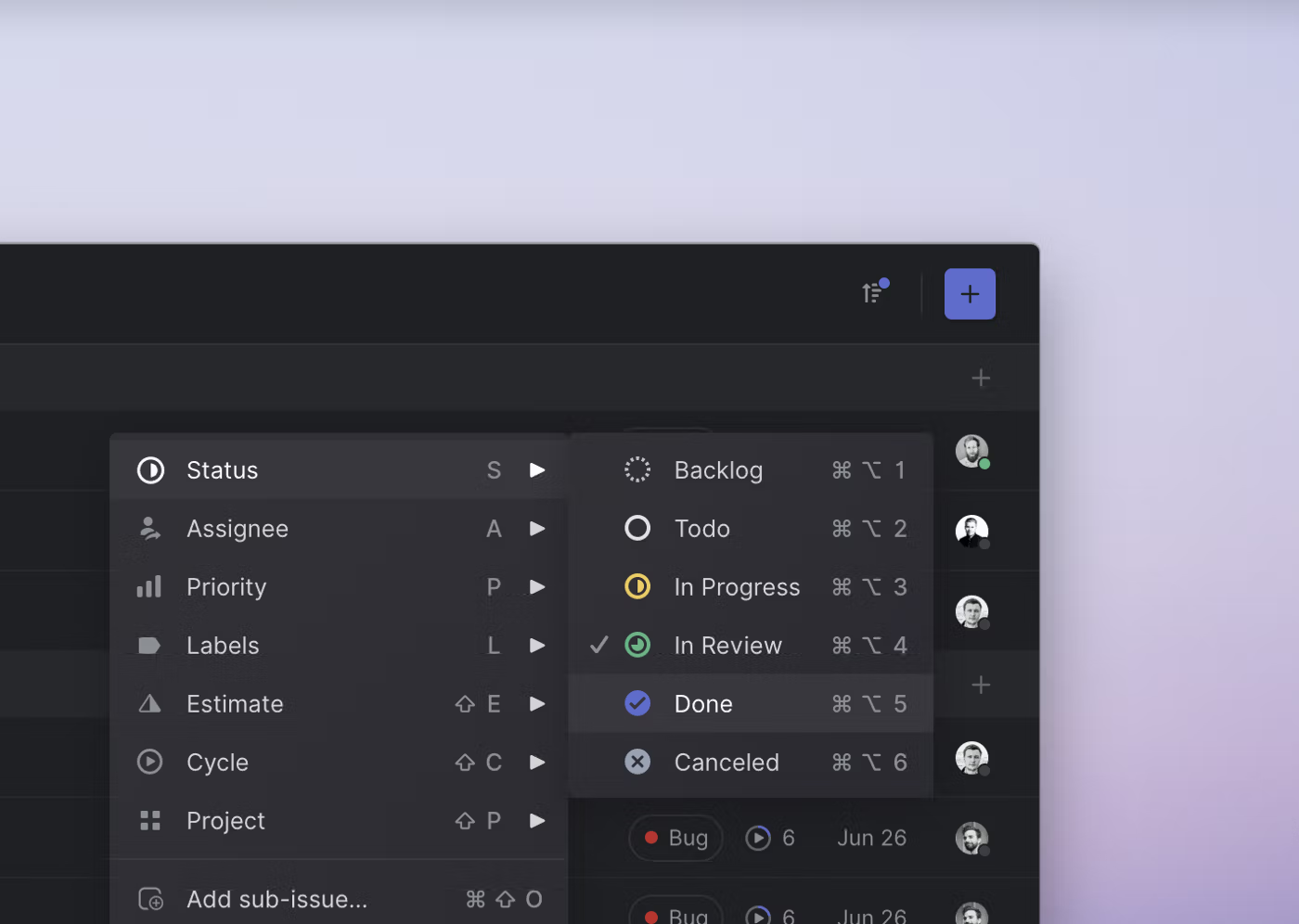
Invisible details - Building contextual menus - Linear
We recently added contextual menus to Linear. This makes the app faster and easier to use for people who prefer their mouse. One small thing that you won’t see or think about but will hopefully feel is a detail we designed into how sub-menus work.
Accessible faux-nested interactive controls
A really common user interface pattern is a big clickable area, such as a card. Sometimes you need controls within that card that are also clickable. There's lots of ways to do it wrong, but fret not, Eric is here to show you how to do it right.
Direct manipulation vs. interface agents
As part of the Digital Library's transition to Open Access, new features for researchers are available in the Premium Edition. Click here to learn more.
Obsidian 1.14.2 Desktop (Early access)
New You can now open files from outside your vault in Obsidian. The file opens in your current window (Desktop only). - Added the
Instrumental interaction: an interaction model for designing post-WIMP user interfaces
As part of the Digital Library's transition to Open Access, new features for researchers are available in the Premium Edition. Click here to learn more.

Instrumental interaction: an interaction model for designing post-WIMP user interfaces
As part of the Digital Library's transition to Open Access, new features for researchers are available in the Premium Edition. Click here to learn more.
Explainer: what is the open movement?
You’ll have read on this site, and perhaps others, about the push towards “open access” for journal articles. But what is open access, and how does it fit into the wider “open movement”? The topic has…

The HTML presentation framework | reveal.js
Documentation and demos for the open source reveal.js HTML presentation framework.
Konsta UI - Mobile UI components built with Tailwind CSS
Mobile UI components built with Tailwind CSS
AI-Generated UI Is Inaccessible by Default
It doesn't mean you can't get AI to help with accessible code, you've just got to know what you're doing.

Building a UI framework
Building a UI Framework Ian Hickson (ian@hixie.ch) — 2025 — First Edition — https://software.hixie.ch/ui-frameworks To leave comments, use the edit version. Introduction This document examines important design decisions for creating a new graphical UI framework. It was commissioned to answer the...

+ ui primitives for navigating between, discovering them, managing them, etc ! (and on all the above, and the ones dan mentions, I don't think they need to look anything like the solutions we already have for these things, new ideas are possible!)

daniel holmgren 🫠
so you have a "universal" app that pulls together all these disparate highly-contextual apps. notifications for all of them in one spot, a algorithm/discovery for seeing updates across all of them, etc
