

Exploring relationships among maps, society, and technology
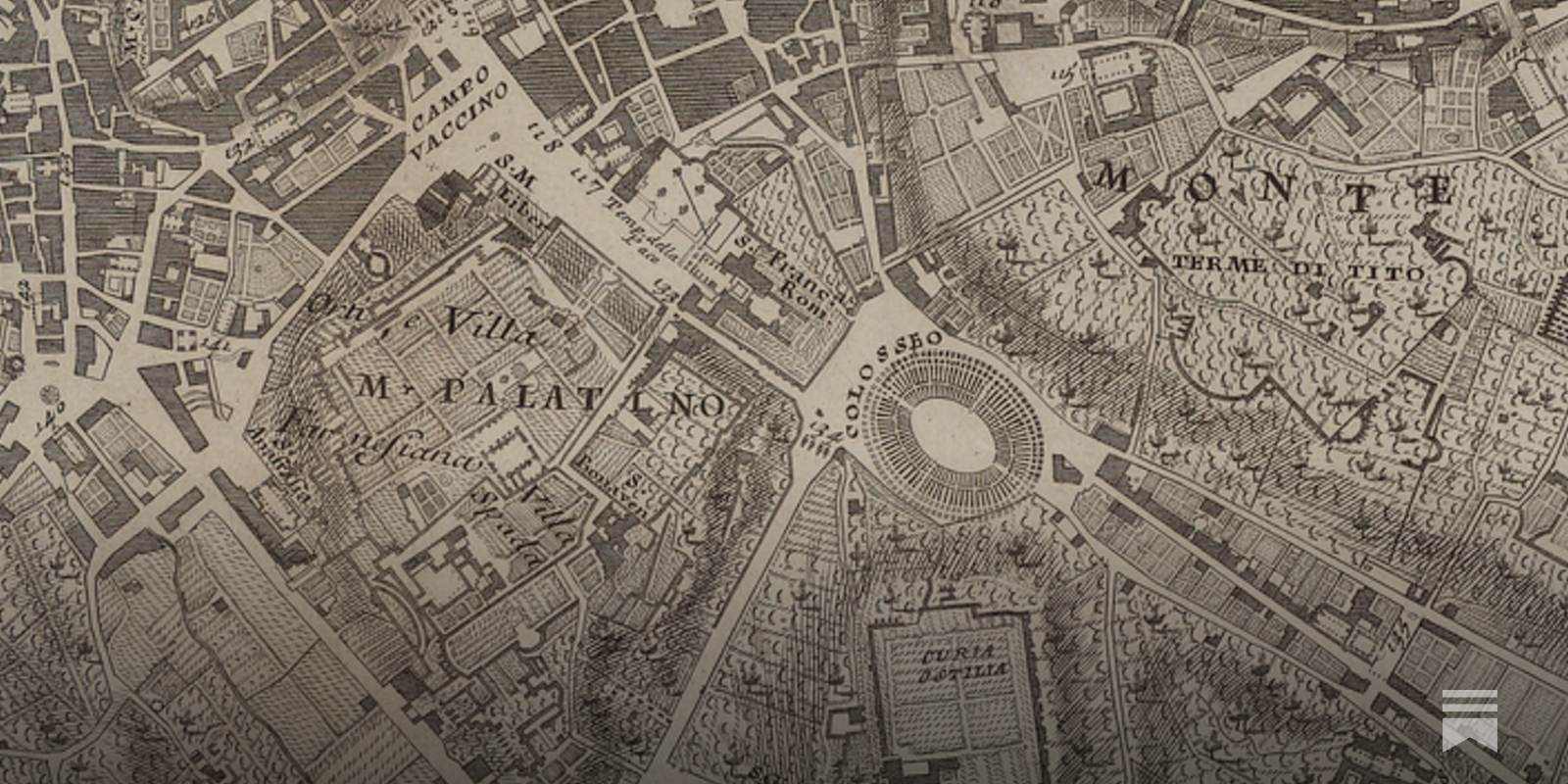
Capitalism Tech Stack Map — A Cross-Civilization Infographic (D3 Force)
Reticulum Network
For the better part of a generation, we have been taught to visualize the digital world through the lens of hierarchy. The mental maps we carry are dominated by a single, misleading image: The Cloud.
A cartographer posits that our maps should be messier. “The ...
A cartographer posits that our maps should be messier. “The idea that we must have a crisp line dividing one country from another is often inaccurate when it co
Technology is Society Made Durable
Is it possible to devise a set of concepts that could replace the technology/society divide? This set of new concepts - association and substitution - might help to rephrase some of the traditional questions of social order and especially that of the durability of domination of power. However, instead of using different tools to analyse power and weakness, it is argued that power and domination are simply different values of variables that should be studied in their whole range. By reconstructing networks it is argued that a full description of power and domination may be obtained.

A Beginner’s Guide to Scientific Roadmapping
Wonderful maps and how to read them


Everything is miscellaneous : the power of the new digital disorder
Includes bibliographical references (p. [235]-257) and index; Prologue : information in space -- The new order of order -- Alphabetization and its discontents -- The geography of knowledge -- Lumps and splits -- The laws of the jungle -- Smart leaves -- Social knowing -- What nothing says -- Messiness as a virtue -- The work of knowledge -- Coda : misc; Philosopher Weinberger shows how the digital revolution is radically changing the way we make sense of our lives. Human beings constantly collect, label, and organize data--but today, the shift from the physical to the digital is mixing, burning, and ripping our lives apart. In the past, everything had its one place--the physical world demanded it--but now everything has its places: multiple categories, multiple shelves. Everything is suddenly miscellaneous. Weinberger charts the new principles of digital order that are remaking business, education, politics, science, and culture. He examines how Rand McNally decides what information not to include in a physical map (and why Google Earth is winning that battle), how Staples stores emulate online shopping to increase sales, why your children's teachers will stop having them memorize facts, and how the shift to digital music stands as the model for the future.--From publisher description; From A to Z, Everything Is Miscellaneous will completely reshape the way you think - and what you know - about the world. Includes information on alphabetical order, Amaxon.com, animals, Aristotle, authority, Bettmann Archive, blogs (weblogs), books, broadcasting, British Broadcasting Corporation (BBC), business, card catalog, categories and categorization, clusters, companies, Colon Classification, conversation, Melvil Dewey, Dewey Decimal Classification system, Encyclopaedia Britannica, encyclopedia, essentialism, experts, faceted classification system, first order of order, Flickr.com, Google, Great Books of the Western World, ancient Greeks, health and medical information, identifiers, index, inventory tracking, knowledge, labels, leaf and leaves, libraries, Library of Congress, links, Carolus Linnaeus, lumping and splitting, maps and mapping, marketing, meaning, metadata, multiple listing services (MLS), names of people, neutrality or neutral point of view, New York Public Library, Online Computer Library Center (OCLC), order and organization, people, physical space, everything having place, Plato, race, S.R. Ranganathan, Eleanor Rosch, Joshua Schacter, science, second order of order, simplicity, social constructivism, social knowledge, social networks, sorting, species, standardization, tags, taxonomies, third order of roder, topical categorization, tree, Uniform Product Code (UPC), users, Jimmy Wales, web, Wikipedia, etc

Home - Overture Maps Foundation
A platform for bringing together tech companies, mapping organizations, government agencies, open data communities, and researchers to build open, reliable, and interoperable map data infrastructure.
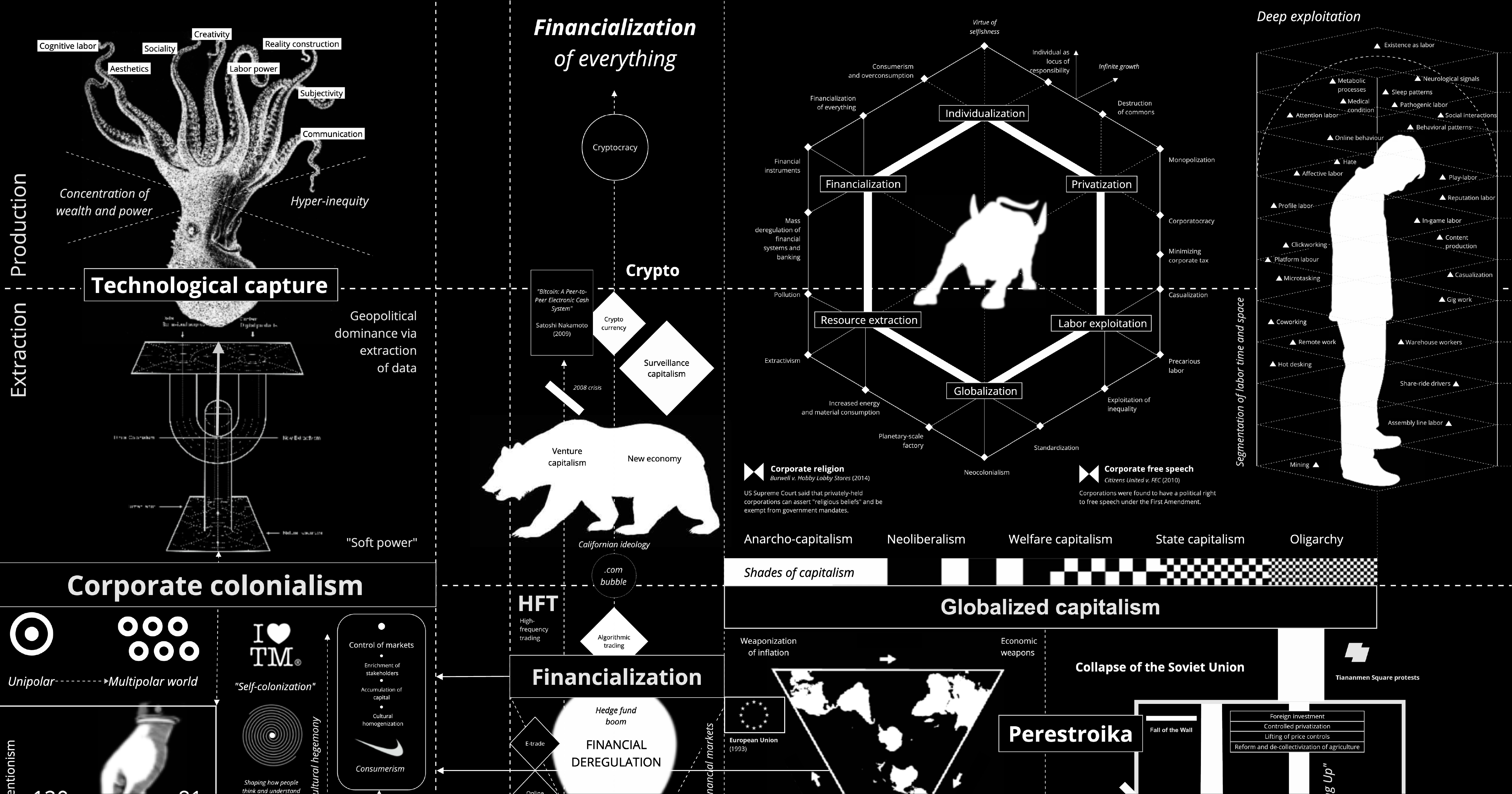
Calculating Empires: A Genealogy of Technology and Power since 1500
Explore how technical and social structures co-evolved over five centuries in this large-scale research visualization.
ATScience Ecosystem Map
An interactive map of research applications, infrastructure and communities built on AT Protocol.

Reality Blind - Vol. 1
Integrating the Systems Science Underpinning Our Collective Futures
Thinking together
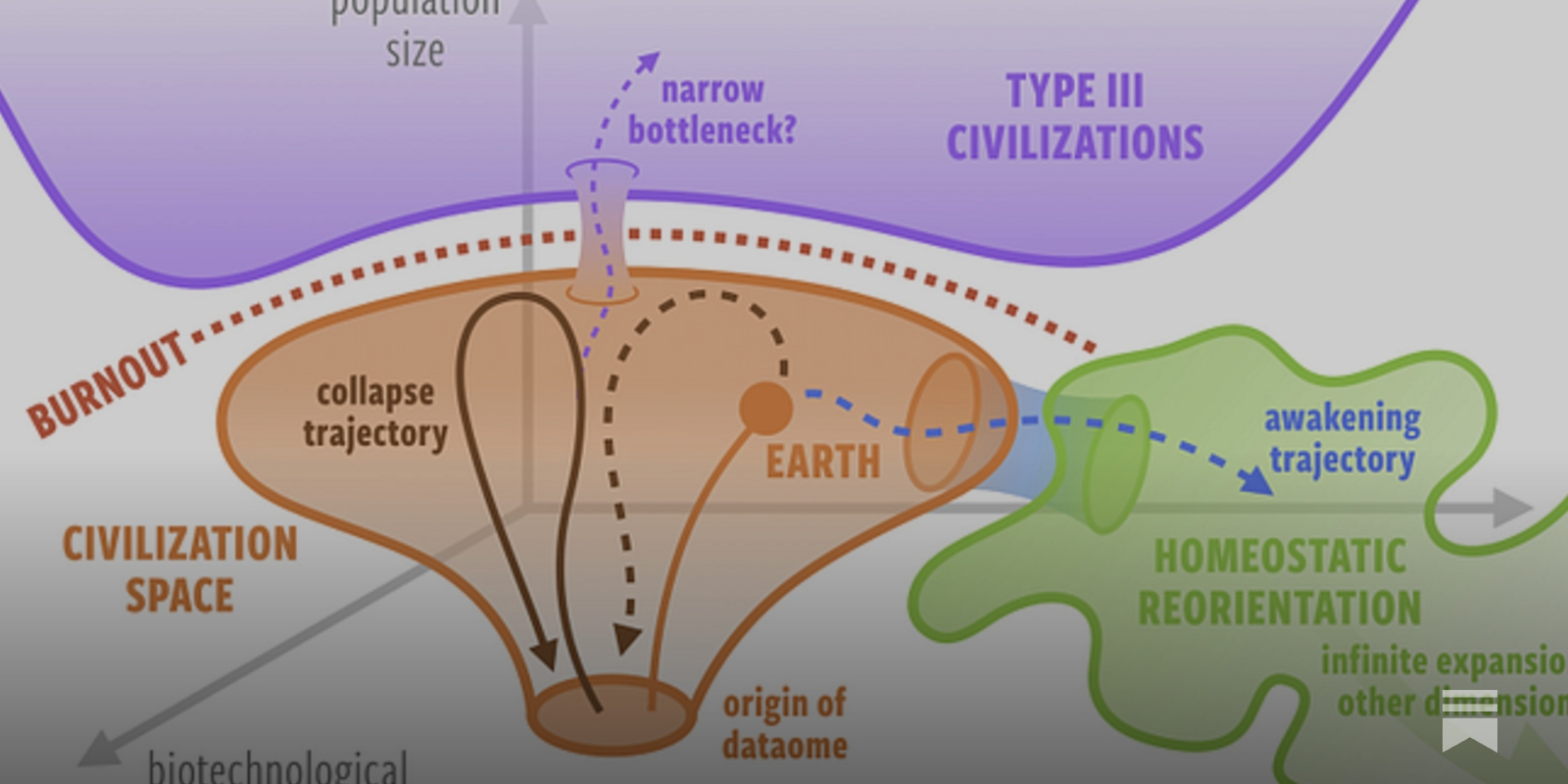
While analyzing a global history databank spanning 10,000 years, Shin, et al found a disconcerting pattern. Civilizations scale until they are overwhelmed by the information environment they create. This is The Information Scaling Threshold.

Wardley map
A Wardley map is a map for business strategy.[1] Components are positioned within a value chain and anchored by the user need, with movement described by an evolution axis.[2] Wardley maps are named after Simon Wardley who created the technique at Fotango in 2005 having created the evolutionary framing the previous year.[3][4] The technique was further developed within Canonical UK between 2008 and 2010[5][independent source needed] and components of mapping can be found in the "Better for Less" paper published in 2010.[6]