

The Great Simplification with Nate Hagens · Episode
Ultra-Processed Information: AI and the Coming Deluge of Noise | Frankly 128
Wisdom in a World in Crisis: The Counterintuitive Need to Slow Down and Find Spaciousness with Iain McGilchrist
Disinformation and grievance narratives
Synthese - Disinformation is often defined as misleading content intended to instill false beliefs. But this definition is too narrow. We need to focus instead on its broader epistemic effects....
The Great Simplification with Nate Hagens
The Great Simplification with Nate Hagens explores money, energy, economy, and the environment with world experts and leaders to understand how everything fits together, and where we go from here
What to Do as the World Falls Apart: A Framework for Action | Frankly 132
Podcast Episode · The Great Simplification with Nate Hagens · March 20 · 53m

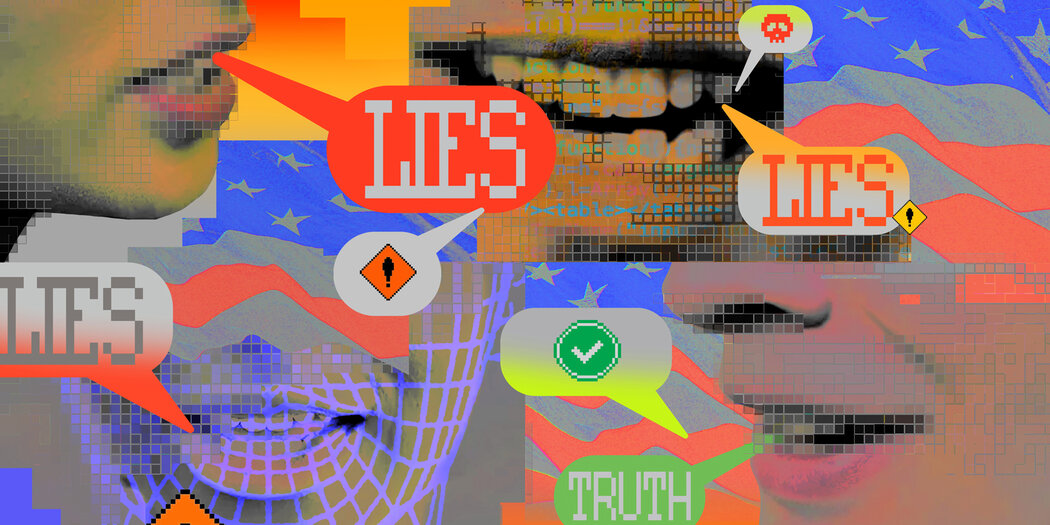
Deepfakes, Elections, and Shrinking the Liar’s Dividend
Heightened public awareness of the power of generative AI could give politicians an incentive to lie about the authenticity of real content.
The Dynamics of Distortion: How Successive Summarization Alters the Retelling of News
This work advances and tests a theory of how news information evolves as it is successively retold by consumers. Drawing on data from over 11,000 participants across ten experiments, the authors offer evidence that when news is repeatedly retold, it undergoes a stylistic transformation termed “disagreeable personalization,” wherein original facts are increasingly supplanted by opinions and interpretations with a slant toward negativity. The central thesis is that when retellers believe they are more (vs. less) knowledgeable than their recipient about the information they are relaying, they feel more compelled to provide guidance on its meaning and to do so in a persuasive manner. This enhanced motivation to guide persuasively, in turn, leads retellers to not only select the subset of facts they deem most essential but, critically, to provide their interpretations and opinions on those facts, with negativity being used as a means of grabbing their audience’s attention. Implications of this work for research on retelling and consumer information diffusion are explored.

The Dynamics of Distortion: How Successive Summarization Alters the Retelling of News
This work advances and tests a theory of how news information evolves as it is successively retold by consumers. Drawing on data from over 11,000 participants across ten experiments, the authors offer evidence that when news is repeatedly retold, it undergoes a stylistic transformation termed “disagreeable personalization,” wherein original facts are increasingly supplanted by opinions and interpretations with a slant toward negativity. The central thesis is that when retellers believe they are more (vs. less) knowledgeable than their recipient about the information they are relaying, they feel more compelled to provide guidance on its meaning and to do so in a persuasive manner. This enhanced motivation to guide persuasively, in turn, leads retellers to not only select the subset of facts they deem most essential but, critically, to provide their interpretations and opinions on those facts, with negativity being used as a means of grabbing their audience’s attention. Implications of this work for research on retelling and consumer information diffusion are explored.
CFP: Religion, Politics, and Cognitive Warfare: Information, Interpretation, Conspiracy, and the Struggle for Reality
The Journal for Cultural and Religious Theory (JCRT) invites proposals for an online conference entitled Religion, Politics, and Cognitive Warfare: Information, Interpretation, Conspiracy, and the Struggle for Reality. The proceedings will be considered for publication in a special issue of the JCRT. This conference investigates how beliefs, paranoia, and conspiratorial modes of knowing shape a contemporary cognitive battlespace in which actors struggle to define truth, authority, and reality itself. Drawing on Michel Foucault's Lectures on the Will to Know and Julia Kristeva's This Incredible Need to Believe (2024), we focus on practices of selective fact use and "truth-selecting" that construct alternative epistemic orders while claiming privileged access to what is "really" going on. Rather than treating conspiracy thinking as merely political or psychological, the conference foregrounds its religious dimensions: faith in hidden powers, moral dualism, apocalyptic expectation, and hermeneutical struggle over revelatory access to the real. Conspiracy cultures routinely reproduce theological structures of knowing—visions of salvation and corruption, truth and deception, initiation and blindness. At the same time, new forms of "cognitive warfare" reframe these religious energies within state and platform attempts to govern perception, attention, and trust. Artificial intelligence, algorithmic media, and strategic information campaigns do not only deliver messages; they create digital ecologies in which suspicion becomes faith-like and revelation is continual. The conference organizers are seeking proposals of high academic quality that take a reflective and analytical approach to both general and specific topics with international appeal or focus. We encourage contributions from scholars of religious studies, philosophy, communication, sociology, security studies, psychology, media, and related fields. Submissions should engage religion as a dynamic force—conceptually, historically, or materially—within the cognitive battlespaces of our time. We encourage contributions from a spectrum of perspectives, approaches, and methodologies. We are not interested in papers that simply rehearse or promote particular conspiracies, or that use the conference as a platform for calling out disliked groups. We are not interested in polemics, jeremiad, or de facto advocacy pieces. Instead, we welcome theoretically informed and methodologically rigorous work that takes the religious and epistemic dimensions of cognitive conflict seriously as objects of critical inquiry.
Wisdom in a World in Crisis: The Counterintuitive Need to Slow Down and Find Spaciousness - The Great Simplification
In this episode, Nate is rejoined by philosopher and neuroscientist Iain McGilchrist for discussion on how our left-brain dominance obscures our sense of value, especially for abstract qualities such as truth, goodness, and beauty.

Living in the Simulacra
Despite a twenty-first-century plethora of images and our collective understanding that digital tools may alter the truth, human beings have a strong belief ...

Reconciling truthfulness and relevance as epistemic and decision-theoretic utility.
Andrew Sullivan: My Distraction Sickness — and Yours
An endless bombardment of news and gossip and images has rendered us manic information addicts. It broke me. It might break you, too.

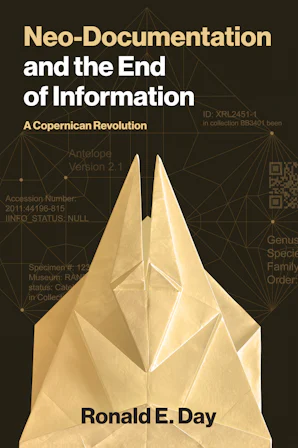
Neo-Documentation and the End of Information
Ronald Day’s Neo-Documentation and the End of Information critiques the modern conception of information as representational “content.” The...
Metacrisis - an Introduction | Metacrisis
In an era defined by global catastrophic risk, polycrisis describes a collection of escalating crises and their complex interactions. Metacrisis points to the common, foundational conditions that generate and sustain these crises.This site offers an accessible introduction to metacrisis: what it is, how it relates to polycrisis, and why it matters. The emphasis is on clarity and rigor rather than drama: presenting the key ideas in a calm, factual way.

The Creature in the Machine | Frankly 120