

Dwarkesh Podcast · Episode
Reinventing Discovery: The New Era of Networked Science
In Reinventing Discovery, Michael Nielsen argues that w…

Athena Aktipis with David Sloan Wilson - Evolving Alignment Podcast
Eight Lessons from the Distributed Podcast So Far
Looking back over the 2019 run of the Distributed podcast, one is struck by the wealth of insights our guests have shared in each and every episode. We’ve spoken to CEOs, activists, lawyers, author…

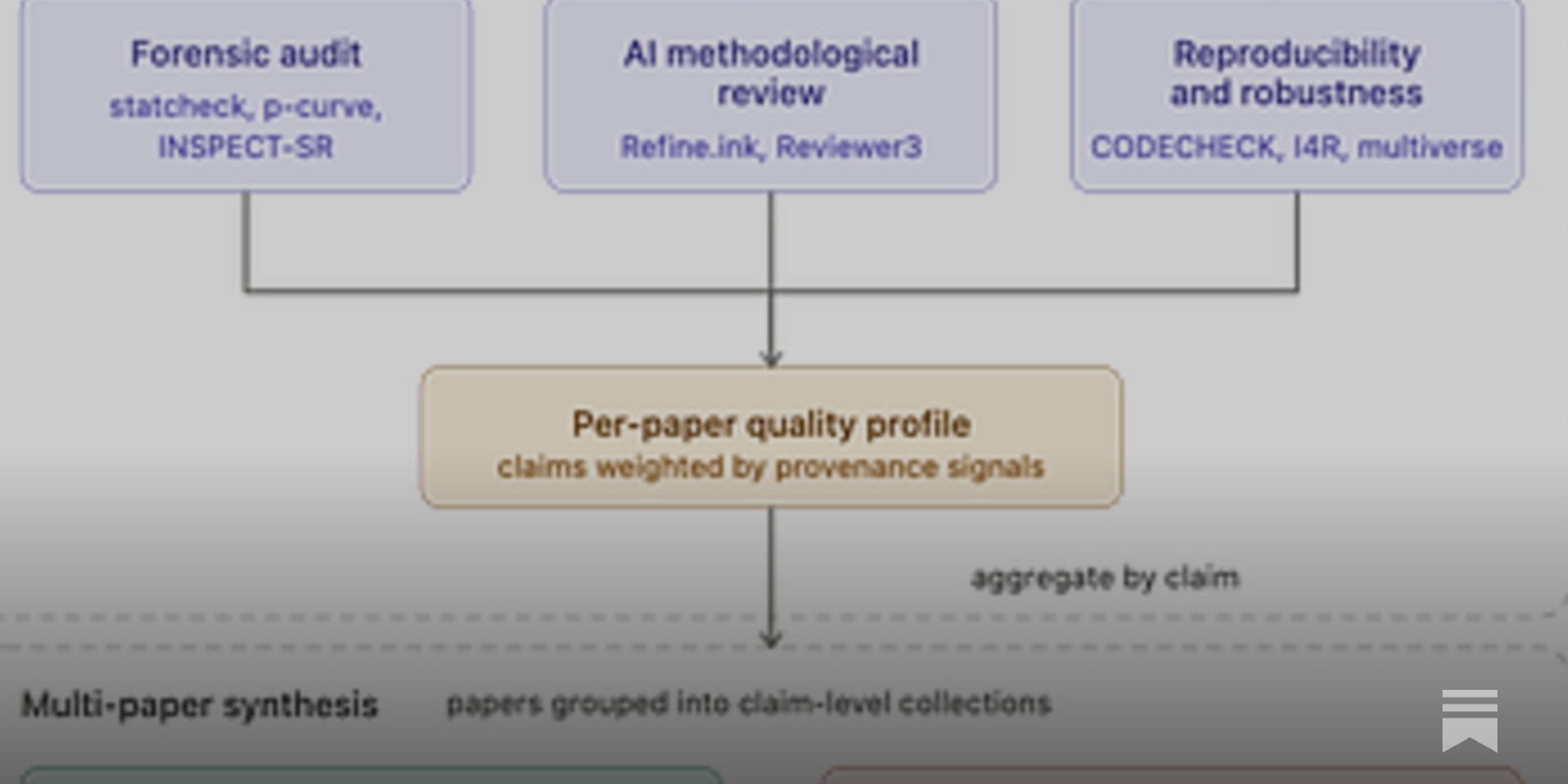
Guest post: If you’re going to critique science, be scientific about it
Loren K. Mell Editor’s note: This post responds to a Feb. 13 article in The Atlantic, “The Scientific Literature Can’t Save Us Now,” written by Retraction Watch cofounders Adam Marcus and Ivan Oran…
What stories should we tell about scientific progress now?
In search of the mysterious fruits of basic science
Gil Durán Maps the Rise of the 'Nerd Reich'
Episode #251 ... You Must Change Your Life, Pt. 2 - The Worlds That Make Us
Podcast Episode · Philosophize This! · 8 August · 35min

Read - Night Science
Itai and Martin have published – and continue to publish – about the main aspects of the creative scientific process and its thinking tools.

Launching the Tacit Knowledge Podcast: How the world's hardest problems really get solved
By Kumar Garg
Future of Scientific Publishing: Interview with Mathïs Fédérico - Writing Scientist
It started as a week-long writing bootcamp, with participants writing together on a video call. The week was a great success and everyone wanted to continue, so they did another week — and are continuing ever since.

How and When to Involve Crowds in Scientific Research | James Evans
The lone academic in a basement lab is an endangered species. Years ago I asked Paul Ginsparg, who founded arXiv, what features his machine-learning filter used to flag speculative submissions. The top three: single-authored, submitted on a weekend, and heavy citation of Newton and Einstein. Science is a contact sport now. Marion Poetz and Henry Sauermann's How and When to Involve Crowds in Scientific Research (https://lnkd.in/g5pwVbfD) is the field manual. What crowds can do: Volume. Zooniverse mobilizes 2.7 million people to classify galaxies and court records. Galaxy Zoo's co-founder hand-classified 50,000 galaxies in one week before concluding that isolation would break him. Reach. NASA spent years failing to predict solar flares, then broadcast the problem. The winner was a semi-retired radio engineer in rural New Hampshire who swapped satellite data for radio data. Experience. Patients and caregivers asked to generate research questions produced 826 that scientists had missed, including the link between aging and wound healing. Bench-to-bedside runs backward. One caution the book underplays: an open call is not an inclusive one. Participation costs in time, money, and access screen people out. Self-selection can narrow the very diversity that makes crowds thrive. As AI floods the labor supply of routine, homogeneous cognition, human crowds become more valuable, not less. Machines process. People notice what nobody thought to ask. Check out my review @ https://lnkd.in/gkzvWrRC and the book @ https://lnkd.in/g5pwVbfD!


This Is How the AI Bubble Could Burst
Podcast Episode · Plain English with Derek Thompson · 09/23/2025 · 59m
