

Upstream · Episode
US Labor & Imperialism Pt. 1: the War Against Communism w/ Jeff Schuhrke
A Theory of Forced Labour Migration
This book focuses on labour dislocation and migration of Palestinians between 1967 and 1990. In particular, it highlights the social transformations in the occupied Palestinian territory where Palestinian labour was permitted to work in Israel from 1968 onwards.
'Zionism Led to Genocide. It Must Disappear': Omer Bartov's New Book …
archived 25 Apr 2026 07:22:14 UTC

A Genocide Scholar Asks “What Went Wrong” in Israel
Podcast Episode · The New Yorker Radio Hour · April 17 · 39m

Men of Capital in Mandate Palestine
This essay examines Palestinian “men of capital” in British-ruled Palestine. It lays out their historical erasure as the product of settler colonialism; the historiographic dominance of the aristoc...

The Rise and Fall of the Palestinian-Arab Middle Class Under the British Mandate, 1920–39
The Palestinian-Arab middle class under the Mandate may be characterized as bourgeois and educated, similarly to bourgeois classes that have developed in the West in the Modern era. The bourgeois characteristics of the Palestinian-Arab middle class, and their influence on its historical trajectory during the Mandate era, have not been studied in depth yet. This article aims to focus on a local aspect of the rise of the middle class in the region in that period: the rise of the Palestinian-Arab middle class under the Mandate, until the Palestinian-Arab Revolt (1936–9). The main hypothesis is that particular bourgeois social and cultural characteristics prevented the middle class full incorporation into the Palestinian-Arab National Movement, and even led to estrangement between the middle class and the national leadership, as well as members of lower strata, especially the villagers. Members of the middle class, mostly Christians but Muslims as well, espoused in their daily life modern habits, ideas, and customs, as a means to distinguish between themselves and other classes, similarly to their parallels in the West, and like their contemporaries elsewhere in the Eastern Mediterranean, as has demonstrated by Watenpaugh. Those gaps reached their climax during the years of revolt.
Jason Hickel: Why a Liberated Palestine Threatens Global Capitalism
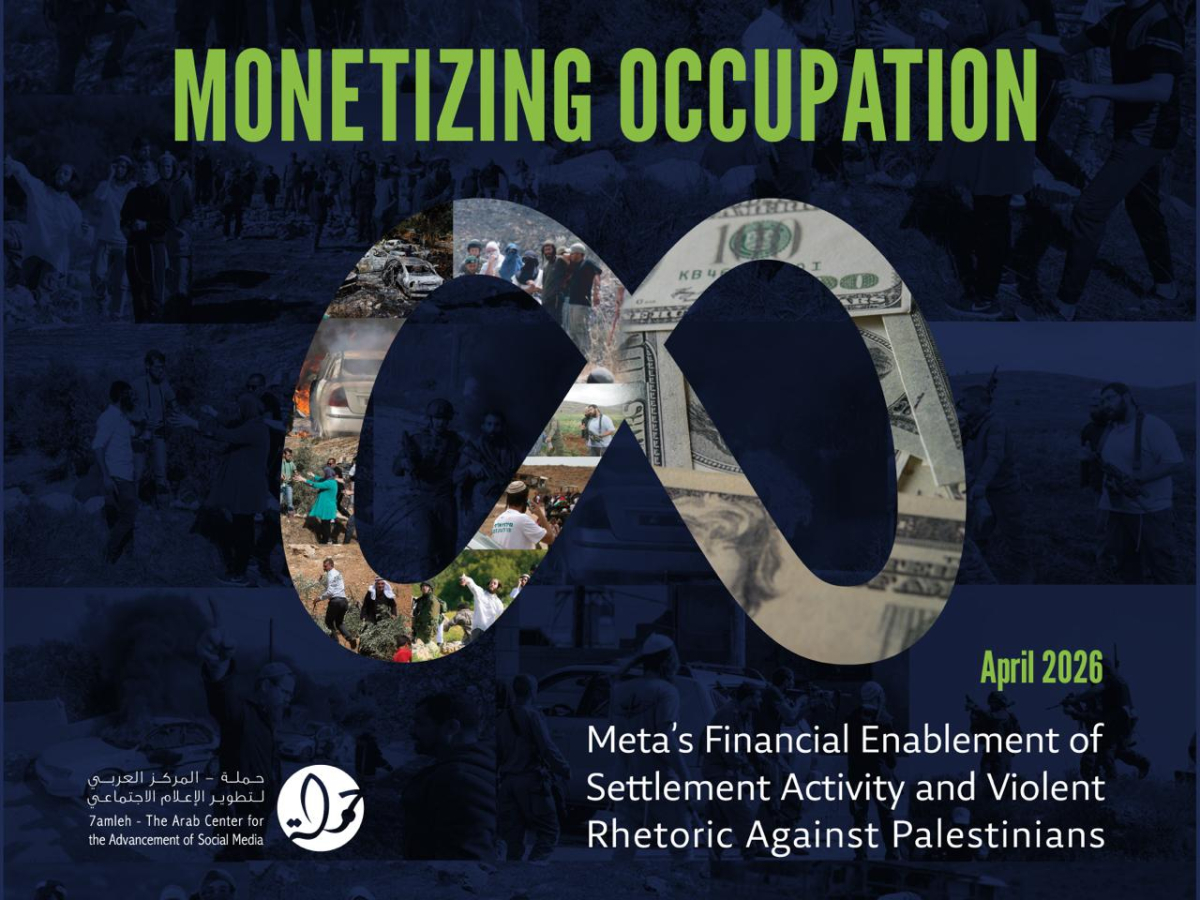
Hamleh - New 7amleh Report: Meta Monetizes Settlements and Violence Against Palestinians
April 13, 2026, 7amleh - The Arab Center for the Advancement of Social Media has released a new report titled “Monetizing Occupation: Meta’s Financial Enablement of Settlement Activity and Violent Rhetoric Against Palestinians.”
The Arab Worker under the Palestine Mandate (1937)
Palestinian trade unionist George Mansour (b. 1905 – d. 1963) initially worked as a baker, then as school teacher in Nazareth before his family moved to Jaffa in 1927, where he worked first in tra...

Institute for the Critical Study of Zionism - Institute for the Critical Study of Zionism
ICSZ supports the development of Critical Zionism Studies with resources for academics and activists. The Institute’s work includes fellowships,


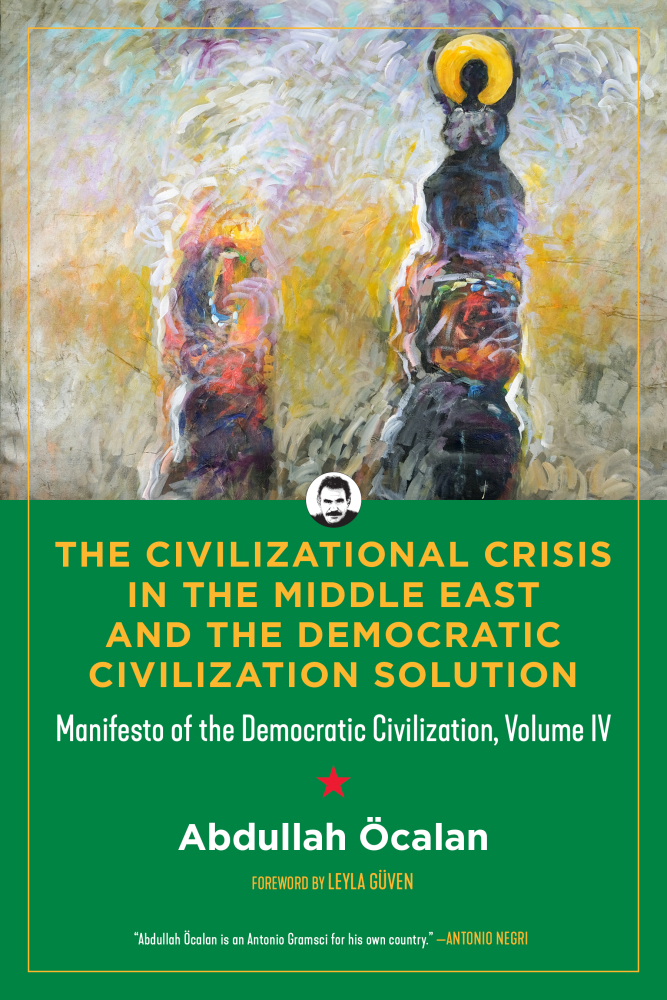
The Civilizational Crisis in the Middle East and the Democratic Civilization Solution: Manifesto of the Democratic Civilization, volume IV
The global crisis of civilization is nowhere more visible than in the Middle East. Wars, authoritarian regimes, social fragmentation, and ecological collapse converge into a single, devastating picture. Abdullah Öcalan argues that the solution to this crisis must be found in the same place where centralized civilization first emerged 5,000 years ago. The fourth volume of Öcalan’s Manifesto of Democratic Civilization traces the region’s deep historical crises while highlighting the many traditions of resistance—religious, cultural, communal, and antiauthoritarian—that have survived despite millennia of state domination. These traditions, he argues, provide the building blocks for a future beyond capitalist modernity. Drawing on the theoretical framework laid out in earlier volumes, Öcalan offers a bold rereading of Middle Eastern history, revealing how patriarchy, hierarchy, and empire became entrenched, and how they can be dismantled. He presents democratic confederalism, a moral and political society, and an ecological, women-centered economic order as the essential pillars of a new civilizational model. In this volume, Öcalan emerges not only as a strategist for resolving the Kurdish question but as a visionary for democratizing the entire region. He closes with urgent questions that speak directly to our global moment: How should we live? What must we do? And where do we begin? Praise “Öcalan, from his cell, reminds us that freedom is not a point of arrival, but a living process, a weaving that is remade collectively, an ethical construction that challenges us in every decision, in every word, in every step. His thought, in dialogue with the rebellious spirit of the people, becomes a vital tool for thinking about emancipation beyond classical forms of politics. That is why reading his work is not only an intellectual act, but a profoundly political act.” —Rosario Aquím Chávez, Bolivian activist, poet, and educator “Öcalan’s works have played a key role in inspiring one of the most widespread movements of real-life revolutionary transformation in recent memory.” —David Graeber, author of Debt and The Dawn of Everything “One should conclude that Abdullah Öcalan is nothing less than a Kurdish Nelson Mandela.” —Slavoj Žižek, author of The Courage of Hopelessness “Öcalan’s utopia—as is soon discovered—is extremely concrete; it is embodied in the struggles and the order of the zones liberated by the Kurdish communist militias! A real utopia, the one that Öcalan supports, a precious gem that strongly opposes the rebirth, so common today, of national fascisms. The utopia of the democratic confederation of peoples embodies a real process that will win every battle.” —Antonio Negri “In these times of accelerating climate change and deepening crises, the product of centuries of imperialism and the past few decades of hyper neoliberalism and ecological destruction, your struggle for freedom and peace has become our struggle, and your example a beacon for untold millions who will yet follow.” —Barry Gills, professor of Global Development Studies at the Faculty of Social Sciences, University of Helsinki About the Contributors Abdullah Öcalan, the founder of the Kurdistan Workers’ Party (PKK), is credited with developing the paradigm of Democratic Modernity. Since his abduction in 1999, he has been imprisoned on the island of Imrali in conditions of extreme isolation. During his time in prison, he has written over ten books that have transformed Kurdish politics. Writing extensively about history, philosophy and politics, he is widely regarded as a key figure in finding a political resolution to the Kurdish question. His writings have made significant contributions to discussions on freedom and outline proposals for non-state political systems in his theories on Democratic Confederalism. His most notable work is the five-volume “Manifesto for a Democratic Civilisation”. His works have been translated into over twenty languages. Leyla Güven is a Kurdish politician, co-chair of the Democratic Society Congress and former mayor of the municipality of Viranşehir in the Şanlıurfa Province of Southeast Anatolia of Turkey, where she represented the former Democratic Society Party. Click here for one-page information sheet on this product
Lobbying for Zionism on Both Sides of the Atlantic | Oneworld
In 1896, a Jewish state was a pipe dream. Today the overwhelming majority of Jews identify as Zionists. How did this happen? Ilan Pappe unveils how over a century of aggressive lobbying changed the map of the Middle East. Pro-Israel lobbies convinced British and American policymakers to condone Israel’s flagrant breaches of international law, […]

The Palestinian Nakba and its Continuous Repercussions
Adel Manna', The Palestinian Nakba and its Continuous Repercussions, Israel Studies, Vol. 18, No. 2, Summer 2013, Shared Narratives—A Palestinian-Israeli Dialogue / Guest Editors: Paul Scham, Benjamin Pogrund, and As'ad Ghanem
Israel: What Went Wrong?
A leading Israeli American scholar of the Holocaust explores and explains his native country's intensifying turn toward violence and exclusion.The distinguished historian Omer Bartov was born on a kibbutz, grew up in Tel Aviv, and served in the Israel Defense Forces during the Yom Kippur War. He went on to become a leading scholar of the German army and the Holocaust, before turning his attention to his native country.In Israel: What Went Wrong?, Bartov sketches the tragic transformation of Zionism, a movement that sought to emancipate European Jewry from oppression, into a state ideology of ethno-nationalism. How is it possible, he asks, that a state founded in the immediate aftermath of the Holocaust, an event that gave legitimacy to a national home for the Jews, stands credibly accused of perpetrating large-scale war crimes? How do we come to terms with the fact that Israel’s war of destruction is being conducted with the support, laced with denial and indifference, of so many of its Jewish citizens?Tracing the roots of the violent events currently unfolding in Israel and the occupied territories, Bartov tracks his country's moral tribulations and considers the origins of Zionism, the intertwining of Israel’s independence with Palestinian displacement, the politics of the Holocaust, controversies over the term "genocide," and the uncertain future. The result is a searing and urgent critique that addresses today’s debates over Zionism and the future of Israel with rigor and depth.
Palestine Action

Activists criminalized in the UK and designated as terrorists in the US
NLG Condemns OFAC Designation of Palestine Action and Autistici/Inventati, Calls for Challenges - National Lawyers Guild

State Department Advances Trump Crackdown on ‘Far-Left Terrorism’

Palestine Action
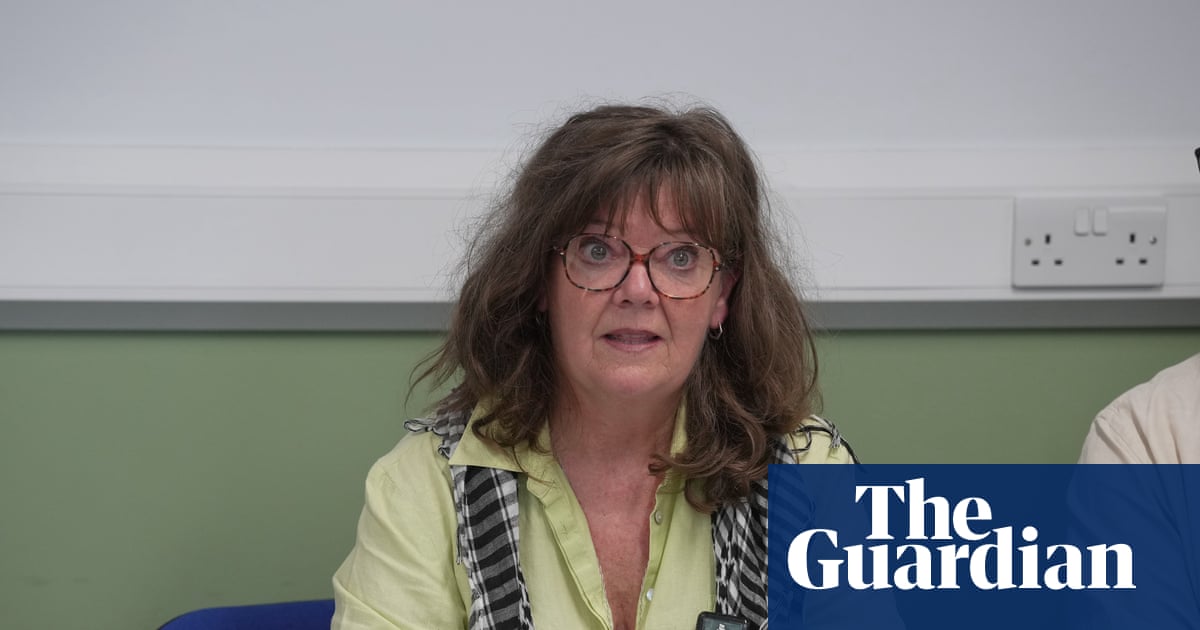
Pro-Palestine activists who were sentenced as terrorists launch appeal
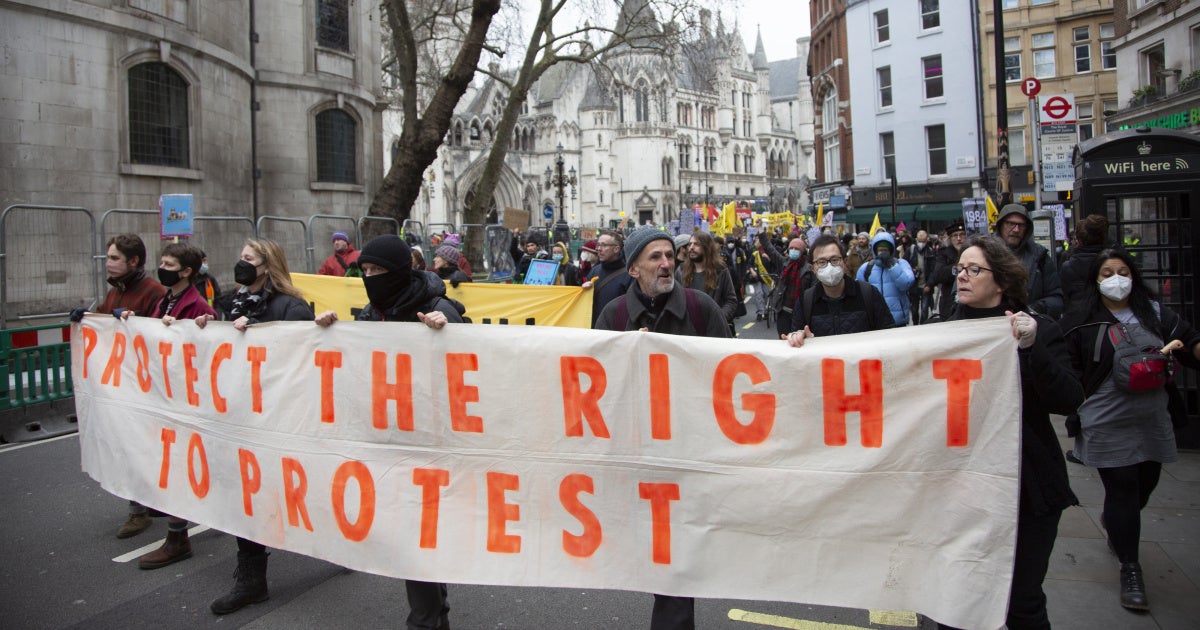
Silencing the Streets

US declares Palestine Action a ’terrorist group’