


"Is this real?" isn't a straightforward question anymore. What to ask instead, and why the source often matters more than the footage itself.
People are trying to claim real videos are deepfakes. The courts are not amused
The unleashing of powerful, generative AI on the public is raising concerns that as the technology becomes more prevalent, it will become easier to claim that anything is fake.
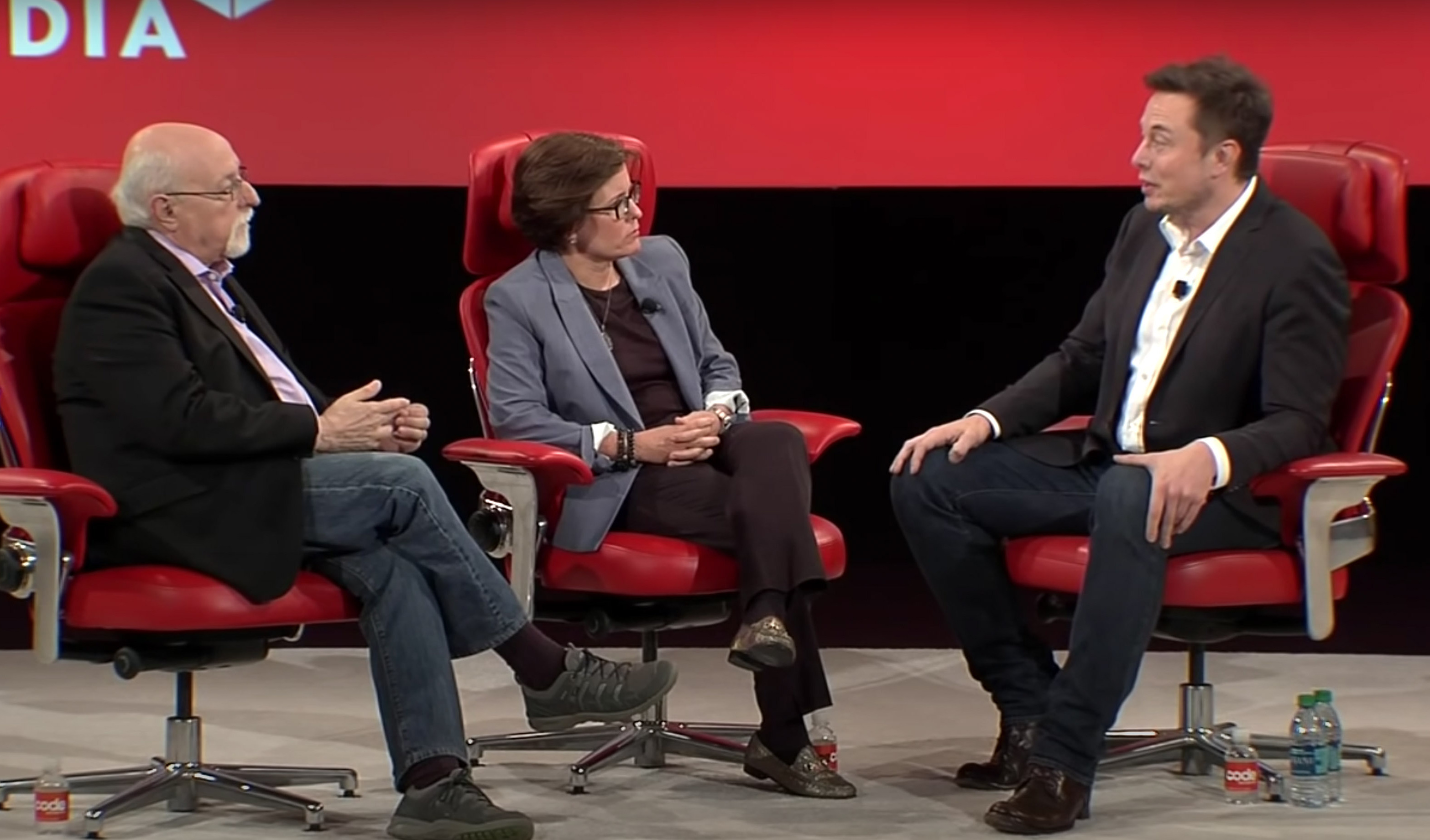
55 AI-Generated Video Statistics: Disclosure, Detection, and Trust
AI-generated video is projected to account for 10% of all digital video content in 2026
Deepfake detection by human crowds, machines, and machine-informed crowds
Significance The recent emergence of deepfake videos raises theoretical and practical questions. Are humans or the leading machine learning model more capable of detecting algorithmic visual manipulations of videos? How should content moderation systems be designed to detect and flag video-based misinformation? We present data showing that ordinary humans perform in the range of the leading machine learning model on a large set of minimal context videos. While we find that a system integrating human and model predictions is more accurate than either humans or the model alone, we show inaccurate model predictions often lead humans to incorrectly update their responses. Finally, we demonstrate that specialized face processing and the ability to consider context may specially equip humans for deepfake detection. , The recent emergence of machine-manipulated media raises an important societal question: How can we know whether a video that we watch is real or fake? In two online studies with 15,016 participants, we present authentic videos and deepfakes and ask participants to identify which is which. We compare the performance of ordinary human observers with the leading computer vision deepfake detection model and find them similarly accurate, while making different kinds of mistakes. Together, participants with access to the model’s prediction are more accurate than either alone, but inaccurate model predictions often decrease participants’ accuracy. To probe the relative strengths and weaknesses of humans and machines as detectors of deepfakes, we examine human and machine performance across video-level features, and we evaluate the impact of preregistered randomized interventions on deepfake detection. We find that manipulations designed to disrupt visual processing of faces hinder human participants’ performance while mostly not affecting the model’s performance, suggesting a role for specialized cognitive capacities in explaining human deepfake detection performance.

Deepfake detection by human crowds, machines, and machine-informed crowds
Significance The recent emergence of deepfake videos raises theoretical and practical questions. Are humans or the leading machine learning model more capable of detecting algorithmic visual manipulations of videos? How should content moderation systems be designed to detect and flag video-based misinformation? We present data showing that ordinary humans perform in the range of the leading machine learning model on a large set of minimal context videos. While we find that a system integrating human and model predictions is more accurate than either humans or the model alone, we show inaccurate model predictions often lead humans to incorrectly update their responses. Finally, we demonstrate that specialized face processing and the ability to consider context may specially equip humans for deepfake detection. , The recent emergence of machine-manipulated media raises an important societal question: How can we know whether a video that we watch is real or fake? In two online studies with 15,016 participants, we present authentic videos and deepfakes and ask participants to identify which is which. We compare the performance of ordinary human observers with the leading computer vision deepfake detection model and find them similarly accurate, while making different kinds of mistakes. Together, participants with access to the model’s prediction are more accurate than either alone, but inaccurate model predictions often decrease participants’ accuracy. To probe the relative strengths and weaknesses of humans and machines as detectors of deepfakes, we examine human and machine performance across video-level features, and we evaluate the impact of preregistered randomized interventions on deepfake detection. We find that manipulations designed to disrupt visual processing of faces hinder human participants’ performance while mostly not affecting the model’s performance, suggesting a role for specialized cognitive capacities in explaining human deepfake detection performance.
Reality Check — Real photo or AI?
Trust your eyes, build a streak, and beat your score in 60 seconds.
The Real Lie About Online Video Runs Deeper Than Facebook’s False Metrics
Everyone bought into the fable that users actually wanted more video.
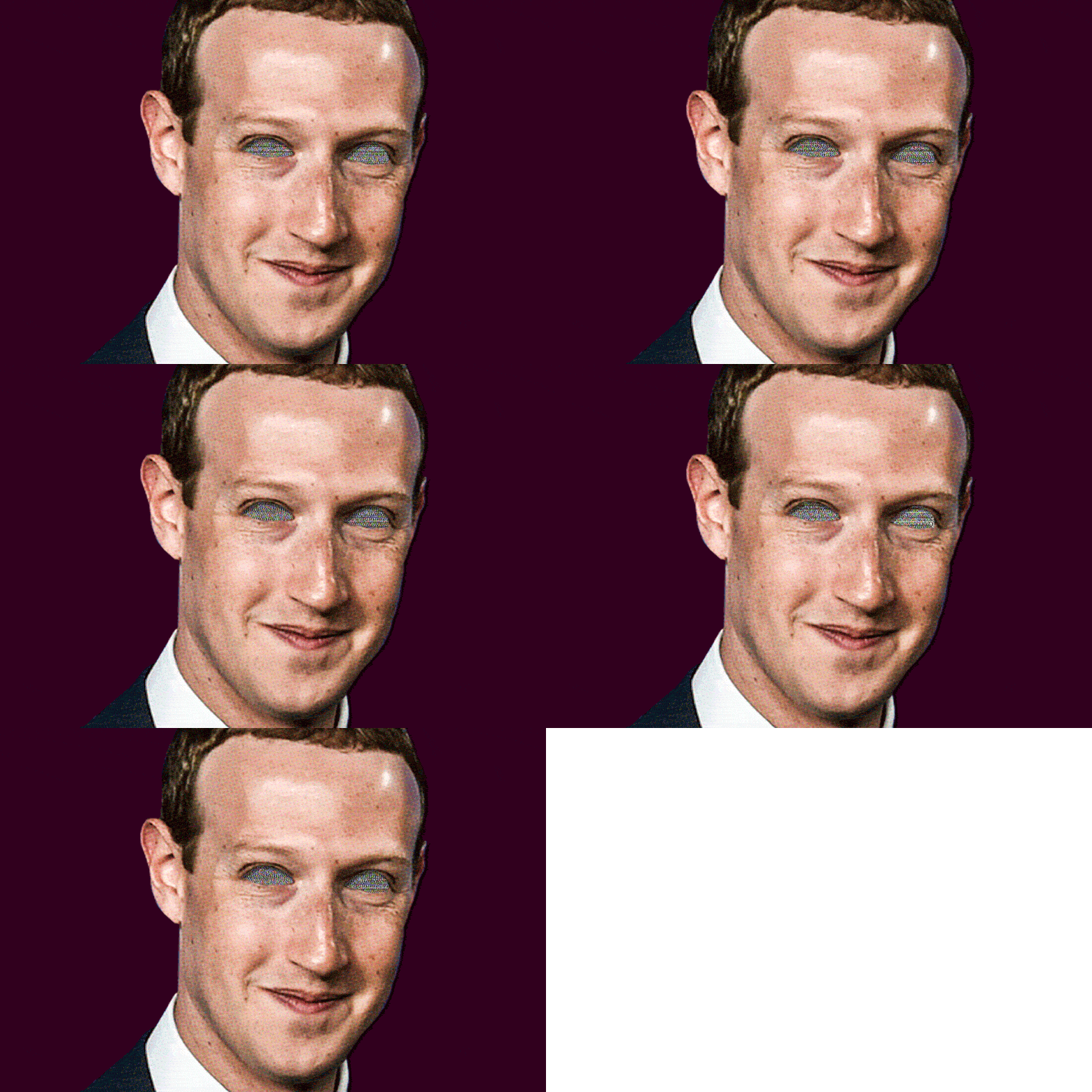
Red Lines (music video about AI safety)
How to tell if an image is AI-generated
Scammers are using AI-generated images to make fake stories more convincing. Here's how to separate real from fake.

AMMeBa: A Large-Scale Survey and Dataset of Media-Based Misinformation In-The-Wild
The prevalence and harms of online misinformation is a perennial concern for internet platforms, institutions and society at large. Over time, information shared online has become more media-heavy and misinformation has readily adapted to these new modalities. The rise of generative AI-based tools, which provide widely-accessible methods for synthesizing realistic audio, images, video and human-like text, have amplified these concerns. Despite intense public interest and significant press coverage, quantitative information on the prevalence and modality of media-based misinformation remains scarce. Here, we present the results of a two-year study using human raters to annotate online media-based misinformation, mostly focusing on images, based on claims assessed in a large sample of publicly-accessible fact checks with the ClaimReview markup. We present an image typology, designed to capture aspects of the image and manipulation relevant to the image's role in the misinformation claim. We visualize the distribution of these types over time. We show the rise of generative AI-based content in misinformation claims, and that its commonality is a relatively recent phenomenon, occurring significantly after heavy press coverage. We also show "simple" methods dominated historically, particularly context manipulations, and continued to hold a majority as of the end of data collection in November 2023. The dataset, Annotated Misinformation, Media-Based (AMMeBa), is publicly-available, and we hope that these data will serve as both a means of evaluating mitigation methods in a realistic setting and as a first-of-its-kind census of the types and modalities of online misinformation.

AMMeBa: A Large-Scale Survey and Dataset of Media-Based Misinformation In-The-Wild
The prevalence and harms of online misinformation is a perennial concern for internet platforms, institutions and society at large. Over time, information shared online has become more media-heavy and misinformation has readily adapted to these new modalities. The rise of generative AI-based tools, which provide widely-accessible methods for synthesizing realistic audio, images, video and human-like text, have amplified these concerns. Despite intense public interest and significant press coverage, quantitative information on the prevalence and modality of media-based misinformation remains scarce. Here, we present the results of a two-year study using human raters to annotate online media-based misinformation, mostly focusing on images, based on claims assessed in a large sample of publicly-accessible fact checks with the ClaimReview markup. We present an image typology, designed to capture aspects of the image and manipulation relevant to the image's role in the misinformation claim. We visualize the distribution of these types over time. We show the rise of generative AI-based content in misinformation claims, and that its commonality is a relatively recent phenomenon, occurring significantly after heavy press coverage. We also show "simple" methods dominated historically, particularly context manipulations, and continued to hold a majority as of the end of data collection in November 2023. The dataset, Annotated Misinformation, Media-Based (AMMeBa), is publicly-available, and we hope that these data will serve as both a means of evaluating mitigation methods in a realistic setting and as a first-of-its-kind census of the types and modalities of online misinformation.
Howtown
RealFactBench: A Benchmark for Evaluating Large Language Models in Real-World Fact-Checking
Large Language Models (LLMs) hold significant potential for advancing fact-checking by leveraging their capabilities in reasoning, evidence retrieval, and explanation generation. However, existing benchmarks fail to comprehensively evaluate LLMs and Multimodal Large Language Models (MLLMs) in realistic misinformation scenarios. To bridge this gap, we introduce RealFactBench, a comprehensive benchmark designed to assess the fact-checking capabilities of LLMs and MLLMs across diverse real-world tasks, including Knowledge Validation, Rumor Detection, and Event Verification. RealFactBench consists of 6K high-quality claims drawn from authoritative sources, encompassing multimodal content and diverse domains. Our evaluation framework further introduces the Unknown Rate (UnR) metric, enabling a more nuanced assessment of models' ability to handle uncertainty and balance between over-conservatism and over-confidence. Extensive experiments on 7 representative LLMs and 4 MLLMs reveal their limitations in real-world fact-checking and offer valuable insights for further research. RealFactBench is publicly available at https://github.com/kalendsyang/RealFactBench.git.
RealFactBench: A Benchmark for Evaluating Large Language Models in Real-World Fact-Checking
Large Language Models (LLMs) hold significant potential for advancing fact-checking by leveraging their capabilities in reasoning, evidence retrieval, and explanation generation. However, existing benchmarks fail to comprehensively evaluate LLMs and Multimodal Large Language Models (MLLMs) in realistic misinformation scenarios. To bridge this gap, we introduce RealFactBench, a comprehensive benchmark designed to assess the fact-checking capabilities of LLMs and MLLMs across diverse real-world tasks, including Knowledge Validation, Rumor Detection, and Event Verification. RealFactBench consists of 6K high-quality claims drawn from authoritative sources, encompassing multimodal content and diverse domains. Our evaluation framework further introduces the Unknown Rate (UnR) metric, enabling a more nuanced assessment of models' ability to handle uncertainty and balance between over-conservatism and over-confidence. Extensive experiments on 7 representative LLMs and 4 MLLMs reveal their limitations in real-world fact-checking and offer valuable insights for further research. RealFactBench is publicly available at https://github.com/kalendsyang/RealFactBench.git.
Apple Reference Image: A New Approach for Verified Photography - Apple Security Research
Introducing Apple Reference Image, a new solution for verifiable photography on iPhone. This new, opt-in camera mode lets a photographer create a securely timestamped reference image that accurately depicts what was captured by the iPhone's camera sensor. Apple Reference Image offers a trustworthy, scalable guarantee that a reference image is what it claims to be: a real photograph, captured by a real sensor in an iPhone camera, at a specific period in time.

DON'T SHARE THIS, IT'S AI FABRICATED It's fake - the media outlet almost certainly used generative AI to write this and it pulled from a "parody" acct (instagram.com/p/DZu8trmR89Y/) The more you share this, the more you help the pro-AI bros say this is all fake youtube.com/live/ho_ZmwgvDdM
DON'T SHARE THIS, IT'S AI FABRICATED It's fake - the media outlet almost certainly used generative AI to write this and it pulled from a "parody" acct (instagram.com/p/DZu8trmR89Y/) The more you share this, the more you help the pro-AI bros say this is all fake youtube.com/live/ho_ZmwgvDdM
