

Is there something it is like to be an AI?
Posted on Wednesday 2 Jul 2025. 1,593 words, 6 links. By Matt Webb.

AI, Ethics, and Society — Home
The Breath of the Author
The palpable presence of someone else's mind in our best writing should give us pause about the encroachment of AI text

My Thoughts on AI, Part 1: Fears, Opinions, and Mental Journey
My own personal thoughts and opinions on AI effects and usage, and how those have evolved over time

AI and the crisis of the author
Editor’s note (September 21, 2026): We have removed this essay. AI was used in its preparation. The TLS editorial guidelines prohibit the use of AI in the
AI Is Not Conscious, But It Is Our Unconscious
The Convivial Society: Vol. 7, No. 4

What the Studies Say About How AI Affects Your Brain: A (Very Big) Compilation
The entire literature clearly points to a single surprising finding
AI: A Guide for Thinking Humans | Melanie Mitchell | Substack
I write about interesting new developments in AI. Click to read AI: A Guide for Thinking Humans, by Melanie Mitchell, a Substack publication with tens of thousands of subscribers.
The Impact of Artificial Intelligence on Human Thought
This research paper examines, from a multidimensional perspective (cognitive, social, ethical, and philosophical), how AI is transforming human thought. It highlights a cognitive offloading effect: the externalization of mental functions to AI can reduce intellectual engagement and weaken critical thinking. On the social level, algorithmic personalization creates filter bubbles that limit the diversity of opinions and can lead to the homogenization of thought and polarization. This research also describes the mechanisms of algorithmic manipulation (exploitation of cognitive biases, automated disinformation, etc.) that amplify AI's power of influence. Finally, the question of potential artificial consciousness is discussed, along with its ethical implications. The report as a whole underscores the risks that AI poses to human intellectual autonomy and creativity, while proposing avenues (education, transparency, governance) to align AI development with the interests of humanity.

Anthropomorphism in AI: hype and fallacy
This essay focuses on anthropomorphism as both a form of hype and fallacy. As a form of hype, anthropomorphism is shown to exaggerate AI capabilities and performance by attributing human-like traits to systems that do not possess them. As a fallacy, anthropomorphism is shown to distort moral judgments about AI, such as those concerning its moral character and status, as well as judgments of responsibility and trust. By focusing on these two dimensions of anthropomorphism in AI, the essay highlights negative ethical consequences of the phenomenon in this field.

Anthropomorphism in AI: hype and fallacy
This essay focuses on anthropomorphism as both a form of hype and fallacy. As a form of hype, anthropomorphism is shown to exaggerate AI capabilities and performance by attributing human-like traits to systems that do not possess them. As a fallacy, anthropomorphism is shown to distort moral judgments about AI, such as those concerning its moral character and status, as well as judgments of responsibility and trust. By focusing on these two dimensions of anthropomorphism in AI, the essay highlights negative ethical consequences of the phenomenon in this field.
Absolutely incredible figure from this journal article arguing that AI should be accepted into the publication and peer review process. #MedSky doi.org/10.1515/cclm-2025-1180
Absolutely incredible figure from this journal article arguing that AI should be accepted into the publication and peer review process. #MedSky doi.org/10.1515/cclm-2025-1180
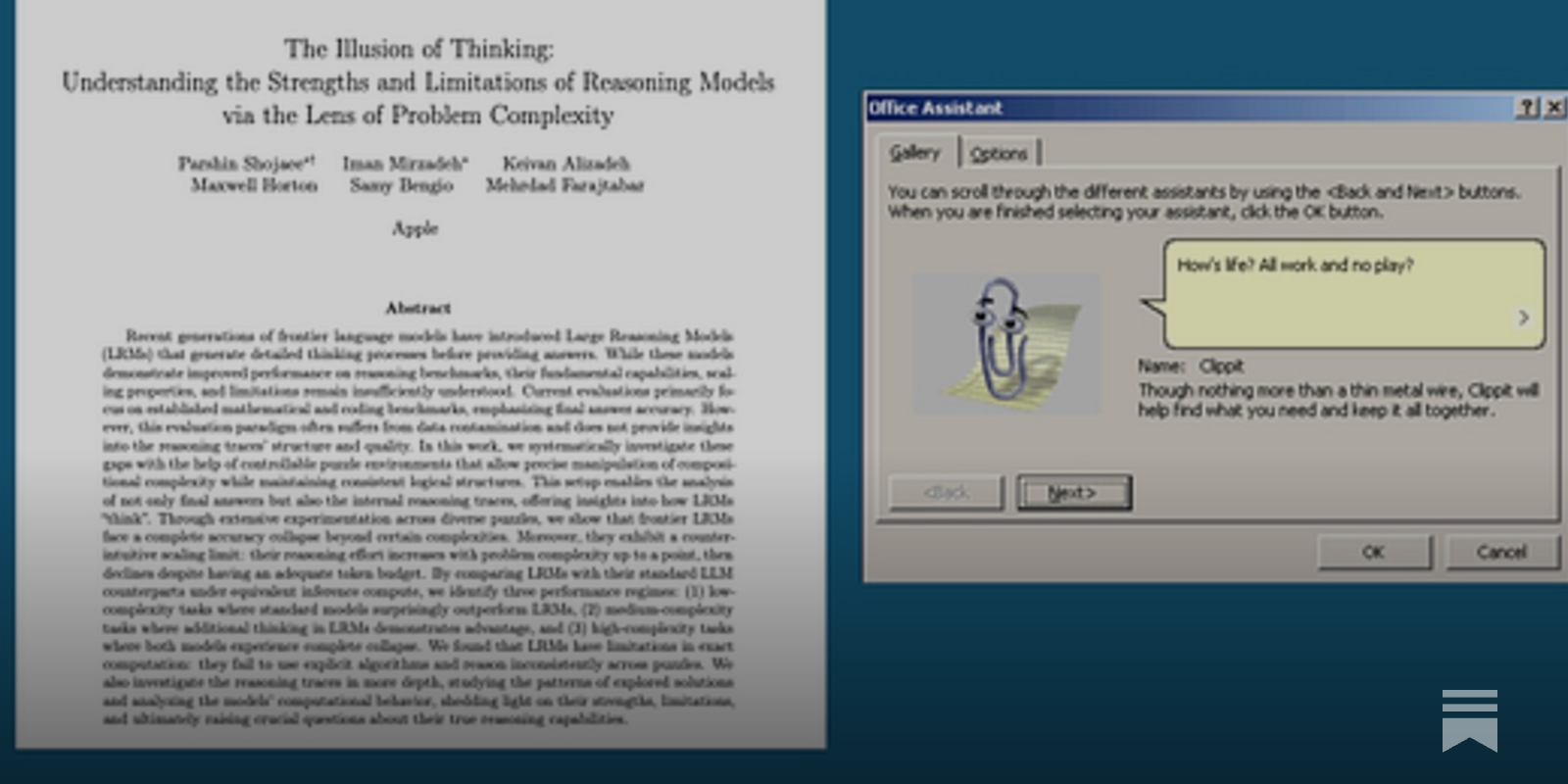
This is a fantastic paper. I just love it. tl;dr AI is not human. Anthropomorphization has been bad for AI, LLMs, and Chat. Clippy walked so today's AI could run.


