

Different environments require different survival strategies
Strategy in Life
What is Strategy? Why is it easy to get wrong and so hard to get right? Strategy Structures in Life Concept-Space Getting from one point to another In a predefined direction Stars as Concept-space analogy By predefined actions Strategy in Life Know your surroundings Creating Strategies Using Strategies Summary Strategy...


Strategy Is a Loop, Not a Plan | Ragan McGill
Most strategies don't fail because they were wrong. They fail because the world moved and the strategy didn't. Here is how I combine John Boyd's OODA loop with Richard Rumelt's strategy kernel to build strategy that keeps learning.

Patterns of Strategy
Patterns of Strategy shows how the strategic fit between organisations drives strategic direction. It is essential reading for those who wish to understand how to manoeuvre their organisation to change its strategic fit to their advantage. The 80 ‘patterns’ of strategy help you explore options for collaboration and competition within your strategic ecosystem. A practical and authoritative guide, you can use it to plan and navigate your strategic future.


Increlution
Survive the ever increasing pressure of time for as long as you can! A minimalistic incremental game about time management that takes inspiration from roguelite games, with a focus on meta-progression. Every generation has a better chance at survival, because previous lives influence its instincts


Home - FLI Worldbuilding Contest
It is frequently practiced by creative writers and scriptwriters, providing the context and backdrop for stories that take place in future, fantasy or alternative realities. Worldbuilding is a tool that can help us explore possible futures for our own world. It helps us better understand what sorts of worlds we may find more or less desirable, and how we might get to there. World builds don’t always have to be grounded in reality, but for our worldbuilding contest we asked contestants to make their imagined worlds plausible and aspirational. To better understand the constraints and ground rules that were used for this contest, visit the Rules page prior to exploring the worlds.
Worlding Raga: 4 - Who Worlds?
So far we’ve been discussing Worlding as an art . One that an individual creator can engage in on their own. As Venkat suggested , we are already living in an…
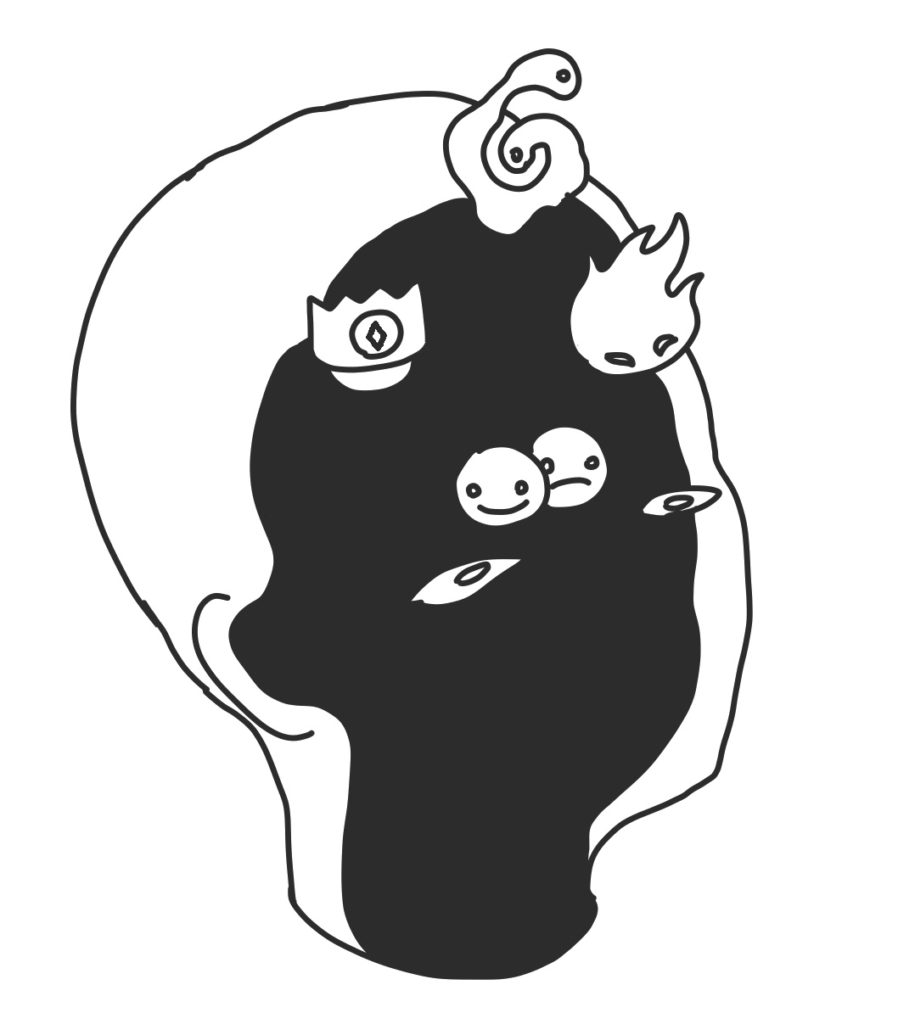
Is open source r-selected?
So there’s this idea from evolutionary ecology called r/K selection theory. The gist is that many species seem to converge toward one of two extreme survival strategies: swarm or tank.

Arcs in Strategy Games
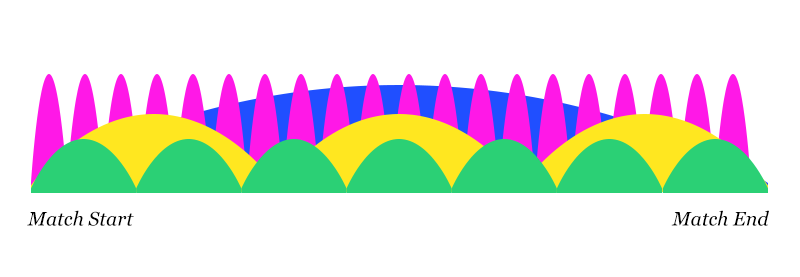
It is common to hear players talk about “tactics” and “strategy” in games. In this case, the colloquial understanding of these terms happens to be pretty useful, in that it …
Many Strategies Fail Because They’re Not Actually Strategies
Many strategy execution processes fail because “new strategies” are often not strategies at all. A real strategy involves a clear set of choices that define what the firm is going to do and what it’s not going to do. Many strategies fail to get implemented because they do not represent such a set of clear choices. And many so-called strategies are in fact goals. “We want to be the number one or number two in all the markets in which we operate” is one of those. It does not tell you what you are going to do; all it does is tell you what you hope the outcome will be. But you’ll still need a strategy to achieve it. Another reason why many implementation efforts fail is that executives see it as a pure top-down, two-step process: “The strategy is made; now we implement it.” That’s unlikely to work. A successful strategy execution process is seldom a one-way trickle-down cascade of decisions.

Lorna Slater delays final biodiversity strategy amid fears over voices being silenced
Lorna Slater has admitted that a key biodiversity strategy has been delayed amid claims interested groups are being “denied the opportunity to…

4-Layers, A Narrative Design Approach
Introduction This blog post will be about a new way to approach narrative design in games - the 4 Layers Approach. It is based on a GDC ...

Critiques of World Models
Specifically, a World Model (WM) is a generative model that simulates the possibilities in diverse scenarios (e.g., physical world, mental world, social world, and evolutionary world). Operationally, a WM takes previous world state s𝑠sitalic_s and action a𝑎aitalic_a, and predicts or simulates the next world state s′superscript𝑠′s^{\prime}italic_s start_POSTSUPERSCRIPT ′ end_POSTSUPERSCRIPT through a transformation function, such as a conditional probability distribution: