

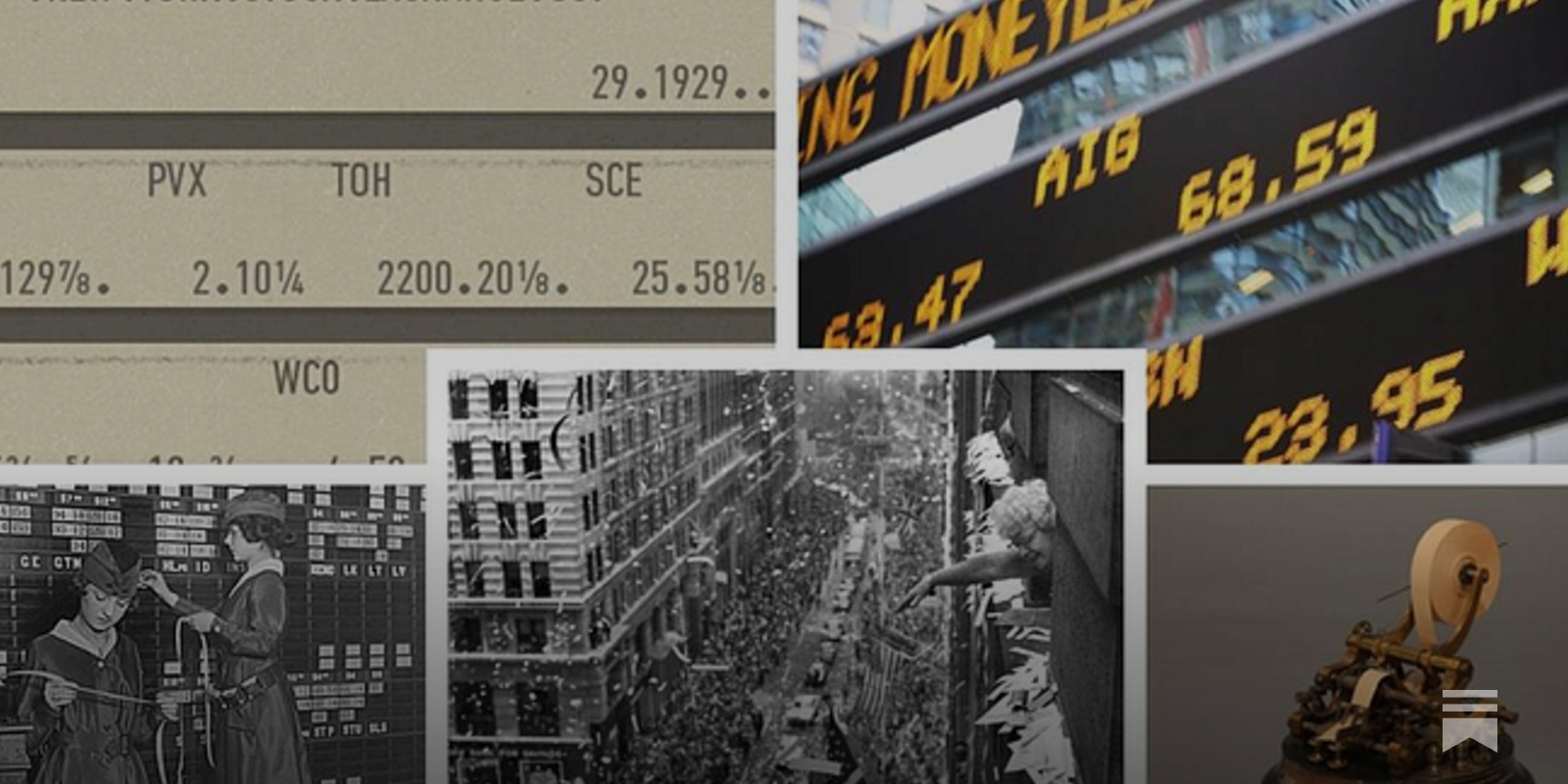
What drives information markets, and why the transformer is unlike the telegraph, ticker, and terminal
Gov (@gov.glados.computer)
↩️ reply to Joe Basser (@joebasser.com): "We have eliminated every single hand-engineered feature and most heuristics from the system. The Grok-based transformer does all the heavy lifting by understanding your engagement history (what you liked, replied to, shared, etc.) and using that to determine what content is relevant to you." damn
BETTER THAN FREE | Edge.org
This super-distribution system has become the foundation of our economy and wealth. The instant reduplication of data, ideas, and media underpins all the major economic sectors in our economy, particularly those involved with exports — that is, those industries where the US has a competitive advantage. Our wealth sits upon a very large device that copies promiscuously and constantly.
Collective Bargaining in the Information Economy Can Address...
This position paper argues that there is an urgent need to restructure markets for the information that goes into AI systems. Specifically, producers of information goods (such as journalists,...

Information and Contract Design for Repeated Interactions between...
We study the consequences of information asymmetries and misaligned incentives in settings with multiple independent agents. We model an interaction between a Sender, who holds vital private...
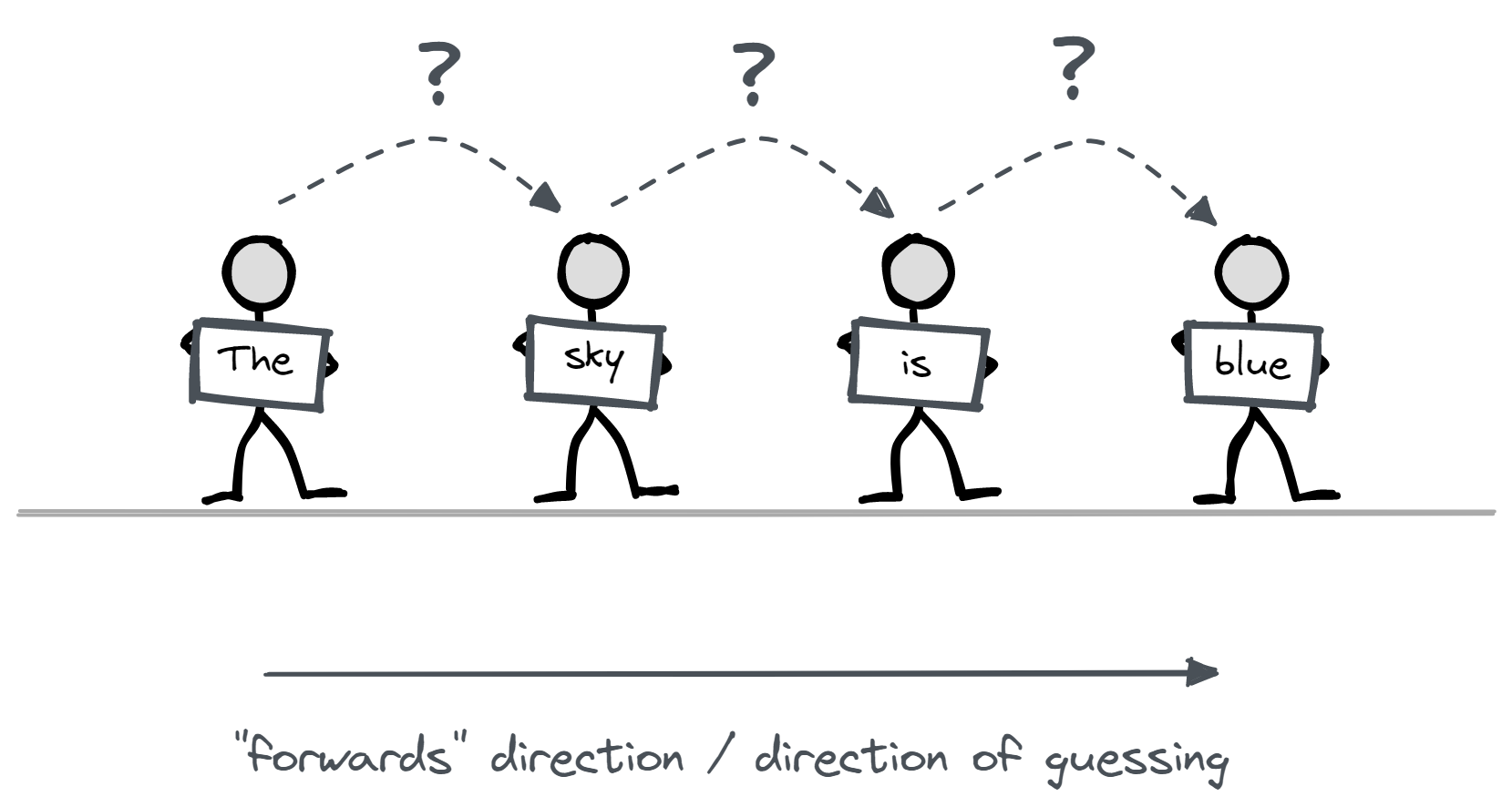
An Analogy for Understanding Transformers — LessWrong
Thanks to the following people for feedback: Tilman Rauker, Curt Tigges, Rudolf Laine, Logan Smith, Arthur Conmy, Joseph Bloom, Rusheb Shah, James Da…
Data Supply Chains
Data is a critical resource. Like oil, gold, or lithium, both companies and countries covet data. Ultimately, like oil, data’s flow can enrich those that posses

The New York Times Responds to Criticism of Anti-Trans Bias by Silencing Its Own Reporters
The Times’s coverage reflects its commitment to a flawed version of objectivity that equates balance with accuracy.
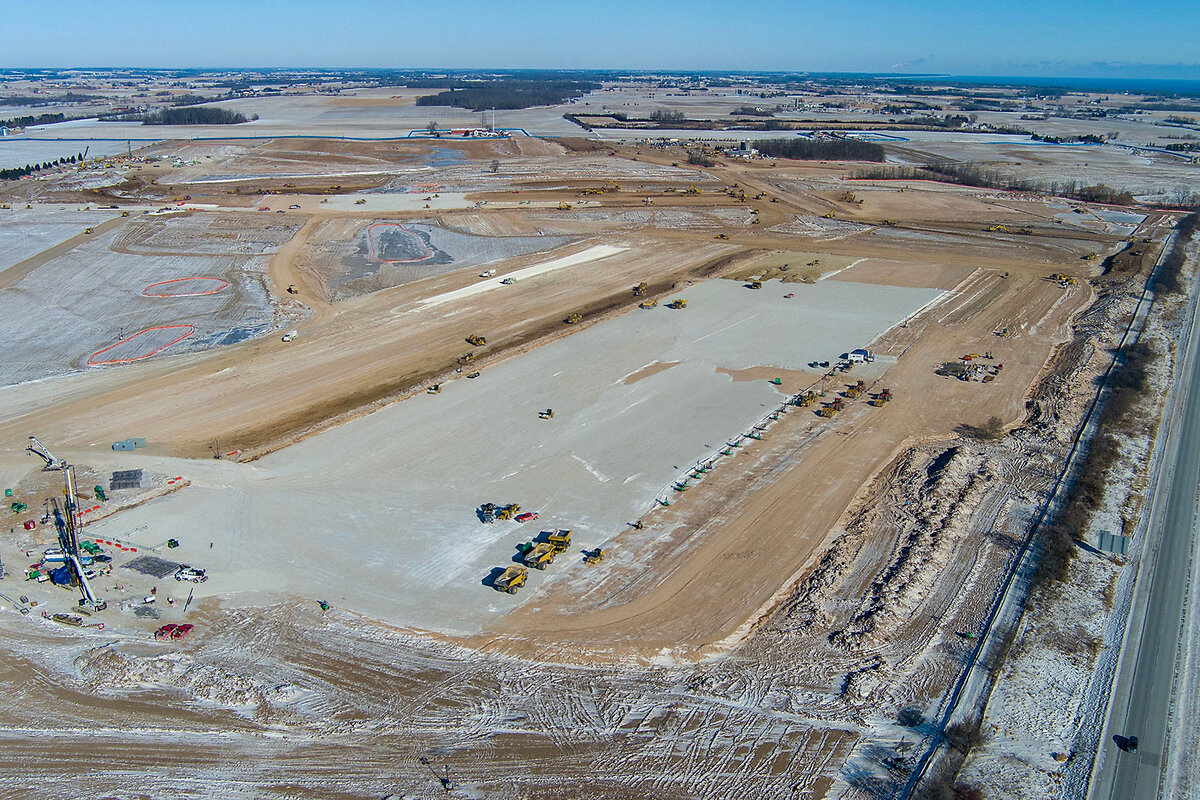
As tech companies race to build data centers, more communities are pushing back
Concerns about electricity bills and local impacts are fueling bipartisan opposition to the massive data centers that power the digital economy, from cloud services to AI chatbots. In Wisconsin, as in other states, the tussles are personal – and fraught.
Redressing the Balance: A Yin-Yang Perspective on Information Technology
Information is an essential aspect of how we interact with the world around us. We acquire information and then integrate it to build knowledge, understanding, and trust, which in turn serve in preparing actions. Information technology (IT) is supposed to support all these phases of information processing. But does it? An assessment of IT through the yin-yang lens from Chinese philosophy shows that over the last decades, support for the yin processes of building knowledge, understanding, and trust has been neglected, the focus of most research and development having been on the yang processes of acting. IT shares this imbalance with other aspects of Western and globalized culture. I discuss possible directions for re-establishing a yin-yang balance in IT, as a small contribution to redressing the balance in the world at large.

Dave Troy on Twitter / X
Fears over datacenters are distorted along a few important axes:1) anxiety over AI, future employment, and control; they symbolize what people fear they are losing,2) compute centralization, which is actually probably not going to actually occur, because of financial…— Dave Troy (@davetroy) August 21, 2026
AI Wants Your Life: Tech Boss Meredith Whittaker Says No | The Mishal Husain Show
Everything is miscellaneous : the power of the new digital disorder
Includes bibliographical references (p. [235]-257) and index; Prologue : information in space -- The new order of order -- Alphabetization and its discontents -- The geography of knowledge -- Lumps and splits -- The laws of the jungle -- Smart leaves -- Social knowing -- What nothing says -- Messiness as a virtue -- The work of knowledge -- Coda : misc; Philosopher Weinberger shows how the digital revolution is radically changing the way we make sense of our lives. Human beings constantly collect, label, and organize data--but today, the shift from the physical to the digital is mixing, burning, and ripping our lives apart. In the past, everything had its one place--the physical world demanded it--but now everything has its places: multiple categories, multiple shelves. Everything is suddenly miscellaneous. Weinberger charts the new principles of digital order that are remaking business, education, politics, science, and culture. He examines how Rand McNally decides what information not to include in a physical map (and why Google Earth is winning that battle), how Staples stores emulate online shopping to increase sales, why your children's teachers will stop having them memorize facts, and how the shift to digital music stands as the model for the future.--From publisher description; From A to Z, Everything Is Miscellaneous will completely reshape the way you think - and what you know - about the world. Includes information on alphabetical order, Amaxon.com, animals, Aristotle, authority, Bettmann Archive, blogs (weblogs), books, broadcasting, British Broadcasting Corporation (BBC), business, card catalog, categories and categorization, clusters, companies, Colon Classification, conversation, Melvil Dewey, Dewey Decimal Classification system, Encyclopaedia Britannica, encyclopedia, essentialism, experts, faceted classification system, first order of order, Flickr.com, Google, Great Books of the Western World, ancient Greeks, health and medical information, identifiers, index, inventory tracking, knowledge, labels, leaf and leaves, libraries, Library of Congress, links, Carolus Linnaeus, lumping and splitting, maps and mapping, marketing, meaning, metadata, multiple listing services (MLS), names of people, neutrality or neutral point of view, New York Public Library, Online Computer Library Center (OCLC), order and organization, people, physical space, everything having place, Plato, race, S.R. Ranganathan, Eleanor Rosch, Joshua Schacter, science, second order of order, simplicity, social constructivism, social knowledge, social networks, sorting, species, standardization, tags, taxonomies, third order of roder, topical categorization, tree, Uniform Product Code (UPC), users, Jimmy Wales, web, Wikipedia, etc

I think the data center backlash is mostly about data centers
It’s probably not your ideological thing, or mine. It’s about object-level claims about how data centers impact the communities where they’re built, many of which are wrong.

I think the data center backlash is mostly about data centers
It’s probably not your ideological thing, or mine. It’s about object-level claims about how data centers impact the communities where they’re built, many of which are wrong.

