Patch the Planet connects security researchers, maintainers, and incident responders to help address critical vulnerabilities across open source.
Patch the Planet: a Daybreak initiative to support open source maintainers
OpenAI introduces Patch the Planet, a Daybreak initiative helping open-source maintainers find, validate, and fix vulnerabilities with AI and expert review.

AI CVE Slop: The Crisis Drowning Open Source Security
The proliferation of AI-generated vulnerability reports — commonly termed “AI slop” — has emerged as one of the most significant…
AI-SLOP: Develop best current practises for Open Source maintainers · Issue #178 · ossf/wg-vulnerability-disclosures
Open source projects are increasingly facing a wave of low-quality, AI-generated vulnerability reports and contributions—commonly referred to as "AI-slop." This issue aims to develop best...
Securing CI/CD in an agentic world: Claude Code Github action case | Microsoft Security Blog
Microsoft Threat Intelligence identified a prompt injection pathway in Claude Code GitHub Action that allowed access to workflow secrets under specific conditions. This research examines the attack chain, responsible disclosure process, Anthropic's mitigation, and guidance for securing AI-powered CI/CD workflows.

OpenAI #16: A History and a Proposal
The real news today is that Anthropic has partnered with the top companies in cybersecurity to try and patch everyone’s systems to fix all the thousands of zero-day exploits found by their new model Claude Mythos.

New AI Flaw Reporting System Fills Crucial Security Gap | CMU Software Engineering Institute
Flaw Reporting for AI (FLARE-AI) allows developers and security researchers to submit artificial intelligence flaws for formal, coordinated disclosure.

NSF investing in secure open-source ecosystems
Open-source software is ubiquitous, supporting artificial intelligence, data science, cloud computing, telecommunications and scientific research tools. Despite these benefits, the number of open-source developers is relatively small, and many projects lack sufficient resources, slowing the pace of innovation and making maintenance difficult. In addition, weaknesses in open-source software, such as security flaws, supply chain risks or insider threats, can spread across many connected systems. In extreme cases, these weaknesses could lead to large-scale failures that affect national or global systems.

Under the hood: Security architecture of GitHub Agentic Workflows
Learn how our threat model and security architecture help teams run agents safely in GitHub Actions.

A quote from Daniel Stenberg
The challenge with AI in open source security has transitioned from an AI slop tsunami into more of a ... plain security report tsunami. Less slop but lots of reports. …
OpenSourceMalware.com - Community Threat Intelligence
Community-driven threat intelligence. Human-verified supply chain threats from every major open source ecosystem.
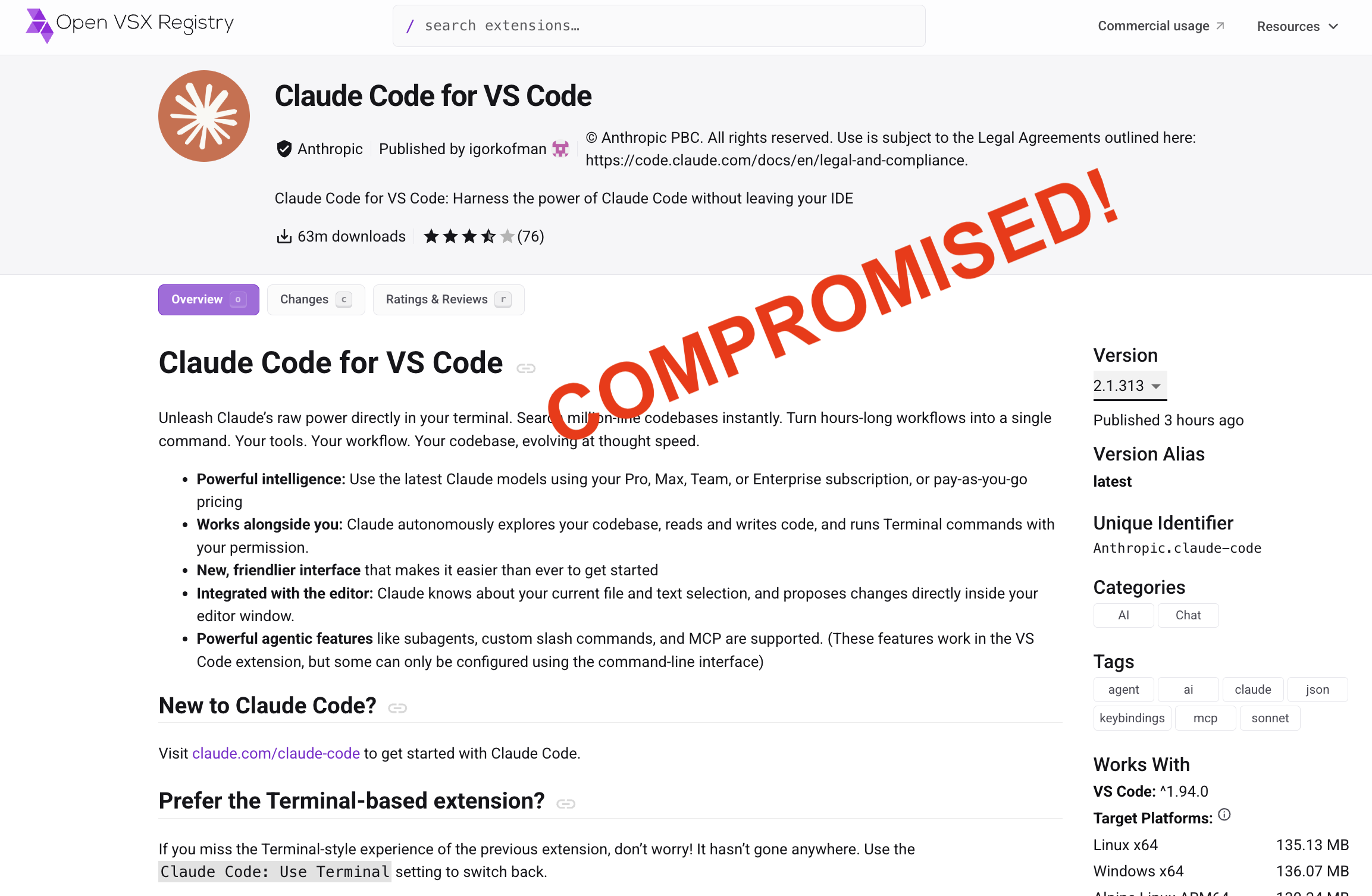
Top AI Security Incidents of 2025 Revealed | Adversa AI
Discover how AI systems are being hacked in the wild — from prompt injection to agent abuse — with real breaches, lessons, and defenses in Adversa AI’s 2025 report.

OpenAI launches new initiative to help find and patch open source bugs | TechCrunch
OpenAI is using AI to help the open source community better protect itself.

Agents Done Right: A Framework Vision for 2026
Agents choke on context, loop on failures, and dump walls of code for review. It's time to rethink the architecture.
Pwning Agentic AI Part I: Your AI Agent Is Already Compromised | TrendAI (US)
Organizations are rapidly connecting AI agents to their databases, document pipelines, and internal tools, creating privileged components that read untrusted input as part of their job. TrendAI™ Research examines how attackers turn these agents against you through return-to-tool (RTT) exploits, and what this means for the future of agentic AI security.

AI, open code and vulnerability risk in the public sector
Guidance for safely publishing source code in the open, and reducing the risk of AI-accelerated vulnerability discovery.

Path to Astra: critical capabilities and frontier safeguards
Astra is the first OpenAI model to meet the Critical cybersecurity capability threshold under the Preparedness Framework, with stronger safeguards for release.