

A technical deep dive into the Codex agent loop, explaining how Codex CLI orchestrates models, tools, prompts, and performance using the Responses API.
Harness engineering: leveraging Codex in an agent-first world
By Ryan Lopopolo, Member of the Technical Staff
Harness engineering: leveraging Codex in an agent-first world
By Ryan Lopopolo, Member of the Technical Staff
Codex for every role, tool, and workflow
Discover new Codex plugins, sites, and annotations that help analysts, marketers, designers, investors, and other teams get more done with AI.
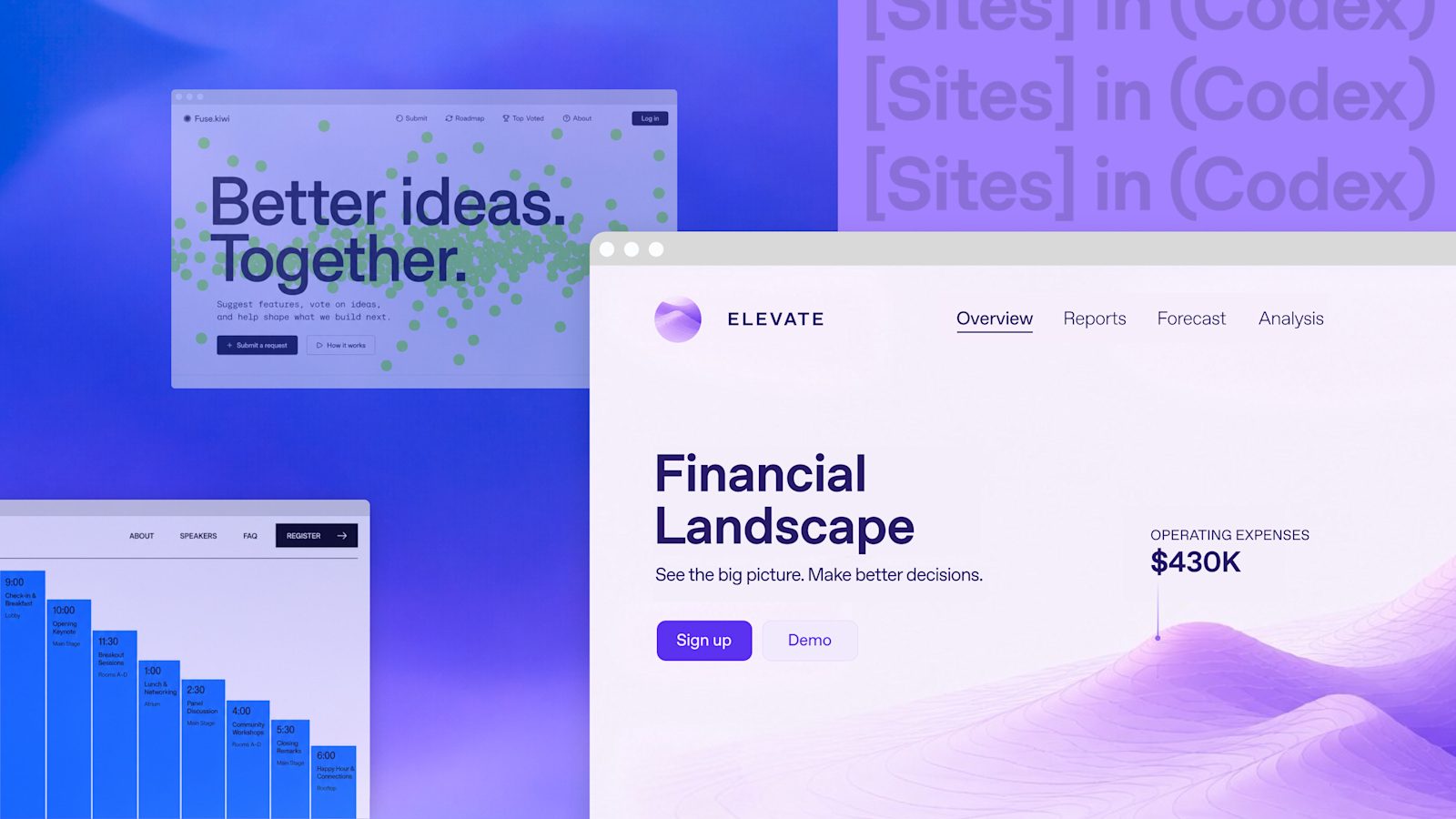
Introducing the Codex app
Introducing the Codex app for macOS—a command center for AI coding and software development with multiple agents, parallel workflows, and long-running tasks.

Codex | AI Coding Partner from OpenAI
The best way to build with agents. Codex accelerates real engineering work, from planning and building features to refactors, reviews, and releases—working seamlessly across your tools.
Tool use with Claude
Connect Claude to external tools and APIs. Learn where tools execute and how the agentic loop works.
Codex Security: now in research preview
Codex Security is an AI application security agent that analyzes project context to detect, validate, and patch complex vulnerabilities with higher confidence and less noise.
Exclusive: Codex agents are inching into the mainstream
OpenAI's agentic coding and work platform is growing, according to a new report from the company.

Agents Done Right: A Framework Vision for 2026
Agents choke on context, loop on failures, and dump walls of code for review. It's time to rethink the architecture.
Joshua Gu on Twitter / X
Recent agentic systems (Claude Code, Codex, RLM, etc.) push context out of the prompt and into the environment (e.g., as files). This helps them maintain long-term knowledge about their goals and functionality.🚨 While this is a good idea, we show a surprising result: systems… pic.twitter.com/XHFVaDcr4l— Joshua Gu (@astrogu_) May 20, 2026

Peter Steinberger 🦞 on Twitter / X
Here’s your monthly reminder that you shouldn’t be prompting coding agents anymore.You should be designing loops that prompt your agents.— Peter Steinberger 🦞 (@steipete) June 7, 2026
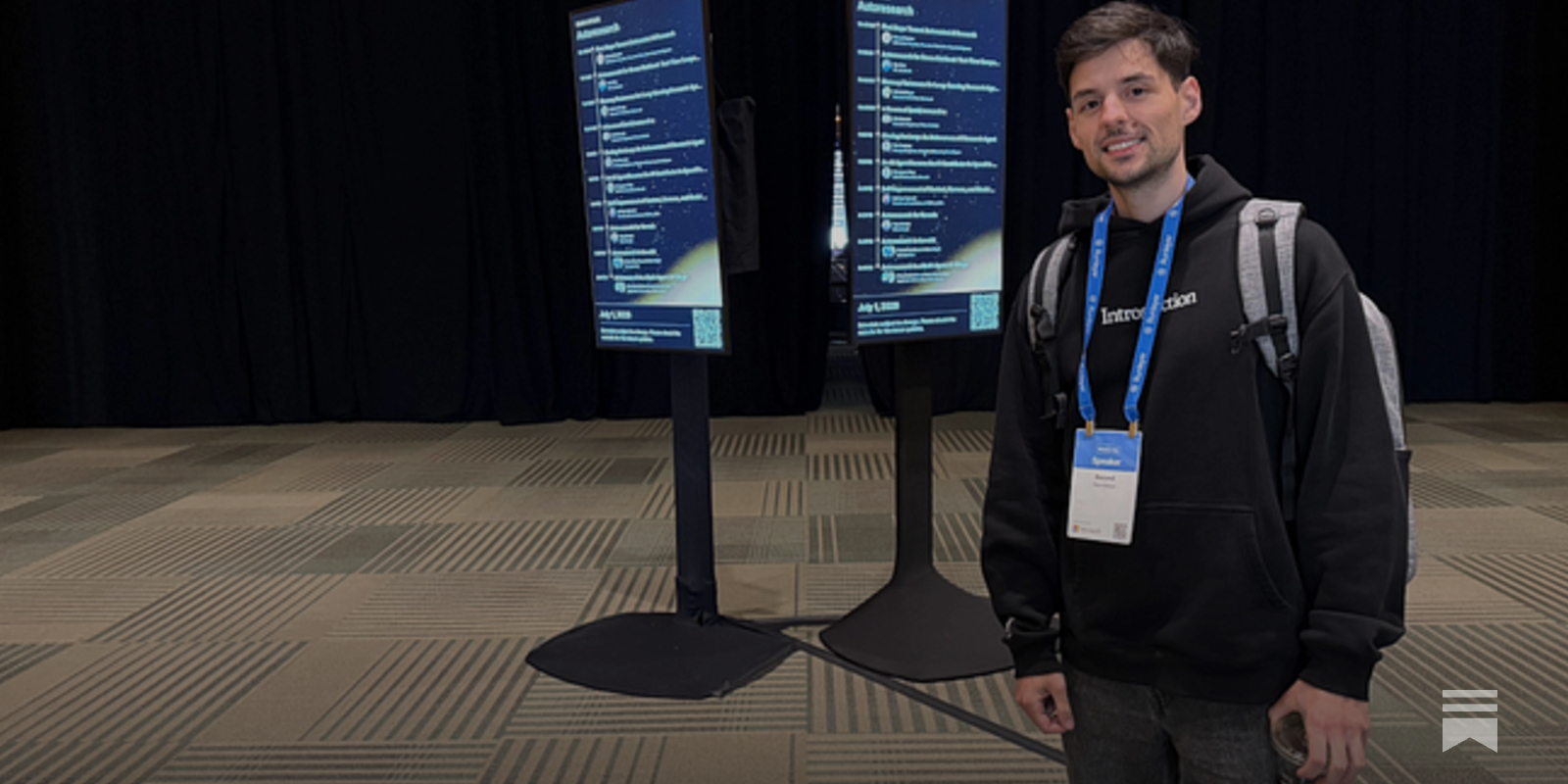
Autoresearch: The feedback loop behind self-improving agents
Introspection co-founder Roland Gavrilescu explains autoresearch, agent “recipes,” self-improving loops, and why humans remain central to the software factory.
Localforge – Free Local GUI for Codex AI & Any LLM | Localforge
Localforge is a free local GUI for Codex AI, Claude and any LLM. Run autonomous agent loops on your codebase, offline and MIT-licensed.
Dive into Claude Code: The Design Space of Today's and Future AI Agent Systems
Claude Code is an agentic coding tool that can run shell commands, edit files, and call external services on behalf of the user. This study describes its comprehensive architecture by analyzing the publicly available TypeScript source code and further comparing it with OpenClaw, an independent open-source AI agent system that answers many of the same design questions from a different deployment context. Our analysis identifies five human values, philosophies, and needs that motivate the architecture (human decision authority, safety and security, reliable execution, capability amplification, and contextual adaptability) and traces them through thirteen design principles to specific implementation choices. The core of the system is a simple while-loop that calls the model, runs tools, and repeats. Most of the code, however, lives in the systems around this loop: a permission system with seven modes and an ML-based classifier, a five-layer compaction pipeline for context management, four extensibility mechanisms (MCP, plugins, skills, and hooks), a subagent delegation mechanism with worktree isolation, and append-oriented session storage. A comparison with OpenClaw, a multi-channel personal assistant gateway, shows that the same recurring design questions produce different architectural answers when the deployment context changes: from per-action safety classification to perimeter-level access control, from a single CLI loop to an embedded runtime within a gateway control plane, and from context-window extensions to gateway-wide capability registration. We finally identify six open design directions for future agent systems, grounded in recent empirical, architectural, and policy literature.

SWE-Bench Pro: Can AI Agents Solve Long-Horizon Software Engineering Tasks?
Large Language Model (LLM) agents have been widely adopted in modern software development workflows. SWE-bench [13] and related works [23, 24, 22, 25, 15] establish the task of issue resolution as a de-facto standard for assessing their capability and usefulness. In this setting, an agent is given an entire codebase, a task description (e.g., a bug report or feature request) in natural language and is instructed to produce a code patch that resolves the issue and passes the repository’s test suite. These benchmarks have been instrumental in demonstrating both the substantial potential and the persistent limitations of current models as SWE agents.