


We’ve created GPT-4, the latest milestone in OpenAI’s effort in scaling up deep learning. GPT-4 is a large multimodal model (accepting image and text inputs, emitting text outputs) that, while less capable than humans in many real-world scenarios, exhibits human-level performance on various professional and academic benchmarks.
GLaM: Efficient Scaling of Language Models with Mixture-of-Experts
Scaling language models with more data, compute and parameters has driven significant progress in natural language processing. For example, thanks to scaling, GPT-3 was able to achieve strong results on in-context learning tasks. However, training these large dense models requires significant amounts of computing resources. In this paper, we propose and develop a family of language models named GLaM (Generalist Language Model), which uses a sparsely activated mixture-of-experts architecture to scale the model capacity while also incurring substantially less training cost compared to dense variants. The largest GLaM has 1.2 trillion parameters, which is approximately 7x larger than GPT-3. It consumes only 1/3 of the energy used to train GPT-3 and requires half of the computation flops for inference, while still achieving better overall zero-shot and one-shot performance across 29 NLP tasks.

Introducing GPT-5.4
Introducing GPT-5.4, OpenAI’s most most capable and efficient frontier model for professional work, with state-of-the-art coding, computer use, tool search, and 1M-token context.
karpathy/minGPT
A minimal PyTorch re-implementation of the OpenAI GPT (Generative Pretrained Transformer) training
Georgi Gerganov on Twitter / X
gpt-oss is a great modelIMO OpenAI showed us the blueprint for winning local AI:- Interleaved SWA- Small head sizes in the attention- Attention sinks- Mixture of Experts FFN- 4-bit trainingAll of these parts combined together result in the best architecture suitable for…— Georgi Gerganov (@ggerganov) August 28, 2025
Accelerating GPT-5.6 Sol Ultrafast with OpenAI
Cerebras powers OpenAI’s GPT-5.6 Sol Ultrafast in the OpenAI API, delivering frontier intelligence at real-time speeds for critical AI work.
The Curse of Recursion: Training on Generated Data Makes Models Forget
Stable Diffusion revolutionised image creation from descriptive text. GPT-2, GPT-3(.5) and GPT-4 demonstrated astonishing performance across a variety of language tasks. ChatGPT introduced such...
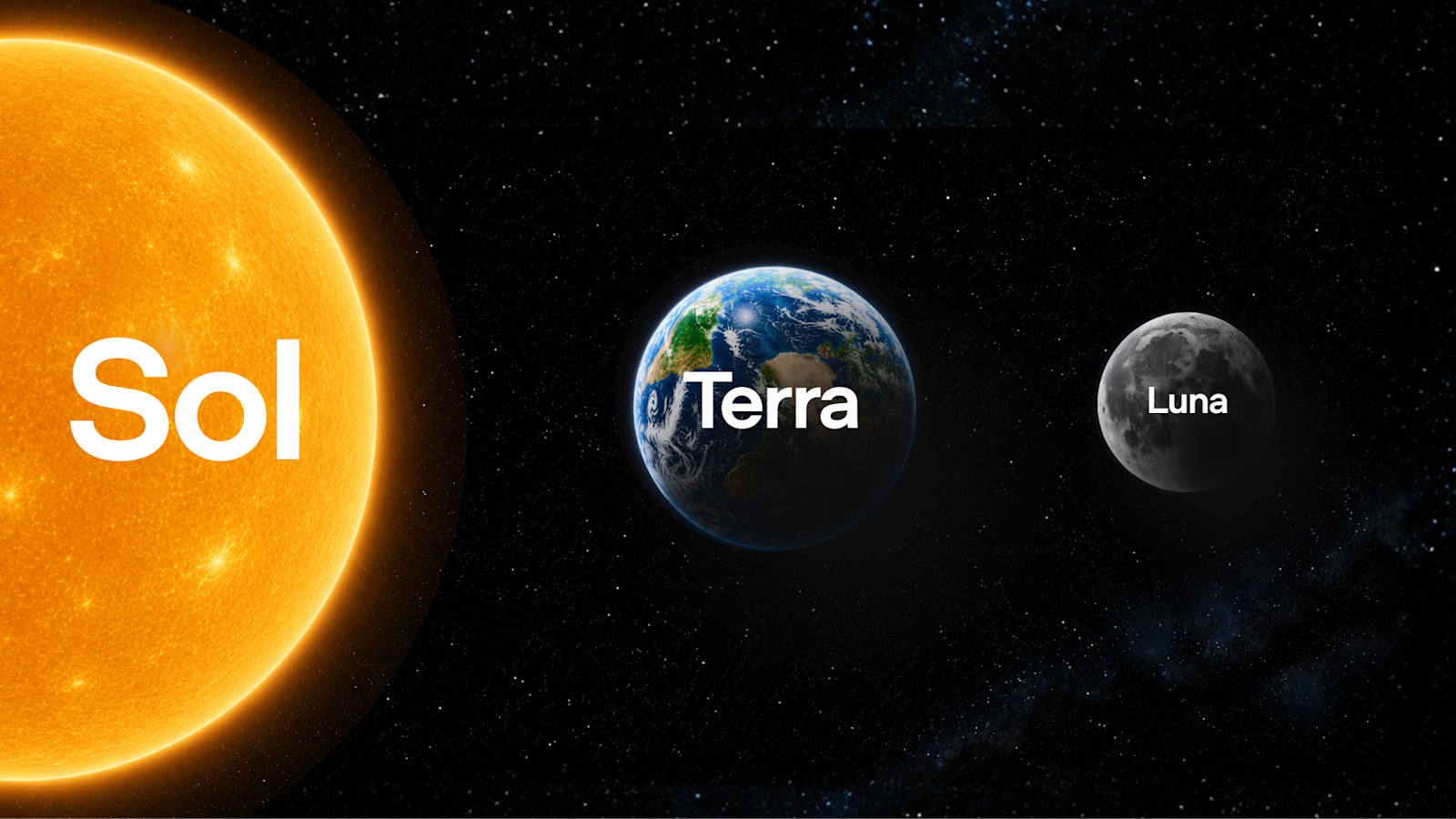
Previewing GPT-5.6 Sol: a next-generation model
OpenAI previews GPT-5.6 Sol, a next-generation model with stronger capabilities in coding, science, and cybersecurity, paired with its most advanced safety stack.
GPT-4.1: Three new million token input models from OpenAI, including their cheapest model yet
OpenAI introduced three new models this morning: GPT-4.1, GPT-4.1 mini and GPT-4.1 nano. These are API-only models right now, not available through the ChatGPT interface (though you can try them …

ImageNet Classification with Deep Convolutional Neural Networks
We trained a large, deep convolutional neural network to classify the 1.3 million high-resolution images in the LSVRC-2010 ImageNet training set into the 1000 different classes. On the test data, we achieved top-1 and top-5 error rates of 39.7\% and 18.9\% which is considerably better than the previous state-of-the-art results. The neural network, which has 60 million parameters and 500,000 neurons, consists of five convolutional layers, some of which are followed by max-pooling layers, and two globally connected layers with a final 1000-way softmax. To make training faster, we used non-saturating neurons and a very efficient GPU implementation of convolutional nets. To reduce overfitting in the globally connected layers we employed a new regularization method that proved to be very effective.
DeepSeek-V3 Technical Report
We present DeepSeek-V3, a strong Mixture-of-Experts (MoE) language model with 671B total parameters with 37B activated for each token. To achieve efficient inference and cost-effective training, DeepSeek-V3 adopts Multi-head Latent Attention (MLA) and DeepSeekMoE architectures, which were thoroughly validated in DeepSeek-V2. Furthermore, DeepSeek-V3 pioneers an auxiliary-loss-free strategy for load balancing and sets a multi-token prediction training objective for stronger performance. We pre-train DeepSeek-V3 on 14.8 trillion diverse and high-quality tokens, followed by Supervised Fine-Tuning and Reinforcement Learning stages to fully harness its capabilities. Comprehensive evaluations reveal that DeepSeek-V3 outperforms other open-source models and achieves performance comparable to leading closed-source models. Despite its excellent performance, DeepSeek-V3 requires only 2.788M H800 GPU hours for its full training. In addition, its training process is remarkably stable. Throughout the entire training process, we did not experience any irrecoverable loss spikes or perform any rollbacks. The model checkpoints are available at https://github.com/deepseek-ai/DeepSeek-V3.
gpt-oss:120b
OpenAI’s open-weight models designed for powerful reasoning, agentic tasks, and versatile developer use cases.
ChatGPT Images 2.0 is a breakthrough that could fundamentally reshape graphic generation
OpenAI is adding reasoning and web search to its ChatGPT Images 2.0 image generator. The model can now create up to eight consistent images from a single prompt and handles text in general, and especially in non-Latin scripts, significantly better.

Modern GPU Programming For MLSys — Modern GPU Programming For MLSys
Machine learning systems sit at the heart of modern AI workloads. In these systems, performance often comes down to the quality of a small number of GPU kernels. Attention kernels, LLM prefill and decode kernels, low-precision block-scaled GEMMs, fused MoE layers, and other large fused kernels all directly shape end-to-end speed in both training and serving.
Modern GPU Programming For MLSys — Modern GPU Programming For MLSys
Machine learning systems sit at the heart of modern AI workloads. In these systems, performance often comes down to the quality of a small number of GPU kernels. Attention kernels, LLM prefill and decode kernels, low-precision block-scaled GEMMs, fused MoE layers, and other large fused kernels all directly shape end-to-end speed in both training and serving.
Building with Open Models