We’re excited to share more about our progress post-training our mixture of experts models. Our latest milestone is the release of Marin 67B-A2B “Snowball” v0.1, a mixture of experts model trained...
Winterbot9000: Replacing legendary Dota draft analyst with artificial intelligence
Winter is, in my opinion, the most impressive analyst when it comes to drafting predictions, and anticipating what hero teams are planning…

Post-Training 50x Faster
We're announcing Trellis, the fastest open-source post-training code for Kimi K2 Thinking

Inkling: Our Open-Weights Model
Our first open-weights model: multimodal, Mixture-of-Experts, with controllable reasoning effort. Available to fine-tune on Tinker.

OpenThoughts: Data Recipes for Reasoning Models — Ryan Marten, Bespoke Labs
Georgi Gerganov on Twitter / X
gpt-oss is a great modelIMO OpenAI showed us the blueprint for winning local AI:- Interleaved SWA- Small head sizes in the attention- Attention sinks- Mixture of Experts FFN- 4-bit trainingAll of these parts combined together result in the best architecture suitable for…— Georgi Gerganov (@ggerganov) August 28, 2025
There is no posttraining data commons
The LLM revolution ran on a pretraining commons that humanity built for other reasons. Posttraining consumes tasks, not documents, and no such commons exists. If the open models community wants...
Position: Don't Just "Fix it in Post": A Science of AI Must Study Training Dynamics
What would it mean to have a scientific understanding of AI? Models are not static objects: they are snapshots of time-evolving processes shaped by data, objectives, architectures, and optimization dynamics. Yet much of AI research treats models as fixed artifacts, analyzing behaviors after training rather than asking why they emerge. This position paper argues that a science of AI must move beyond post-hoc fixes and study the training dynamics that produce model behavior. Such a science should support progressively stronger forms of understanding: predicting outcomes from early training signals, intervening when trajectories go wrong, and ultimately designing training procedures that more reliably produce desired properties. Scaling laws have made prediction routine for loss; the challenge is extending this success to capabilities, biases, robustness, and safety-relevant behaviors. We articulate requirements for such theories grounded in the history and philosophy of science, examine progress in mechanistic interpretability, fairness, memorization, and simplicity bias, and identify concrete open problems.

Frontier Pre-training at Microsoft AI | Microsoft AI
In June, we announced MAI-Thinking-1, a general-purpose foundation model post-trained on top of MAI-Base-1 with strong reasoning performance. We’ve recently completed pre-training our new state-of-the-art model, MAI-Base-2, an MoE foundation model with 80 billion active and 2.8 trillion total parameters.
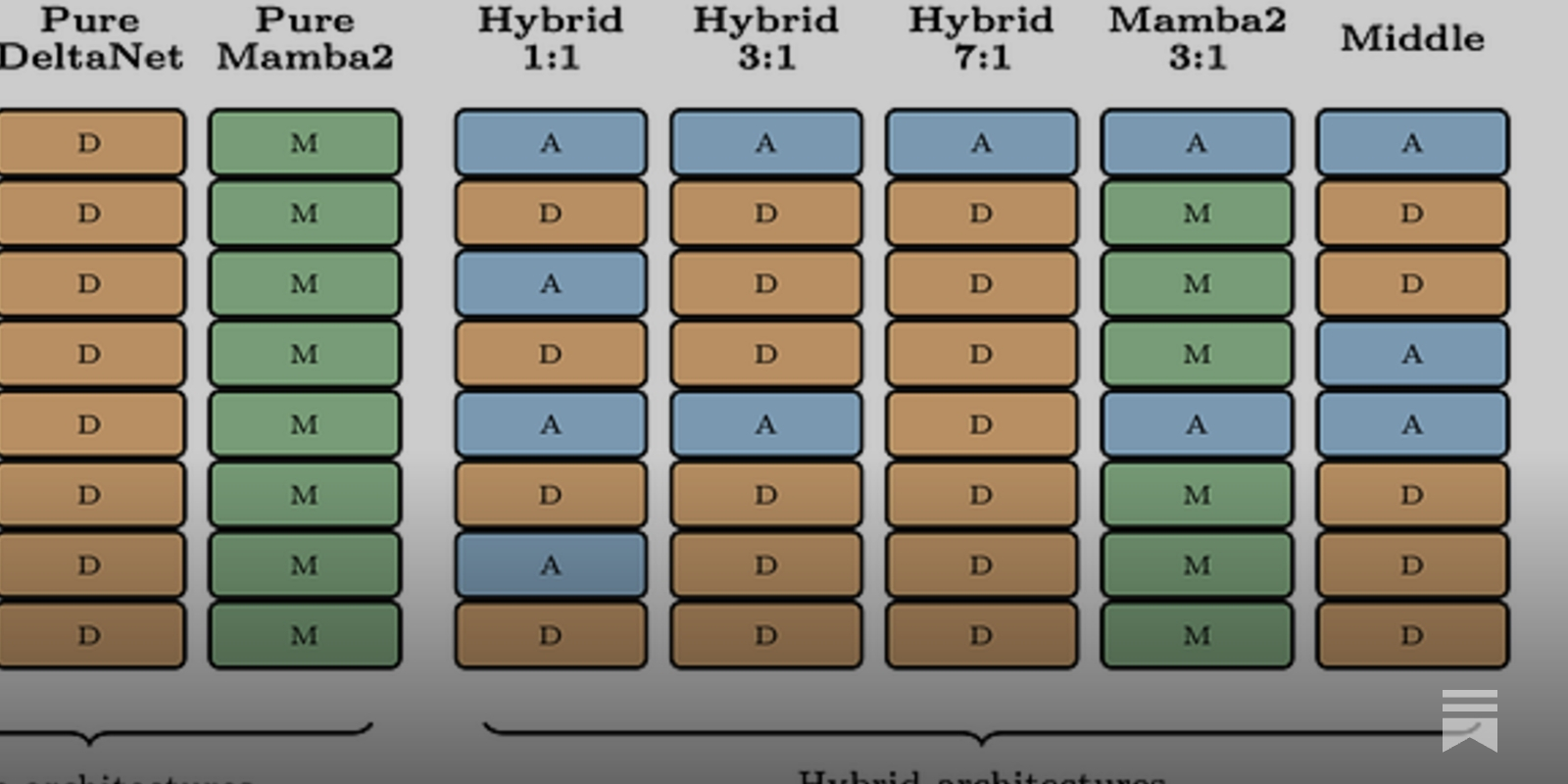
Olmo Hybrid and future LLM architectures
The latest Olmo model and discussions at the frontier of open-source post training tools.
Latest open artifacts (#23): Laguna S2.1, Inkling, & Kimi K3 show the utility of open models on the Pareto frontier
Capacity to train strong models is proliferating.

SkillOpt: Executive Strategy for Self-Evolving Agent Skills
View recent discussion. Abstract: Agent skills today are hand-crafted, generated one-shot, or evolved through loosely controlled self-revision, none of which behaves like a deep-learning optimizer for the skill, and none of which reliably improves over its starting point under feedback. We argue the skill should instead be trained as the external state of a frozen agent, with the same discipline that makes weight-space optimization reproducible. SkillOpt is, to our knowledge, the first systematic controllable text-space optimizer for agent skills: a separate optimizer model turns scored rollouts into bounded add/delete/replace edits on a single skill document, and an edit is accepted only when it strictly improves a held-out validation score. A textual learning-rate budget, rejected-edit buffer, and epoch-wise slow/meta update make skill training stable while adding zero inference-time model calls at deployment. Across six benchmarks, seven target models, and three execution harnesses (direct chat, Codex, Claude Code), SkillOpt is best or tied on all 52 evaluated (model, benchmark, harness) cells and beats every per-cell competitor among human, one-shot LLM, Trace2Skill, TextGrad, GEPA, and EvoSkill skills. On GPT-5.5 it lifts the average no-skill accuracy by +23.5 points in direct chat, by +24.8 inside the Codex agentic loop, and by +19.1 inside Claude Code. Transfer experiments further show that optimized skill artifacts retain value when moved across model scales, between Codex and Claude Code execution environments, and to a nearby math benchmark without further optimization. Code: this https URL
General 2 — Fairly Trained
These are the companies and models that we’ve certified so far. We encourage you to choose them when considering generative AI providers.

DR Tulu: An open, end-to-end training recipe for long-form deep research | Ai2
We introduce Deep Research Tulu (DR Tulu), an open post-training recipe and framework for long-form deep research agents.

Securing our frontier model training environment
OpenAI explains how we strengthened containment for frontier model training and evaluation, including offline environments and high-compute red-teaming.