

OpenForum Europe and Fraunhofer ISI conducted a study on the impact of Open Source Software and Hardware on technological independence, competitiveness and
Study about the impact of open source software and hardware on technological independence, competitiveness and innovation in the EU economy
This study aims to investigate the economic impact of Open Source Software and Hardware on the EU economy.

The emerging economic paradigm of Open Source
The following commentary is part of First Monday's Special Issue #2: Open Source. Open Source developers have, perhaps without conscious intent, created a new and surprisingly successful economic paradigm for the production of software. Examining that paradigm can answer a number of important questions. It's not immediately obvious how Open Source [1] works economically. Probably the worst consequence of this lack of understanding is that many people don't understand how Open Source could be economically sustainable, and some may even feel that its potential negative effect upon the proprietary software industry is an overall economic detriment. Fortunately, if you look more deeply into the economic function of software in general, it's easy to establish that Open Source is both sustainable and of tremendous benefit to the overall economy. Open Source can be explained entirely within the context of conventional open-market economics. Indeed, it turns out that it has much stronger ties to the phenomenon of capitalism than you may have appreciated.
How open-source software took over the world | TechCrunch
It was just five years ago that there was an ample dose of skepticism from investors about the viability of open source as a business model. Fast-forward to today and we’ve witnessed the growing excitement in the space.
The Rise of Open Source Software in Europe
We are seeing a significant change in the global business landscape, and attention within technology circles has focused on verticals where adoption levels have been surging over the past few months, in areas such as e-commerce, logistics, digital payments, telehealth, or tools enabling remote worki

Roadmap: Open Source
After years of investing in open source software, we’re releasing our thinking on what positions these companies as emerging technology giants.
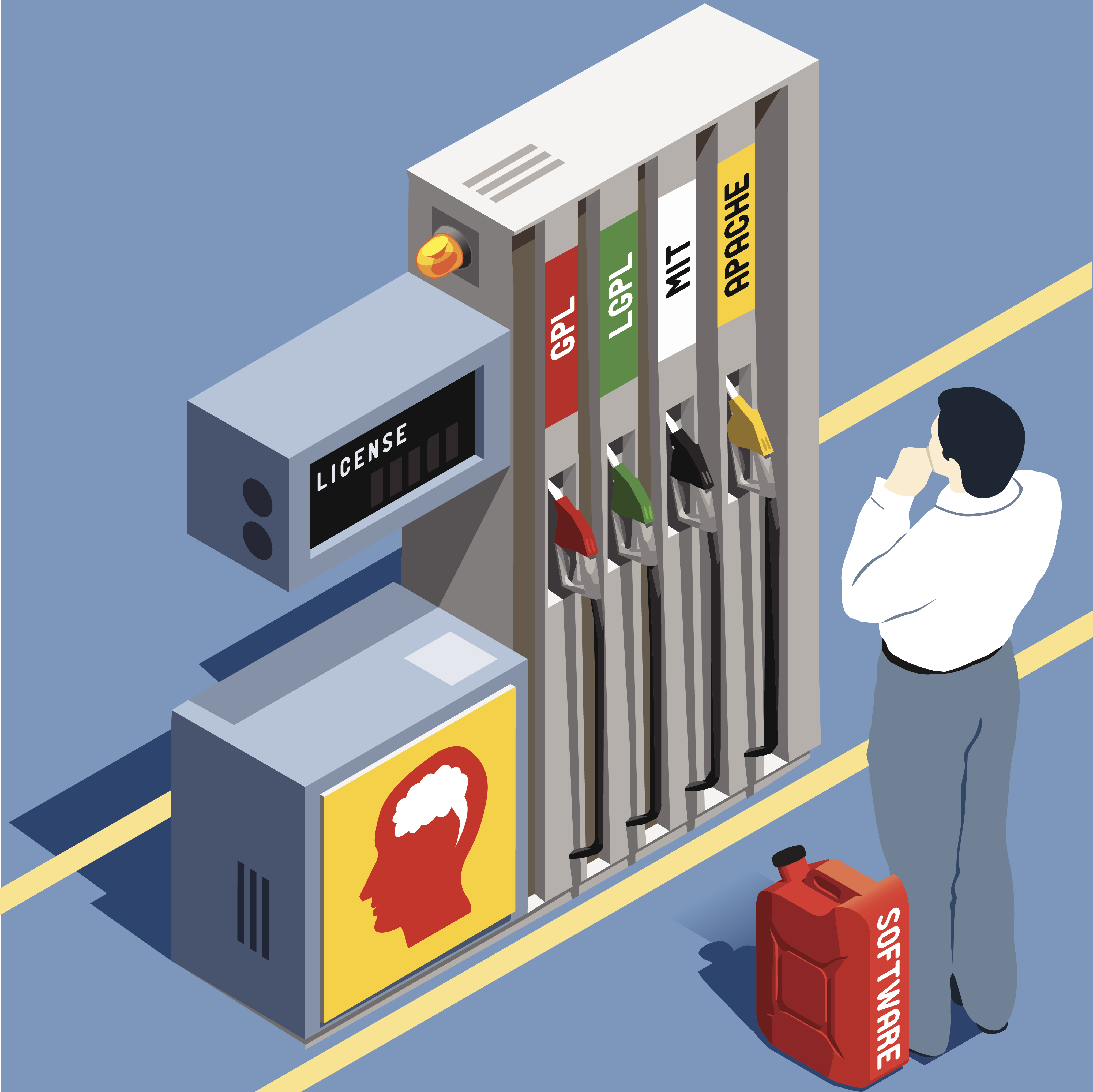
Why Open Source Software / Free Software (OSS/FS, FOSS, or FLOSS)? Look at the Numbers!
This paper provides quantitative data that, in many cases, open source software / free software is equal to or superior to their proprietary competition. The paper examines market share, reliability, performance, scalability, scaleability, security, and total cost of ownership; it also comments on non-quantitative issues and unnecessary fears.
A Replication Study on Measuring the Growth of Open Source
Context: Over the last decades, open-source software has pervaded the software industry and has become one of the key pillars in software engineering. The incomparable growth of open source reflected that pervasion: Prior work described open source as a whole to be growing linearly, polynomially, or even exponentially. Objective: In this study, we explore the long-term growth of open source and corroborating previous findings by replicating previous studies on measuring the growth of open source projects. Method: We replicate four existing measurements on the growth of open source on a sample of 172,833 open-source projects using Open Hub as the measurement system: We analyzed lines of code, commits, new projects, and the number of open-source contributors over the last 30 years in the known open-source universe. Results: We found growth of open source to be exhausted: After an initial exponential growth, all measurements show a monotonic downwards trend since its peak in 2013. None of the existing growth models could stand the test of time. Conclusion: Our results raise more questions on the growth of open source and the representativeness of Open Hub as a proxy for describing open source. We discuss multiple interpretations for our observations and encourage further research using alternative data sets.

Open source sustainability
While only twenty years ago open-source software was simply a curiosity that attracted the attention of a few academics and was not seriously considered in the software industry, open-source infrastructure today is ubiquitous, powering applications in virtually every domain.
Reframing “Open Source AI” with Meredith Whittaker: AI Impact Summit 2026
The $70B Open Source Software Paradox
It’s no news that over the last 10-15 years, particularly noticeable in the last 5 years, the enterprise software industry has gradually transformed from complex, expensive, closed-source (proprietary) software stacks to extensible/configurable,...

Open Source is Broken
The Open Source movement, as championed by the OSI, prizes absolute openness above all other concerns...

Open Source is Broken
The Open Source movement, as championed by the OSI, prizes absolute openness above all other concerns...
Open source is the electric vehicle of digital policy
Open source is very popular these days, not least due to the open-source strategy that the European Commission announced last week as part of the tech sovereignty package. While there is a lot to criticise about that strategy (exaggerated goals, misleading numbers etc), the one thing I would like to

Open source and the software supply chain
Managing something as esoteric as resources for building software with a variety of contributions made by the open source community is more amorphic.

The Rise of Open Source Challengers
A look at how OSS takes over the application layer + the potential end of closed source software categories
