

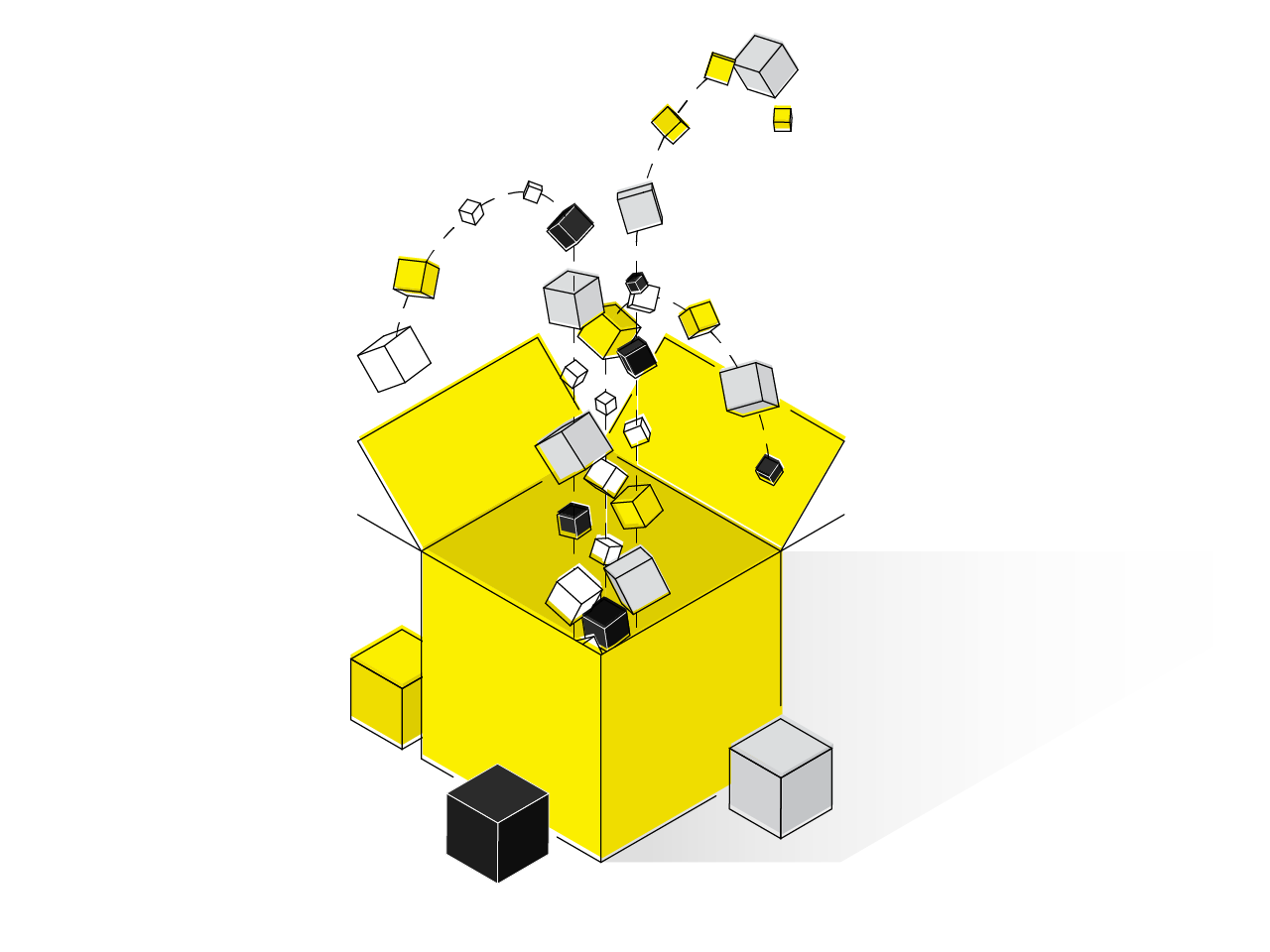
Today's AI landscape is dominated by a few tech companies. This White Paper presents an alternative: Public AI systems built on transparency, democratic governance, and open access to critical infrastructure.
Unpacking Open Source Artificial Intelligence: Toward a Framework for Openness in Foundation Models
Openness has long driven innovation in software,9 and AI is no exception.12 While some see openness in foundation models (FMs) as a security threat,18 others argue that restricting access will not meaningfully reduce risk and will limit the benefits of transparency, research, and global participation.3 As the EU AI Act reporting requirements on FMs—also referred to as general-purpose AI models (GPAIMs)—move toward implementation, there is an urgent need for a more nuanced and informed understanding of openness in AI systems.

For Most of the World, Open-Source AI Is the Only Way Forward
Proprietary AI is both too expensive and too centralized in control for most countries and companies to rely upon.
“Wait, not like that”: Free and open access in the age of generative AI
The real threat isn’t AI using open knowledge — it’s AI companies killing the projects that make knowledge free

The Arguments Against Open Source AI are Very Bad | Tom Bedor's Blog
The release of Kimi K3 has opened a fresh round of angst and confused discourse. There's a loud cohort of journalists, business leaders, and politicians arguing that open source AI is a dangerous threat. OpenAI's Dean Ball:
Public Intelligence
Imagine 50 years from now a Public Intelligence that was a distributed, open-source, non-commercial artificial intelligence, operated like the internet, and available to the whole world. This public AI would be a federated system, not owned by any one entity, … Continue reading →
Reframing “Open Source AI” with Meredith Whittaker: AI Impact Summit 2026
OpenAI Calls for New Industrial Policy as AI Reshapes Economy and Governance
OpenAI’s policy paper argues that governments must adopt a new industrial policy to manage AI’s economic disruption.
OpenAI targets workplace professionals as enterprise AI demand surges
‘These leaders recognize AI as the most consequential shift of their lifetime, and they’re asking us how to reinvent their companies around it’

OpenAI’s vision for the AI economy: public wealth funds, robot taxes, and a four-day workweek | TechCrunch
OpenAI proposes taxes on AI profits, public wealth funds, and expanded safety nets to address job loss and inequality, blending redistribution with capitalism as policymakers debate AI’s economic impact.

OpenAI News
Stay up to speed on the rapid advancement of AI technology and the benefits it offers to humanity.
OpenAI News
Stay up to speed on the rapid advancement of AI technology and the benefits it offers to humanity.
Public AI Inference Utility
A nonprofit, open-source service to make public and sovereign AI models more accessible.
OpenAccess.ai — Rigorous Open Access Publishing
$20 to submit, free to read. AI peer review. Open to human and machine authors. All articles CC-BY 4.0.

Paper: Can AI agents conduct open-ended AI research? Early evidence from two case studies

URL and discussions of the paper "Can AI agents conduct open-ended AI research? Early evidence from two case studies"

AI Research Evaluation: Negative Findings and Failure Modes | Arvind Narayanan posted on the topic | LinkedIn

📢 New paper: Forecasts of explosive AI progress hinge on AI agents automating AI research. But most evaluations of agents conducting AI research focus on narrow, verifiable tasks. Can AI agents… | Sayash Kapoor

My claude is constantly wanting to 'A/B test' things instead of actually just doing the thing I told her to do, and constantly wants to fall…

A snapshot of research into answering if frontier AI agents can run R&D into AI (which not surprisingly failed apart from "minor findings…

This is definitely my feeling working with them on recommendation algorithm.

"This paper prompted Jack Clark, one of the co-founders of Anthropic to post this to their news letter: 'the singularity could be delayed'".