

Safety legislation is one step forward, two steps back
Online Safety Amendment (Social Media Minimum Age) Act 2024
The Online Safety Amendment Act 2024 is an Australian act of parliament that prohibits minors under the age of 16 from holding an account on certain social media platforms. It is an amendment to the Online Safety Act 2021 and was passed by the Parliament of Australia on 29 November 2024. It imposes monetary penalties on social media companies that fail to take reasonable steps to prevent minors under 16 that are located in Australia from having accounts on their services.

‘Now we don’t have a safe place’: sex workers’ social media site Switter shuts down amid legal fears
Platform says government changes to online safety and defamation laws in Australia, UK and US made it ‘impossible’ to comply
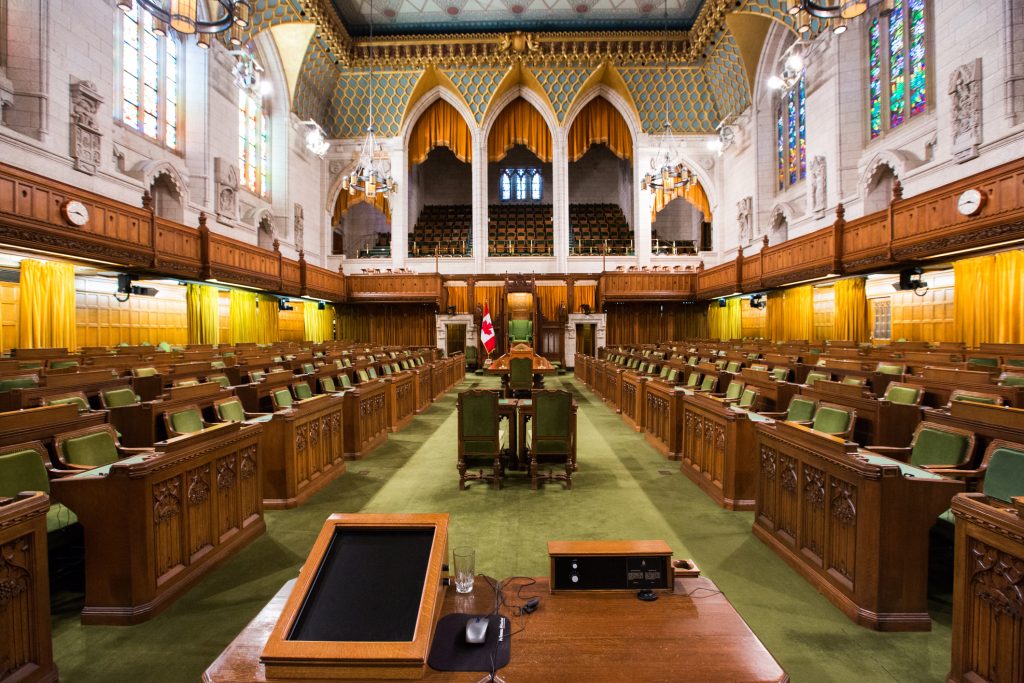
Reading the Digital Safety Act with My Mastodon Admin Hat On
Back in 2024, I published a reading of the Online Harms Act from my perspective as an admin of a Mastodon instance. The Online Harms Act was a proposed Canadian bill meant to regulate social media to prevent harmful content, particularly hate speech and child abuse materials. While the Online Harms Act ultimately did not come to pass (due the proroguing of Parliament later that year), the Carney Liberal government is bringing much of it back with a new Digital Safety Act. In this post, I am also giving the new Act a look from the perspective of a Mastodon admin.
An Open Letter to the UK Government: Reconsider the Online Safety Act
To the Prime Minister, Members of Parliament, and the Secretary of State for Science, Innovation and Technology,
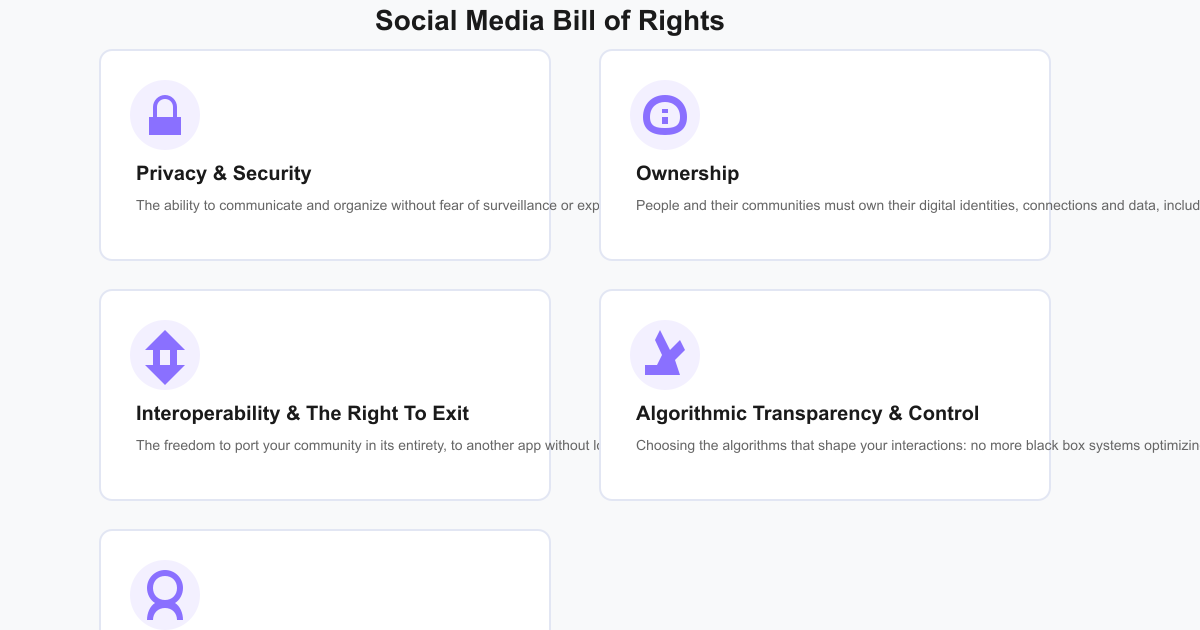
Declaration of Social Media Rights
Five fundamental rights we need for a free, open, and humane social media ecosystem
Study: Social media probably can’t be fixed
The [structural] mechanism producing these problematic outcomes is really robust and hard to resolve."

Online Safety Bills Are Fueling a New Wave of Internet Censorship
State and federal bills seek to limit minors’ access to social media, but civil liberties advocates warn that the resulting online censorship threatens constitutional rights without delivering real safety.
How do you solve a problem like social media? Part I
It's all well and good saying we should regulate social media. But social media is already regulated. So why is it failing? And what could we do in response?
Everything You Wanted to Know About a Kids' Social Media Ban (But Were Rightly Afraid to Ask): A FAQ on Age Verification and Mandated ID for Everyone - Michael Geist
The government is expected to table the Digital Safety Act on Wednesday with reports that it will include a ban on social media for those under 16, framed as a “temporary” measure that platforms can exit once a new digital regulator certifies their safety standards. I have been writing about these issues, from the original Online Harms Act to mandated age verification and website blocking and now the kids’ ban, for several years. This FAQ gathers the analysis in one place, with links throughout to the longer pieces for anyone who wants to go deeper. The key takeaway is that a kids' social media ban is an ineffective and harmful policy that raises privacy concerns for tens of millions of Canadians through mandated age verification requirements. The policy fails to address the underlying concerns with social media and the prospect of a "temporary" ban makes little sense since the requirement might be reversible, but the data collection and regulatory infrastructure are permanent.
Trust & Safety Library - Trust & Safety Professional Association
Welcome to the Trust & Safety Library! We use this space to collect articles, blog posts, journal articles, lectures, podcasts, and websites that trust and safety professionals may find useful in developing policies, supporting moderators, building systems to detect violations, and generally deepening their practice. We welcome your submissions and feedback. This project was initially
Four Functional Quadrants for Trust & Safety Tools: Detection, Investigation, Review & Enforcement (DIRE) <div> <br> </div>
Public discourse and regulatory debates about online trust and safety have long been dominated by a focus on rules, not tools: preoccupied mostly by the questio

Is anyone considering going for this project. digital-strategy.ec.europa.eu/en/news/new-call-proposals-sh…
New call for proposals to shape safer and more inclusive social media platforms
digital-strategy.ec.europa.euHey everyone! I’m starting a monthly blog about trends in moderation from Blacksky’s Trust and Safety team called: “What’s Happening on My Feed?” The first post: “Putting the Trust back in Trust and Safety” is out now, check it out: whatshappeningonmyfeed.leaflet.pub/3mpont6fedc2z

Putting the Trust back in Trust and Safety
whatshappeningonmyfeed.leaflet.pubHey everyone, I spent the last three years as a Trust and Safety professional researching traditional social media and decided to put words to my thoughts. I hope you find my findings enjoyable or intriguing.

Traditional Social Media as a Prison
whatshappeningonmyfeed.leaflet.pub'Safety as Public Infrastructure? The Future of Moderation in the Open Social Web' Talk by Saskia Welch, Aditya Singh and Sebastian Vogelsang More info: ctalx.c-base.org/fediday-2026/talk/MGDNUN/ Click your tickets here: berlinfedi.day ⁂ […] berlin.social/@berlinfediday/11724669250279…


