


A New Paradigm for Safe, Trustworthy, Responsible AI.
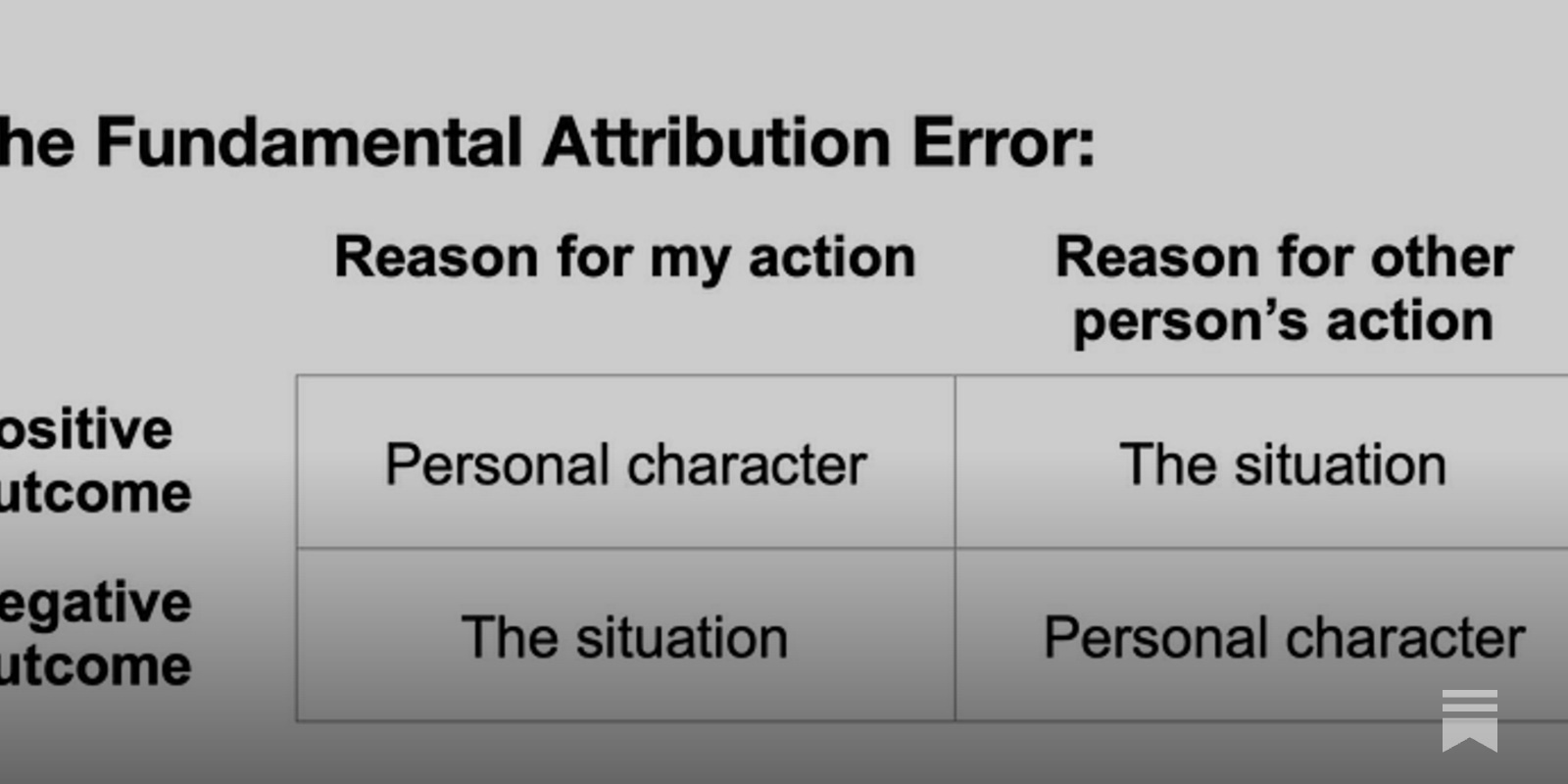
The AI Attribution Error
If an AI produces something useful it's because of your own skill in model choice, prompting, and steering. If not, it's because the model is a useless lying machine that can't follow directions.
Responsible AI
Discover how AWS is committing to developing AI responsibly – to built trust, promote the safe development of AI, and act as a force for good.
How Shifting Responsibility for AI Harms Undermines Democratic Accountability | TechPolicy.Press
The moralization of individual AI use deflects responsibility away from powerful actors like corporations and governments, Suvradip Maitra and others write.

AI Epistemic Risks: Emerging Mechanisms & Evidence
<p>Advances in artificial intelligence pose risks to humanity's collective capacity to form accurate beliefs, reason well, and maintain a healthy information en

AI Principles
A guiding framework for our responsible development and use of AI, alongside transparency and accountability in our AI development process.

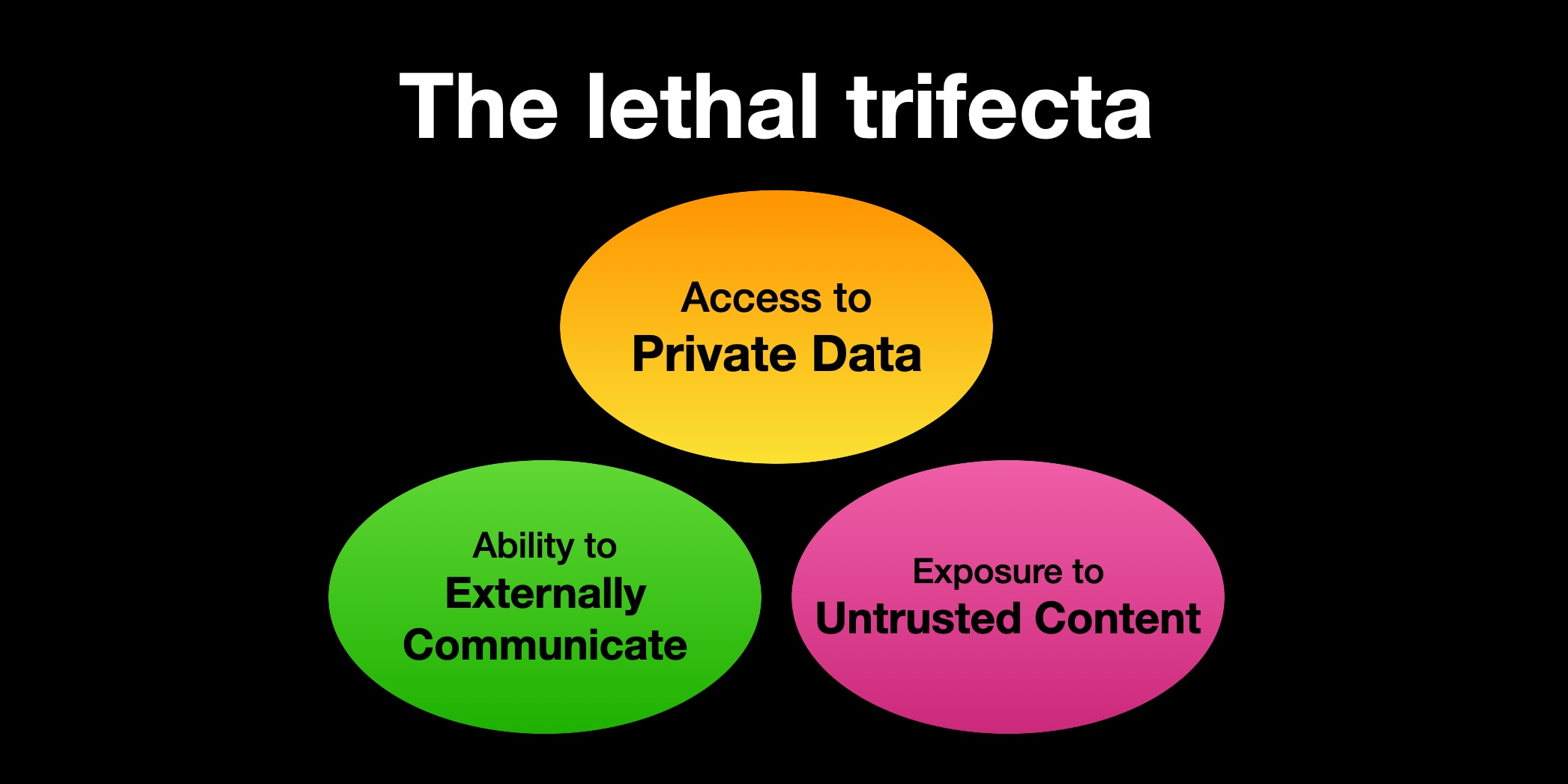
The lethal trifecta for AI agents: private data, untrusted content, and external communication
If you are a user of LLM systems that use tools (you can call them “AI agents” if you like) it is critically important that you understand the risk of …
AI agents pose untold risk to humanity. We must act to prevent that future | David Krueger
The pieces are falling into place for autonomous artificial intelligence. We must stop unregulated development

Trust and reliance on AI — An experimental study on the extent and costs of overreliance on AI
Decision-making is undergoing rapid changes due to the introduction of artificial intelligence (AI), as AI recommender systems can help mitigate human flaws and increase decision accuracy and efficiency. However, AI can also commit errors or suffer from algorithmic bias. Hence, blind trust in technologies carries risks, as users may follow detrimental advice resulting in undesired consequences. Building upon research on algorithm appreciation and trust in AI, the current study investigates whether users who receive AI advice in an uncertain situation overrely on this advice — to their own detriment and that of other parties. In a domain-independent, incentivized, and interactive behavioral experiment, we find that the mere knowledge of advice being generated by an AI causes people to overrely on it, that is, to follow AI advice even when it contradicts available contextual information as well as their own assessment. Frequently, this overreliance leads not only to inefficient outcomes for the advisee, but also to undesired effects regarding third parties. The results call into question how AI is being used in assisted decision making, emphasizing the importance of AI literacy and effective trust calibration for productive deployment of such systems.
Distributional AGI Safety
AI safety and alignment research has predominantly been focused on methods for safeguarding individual AI systems, resting on the assumption of an eventual emergence of a monolithic Artificial General Intelligence (AGI). The alternative AGI emergence hypothesis, where general capability levels are first manifested through coordination in groups of sub-AGI individual agents with complementary skills and affordances, has received far less attention. Here we argue that this patchwork AGI hypothesis needs to be given serious consideration, and should inform the development of corresponding safeguards and mitigations. The rapid deployment of advanced AI agents with tool-use capabilities and the ability to communicate and coordinate makes this an urgent safety consideration. We therefore propose a framework for distributional AGI safety that moves beyond evaluating and aligning individual agents. This framework centers on the design and implementation of virtual agentic sandbox economies (impermeable or semi-permeable), where agent-to-agent transactions are governed by robust market mechanisms, coupled with appropriate auditability, reputation management, and oversight to mitigate collective risks.

AI, Ethics, and Society — Home
How malicious AI swarms can threaten democracy: The fusion of agentic AI and LLMs marks a new frontier in information warfare
Advances in AI offer the prospect of manipulating beliefs and behaviors on a population-wide level. Large language models and autonomous agents now let influence campaigns reach unprecedented scale and precision. Generative tools can expand propaganda output without sacrificing credibility and inexpensively create falsehoods that are rated as more human-like than those written by humans. Techniques meant to refine AI reasoning, such as chain-of-thought prompting, can just as effectively be used to generate more convincing falsehoods. Enabled by these capabilities, a disruptive threat is emerging: swarms of collaborative, malicious AI agents. Fusing LLM reasoning with multi-agent architectures, these systems are capable of coordinating autonomously, infiltrating communities, and fabricating consensus efficiently. By adaptively mimicking human social dynamics, they threaten democracy. Because the resulting harms stem from design, commercial incentives, and governance, we prioritize interventions at multiple leverage points, focusing on pragmatic mechanisms over voluntary compliance.
A Strategy for Protecting Content from AI
Because that’s the world we live in these days.

How malicious AI swarms can threaten democracy
The fusion of agentic AI and LLMs marks a new frontier in information warfare , Advances in artificial intelligence (AI) offer the prospect of manipulating beliefs and behaviors on a population-wide level ( 1 ). Large language models (LLMs) and autonomous agents ( 2 ) let influence campaigns reach unprecedented scale and precision. Generative tools can expand propaganda output without sacrificing credibility ( 3 ) and inexpensively create falsehoods that are rated as more human-like than those written by humans ( 3 , 4 ). Techniques meant to refine AI reasoning, such as chain-of-thought prompting, can be used to generate more convincing falsehoods. Enabled by these capabilities, a disruptive threat is emerging: swarms of collaborative, malicious AI agents. Fusing LLM reasoning with multiagent architectures ( 2 ), these systems are capable of coordinating autonomously, infiltrating communities, and fabricating consensus efficiently. By adaptively mimicking human social dynamics, they threaten democracy. Because the resulting harms stem from design, commercial incentives, and governance, we prioritize interventions at multiple leverage points, focusing on pragmatic mechanisms over voluntary compliance.

How malicious AI swarms can threaten democracy
The fusion of agentic AI and LLMs marks a new frontier in information warfare , Advances in artificial intelligence (AI) offer the prospect of manipulating beliefs and behaviors on a population-wide level ( 1 ). Large language models (LLMs) and autonomous agents ( 2 ) let influence campaigns reach unprecedented scale and precision. Generative tools can expand propaganda output without sacrificing credibility ( 3 ) and inexpensively create falsehoods that are rated as more human-like than those written by humans ( 3 , 4 ). Techniques meant to refine AI reasoning, such as chain-of-thought prompting, can be used to generate more convincing falsehoods. Enabled by these capabilities, a disruptive threat is emerging: swarms of collaborative, malicious AI agents. Fusing LLM reasoning with multiagent architectures ( 2 ), these systems are capable of coordinating autonomously, infiltrating communities, and fabricating consensus efficiently. By adaptively mimicking human social dynamics, they threaten democracy. Because the resulting harms stem from design, commercial incentives, and governance, we prioritize interventions at multiple leverage points, focusing on pragmatic mechanisms over voluntary compliance.
in my imagination of the future, of AIs doing raw research, it was the AIs that had full control over the proofs they wrote--attribution was clear, and so was the choice to disclose it. but as it stands we are in some hybrid situationship where the human prompter still assumes responsibility.

