


An annotated walkthrough of our posit::conf(2026) keynote.
Agents Done Right: A Framework Vision for 2026
Agents choke on context, loop on failures, and dump walls of code for review. It's time to rethink the architecture.
Can AI Agents Synthesize Scientific Conclusions?
Scientific AI agents increasingly retrieve evidence, reason across sources, and synthesize conclusions used in consequential decisions. Yet, their ability to do so in high-stakes domains such as health remains unclear. We introduce SciConBench, a large-scale live benchmark of 9.11K questions and expert-written conclusions from systematic reviews to evaluate open-domain scientific conclusion synthesis. The benchmark draws on an expert-validated automated evaluation pipeline that decomposes conclusions into atomic facts and measures correctness and comprehensiveness via factual precision and recall. To mitigate data leakage, we further introduce SciConHarness, a clean-room evaluation harness that equips agents with controlled web interaction to ensure valid measurement. Evaluating 8 frontier models and deep research agents, we find that factual quality remains low: under clean-room settings, the best agent achieves only a factual F1 of 0.337. Our clean-room setting consistently reduces performance relative to unconstrained evaluation, suggesting that leakage inflates estimates of models' true synthesis capabilities. Finally, we audit consumer-facing agents (e.g., Google AI Overview, OpenEvidence) and find they frequently generate incomplete and sometimes contradictory conclusions, even when the ground-truth answer is available. Overall, our results show that reliable synthesis of scientific conclusions remains an open challenge, and that clean-room evaluation is essential for assessing open-domain AI agents.

Open Source Data Labeling and AI Evaluation | Label Studio
Multi-modal data labeling and annotation platform for agent traces, LLM evals, RLHF, computer vision, document AI, NLP, audio transcription, and more.
Supporting Our AI Overlords: Redesigning Data Systems to be Agent-First
Large Language Model (LLM) agents, acting on their users' behalf to manipulate and analyze data, are likely to become the dominant workload for data systems in the future. When working with data,...
ScienceIDE: Turning World's Scientific Codebase into Agent Learnable Environments
Scientific code repositories encode decades of human knowledge in executable models, methods, and tools. Yet fragmented toolchains, implicit domain conventions, and specialized correctness criteria make this knowledge difficult to convert into reliable learning experience-a challenge we call the scientific experience bottleneck. We introduce ScienceIDE, infrastructure for turning the world's scientific code into programmable environments for scientific agents. Guided by expert-defined scientific cases and acceptance criteria, agents transform repositories into executable environments that support task generation, execution, and scientific verification. These environments provide a shared foundation for supervised fine-tuning, reinforcement learning, and evaluation. Using verified interaction trajectories, we train PhAI-IDE-72B, PhAI-IDE-9B, and PhAI-IDE-4B. The model family shows gains in held-out scientific-code repair and across selected general-purpose benchmarks in code, reasoning, and knowledge, providing evidence of positive transfer from scientific experience to broader capabilities. ScienceIDE lays the foundation for an integrated workspace for agent learning and scientific practice, making humanity's scientific software a shared substrate for developing scientific intelligence. Code: https://github.com/aitofound/ScienceIDE
Open Agent Specification (Agent Spec): A Unified Representation for AI Agents
The proliferation of agent frameworks has led to fragmentation in how agents are defined, executed, and evaluated. Existing systems differ in their abstractions, data flow semantics, and tool integrations, making it difficult to share or reproduce workflows. We introduce Open Agent Specification (Agent Spec), a declarative language that defines AI agents and agentic workflows in a way that is compatible across frameworks, promoting reusability, portability and interoperability of AI agents. Agent Spec defines a common set of components, control and data flow semantics, and schemas that allow an agent to be defined once and executed across different runtimes. Agent Spec also introduces a standardized Evaluation harness to assess agent behavior and agentic workflows across runtimes - analogous to how HELM and related harnesses standardized LLM evaluation - so that performance, robustness, and efficiency can be compared consistently across frameworks. We demonstrate this using four distinct runtimes (LangGraph, CrewAI, AutoGen, and WayFlow) evaluated over three different benchmarks (SimpleQA Verified, $τ^2$-Bench and BIRD-SQL). We provide accompanying toolsets: a Python SDK (PyAgentSpec), a reference runtime (WayFlow), and adapters for popular frameworks (e.g., LangGraph, AutoGen, CrewAI). Agent Spec bridges the gap between model-centric and agent-centric standardization & evaluation, laying the groundwork for reliable, reusable, and portable agentic systems.
New data agents across the Agentic Data Cloud | Google Cloud Blog
Learn about new data agents and tools for business analysts, data scientists, and database admins to integrate with the Agentic Data Cloud.
Trusting AI with Your Data: Safe Automation from Branch to Production
Introducing Cursor 2.0 and Composer · Cursor
A new interface and our first coding model, both purpose-built for working with agents.

gpt-oss:120b
OpenAI’s open-weight models designed for powerful reasoning, agentic tasks, and versatile developer use cases.

Cognition | Agent Trace: Capturing the Context Graph of Code
We’re excited to join in Cursor, Cloudflare, Vercel, git-ai, OpenCode and others in support of [Agent Trace](https://agent-trace.dev/). As described in the spec, Agent Trace is an open, vendor-neutral spec for recording AI contributions alongside human authorship in version-controlled codebases.
Snowflake and the Agentic Resource Discovery Specification
Snowflake supports ARD, an open protocol developed with Microsoft to standardize how AI agents are cataloged, searched and discovered enterprise-wide.
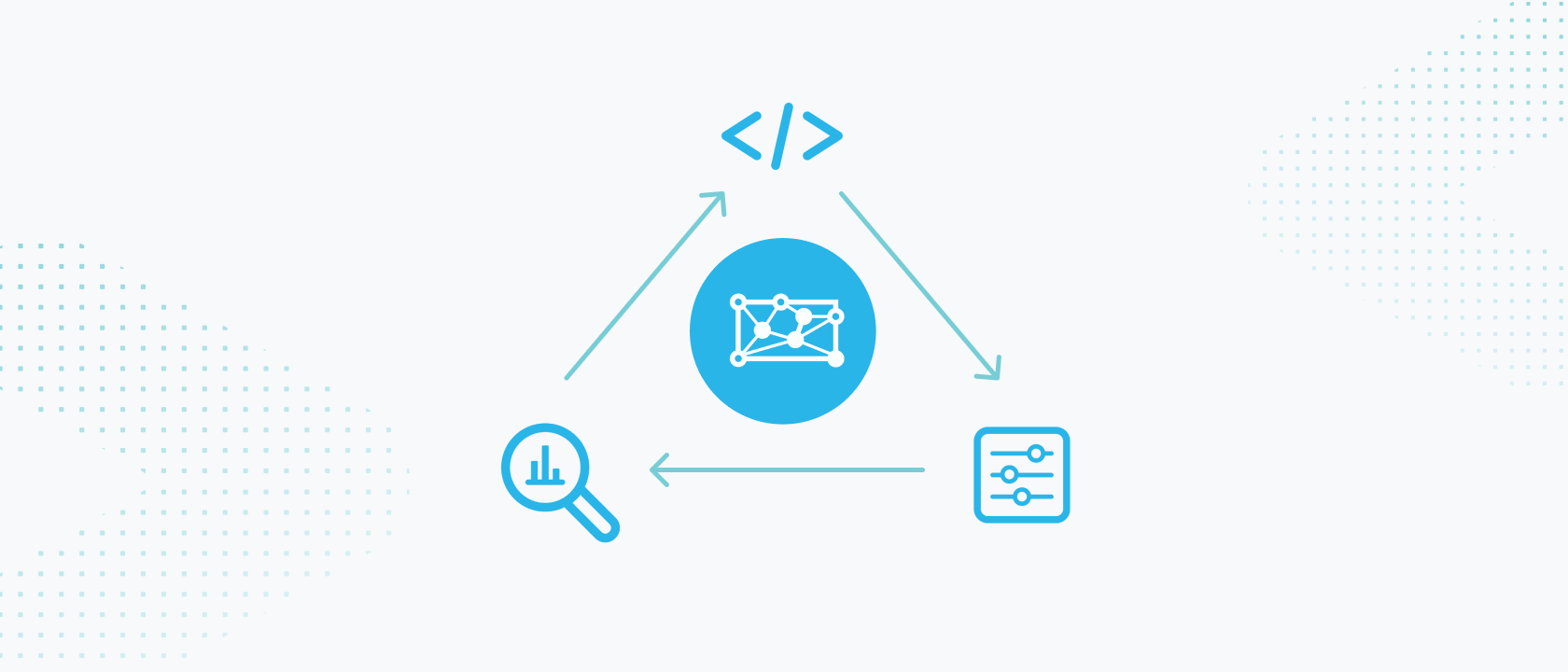
Prime Intellect - The Open Stack for Self-Improving Agents
The compute and infrastructure platform for you to train, evaluate, and deploy your own agentic models.
Prime Intellect - The Open Stack for Self-Improving Agents
The compute and infrastructure platform for you to train, evaluate, and deploy your own agentic models.
Introducing AgentKit, new Evals, and RFT for agents
Today, we’re releasing new tools to help developers go from prototype to production faster: AgentKit, expanded evals capabilities, and reinforcement fine-tuning for agents.

Open-Source Agentic Inference Benchmark | InferenceX
Compare AgentX, InferenceX's long-context, multi-turn coding scenario, with fixed-sequence AI inference across chips and frameworks. Public NVIDIA and AMD runs update when configurations change.