

OpenTimestamps aims to be a standard format for blockchain timestamping.
Timestamp Identifiers (TIDs) - AT Protocol
A compact timestamp-based identifier for revisions and records.
Open Attested Runtimes Explainer
Open Attested Runtimes A New Foundation for User-Controlled Computing Author: Alex Komoroske, with some help from Claude Last Updated: March 26, 2025 Your personal devices are your sovereign territory. You control what software runs, what data is stored, and how your information is used. This ...

attested.network — Proof of Payment for ATProtocol
An open specification for decentralized, cryptographically verifiable proof of payments.
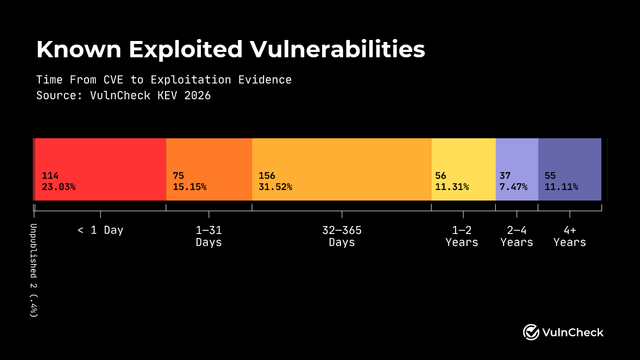
Just a rumour of a bug is enough to find a security exploit these days
Thinking through how the conventional OSS security embargoes no longer buy us time, and what open source maintainers might do instead to respond
bytecodealliance/wasmtime
A lightweight WebAssembly runtime that is fast, secure, and standards-compliant
Temporal: The 9-Year Journey to Fix Time in JavaScript
JavaScript's Date object has been a source of bugs for three decades. Temporal, which just reached Stage 4, is a modern replacement with immutable types, first-class time zone and calendar support, and nanosecond precision. This is the story of how Bloomberg, Igalia, and the TC39 community spent nine years turning an idea into a shipping standard.

Time-lock puzzle
A time-lock puzzle, or time-released cryptography, encrypts a message that cannot be decrypted until a specified amount of time has passed. The concept was first described by Timothy C. May,[1] and a solution first introduced by Ron Rivest, Adi Shamir, and David A. Wagner in 1996.[2] Time-lock puzzle are useful in cases where confidentiality of information is determined by time, such as a diarist who does not want their views released until 50 years after their death, an auction where bids are sealed until the bidding period is closed, electronic voting, and contract signing.[1][3] They can additionally be used in creating further cryptographic primitives, such as verifiable delay functions and zero knowledge proofs.[3]
OpenRank (Karma3) — Onchain Atlas
Karma3 Labs' decentralized reputation-compute protocol that ran EigenTrust over onchain and social graphs to power verifiable rankings, feeds, and sybil-resistant airdrops — technically validated but shut down in 2026 for lack of a business model.

Permissioned Data Diary 2: Buckets - Daniel's Leaflets
The second in a series of posts building up a solution to permissioned data on atproto. We introduce buckets: a new protocol primitive for creating a shared social context.
15 Open-Source Tools for Digital Sovereignty (2026) | Comparisons & Alternatives | Vucense
Own your digital stack. The 15 best open-source tools for privacy, security, and full control over your data — reviewed and ranked for 2026.
ATProtocol Attestations: Cryptographic Signatures for the Decentralized Web - Nick's Blog
This post introduces the formal ATProtocol attestation specification, a framework for adding cryptographic signatures to ATProto records through two complementary patterns: inline attestations that embed signatures directly in records, and remote attestations that store proof in separate repository records. The specification prevents replay attacks through repository binding, uses CID-based content addressing for integrity, and provides the cryptographic foundation for verified credentials, trusted content, and authenticated interactions in the decentralized ATProtocol ecosystem.
Matakite — public forecasting
Public, timestamped forecasts as signed records in your own PDS.
Holochain: Reinventing Applications
Holochain is a framework for writing fully distributed peer-to-peer applications. It is not based on blockchain technology. Nor is…
