

This paper introduces a novel, play-based method for teaching drawing to young children, emphasising observation, creativity, and the development of visual literacy. The method, refined through years of practical testing with the author's children, moves beyond rote copying and focuses on engaging parents in the learning process. It leverages fun, interactive exercises designed to enhance spatial reasoning, attention to detail, and an appreciation for artistic expression while fostering the understanding of drawing as a natural form of expression alongside language and mathematics, helping children develop a confident, lifelong relationship with visual communication that transcends common perceptions of drawing as an intimidating or exclusively talent-based skill. This paper also presents a literature review on early childhood art education and highlights the importance of drawing as a fundamental cognitive skill.
Drawabox | A free, exercise based approach to learning the fundamentals of drawing
A free, exercise based approach to learning the fundamentals of drawing. We tackle drawing in a logical, analytical fashion inspired by concept artists and industrial designers, focusing on technical skills that can be developed with hard work and determination.

Prof. Judy Fan: Cognitive Tools for Making the Invisible Visible
Prof. Judy Fan: Cognitive Tools for Making the Invisible Visible
Children today are suffering a severe deficit of play | Aeon Essays
Children today are cossetted and pressured in equal measure. Without the freedom to play they will never grow up
Art Prompt Generator Drawing Prompts
Your art bestie 🎨 Learn watercolor painting, modern calligraphy, drawing, Procreate, gouache...and more! Plus cruelty-free art supplies that give back.

‘My son genuinely believed it was real’: Parents are letting little kids play with AI. Are they wrong?
Some believe AI can spark their child’s imagination through personalized stories and generative images. Scientists are wary of its effect on creativity



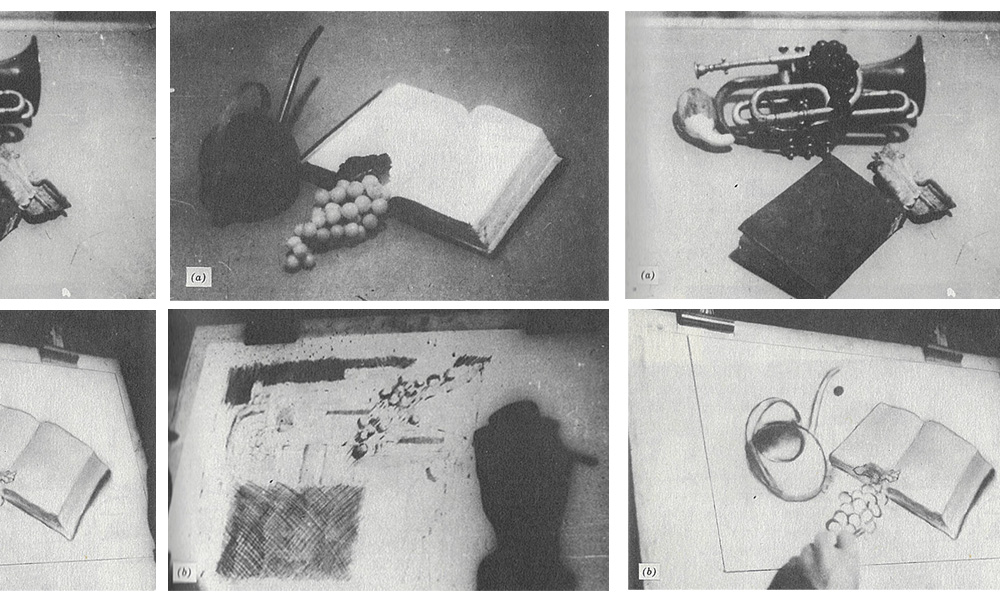
The 1960s Art School Experiment That Redefined Creativity
A groundbreaking study revealed that the most compelling artists seek to find problems, not solve them.
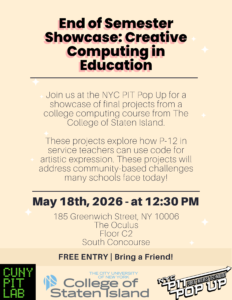
Creative Computing in Education Course Showcase
This event will showcase creative computing final projects from a College of Staten Island course that explores how P-12 in-service teachers can use code for artistic expression. These projects will […]
Thinking with Sand: A Talk Series Exploring New Software Tools for Creative Exploration and Augmented Thinking At the MIT Media Lab
Tipographia
Visual archive of graphic design, typography and things printed in Portugal. A collection by...


rheingold's brainstorms: rheingoldian writing
MOOSE Crossing is a text-based virtual world (or "MUD") where kids, in Bruckman's words, "are imagining new places and objects, and creating them with words and programs. In their spare time for fun they are reading, doing creative writing, and writing computer programs. Through these activities, they are learning in a self-motivated, self-directed, peer-supported fashion." Imagine combining the educational value of a well-designed curriculum in writing, history, programming, mathematics or other subject areas with the innate fascination that kids exhibit when they play with video games or college students exhibit when they stay online for hours on end, engaged in the role-playing games known as MUDs.
