


Explore Sid Sijbrandij's osteosarcoma research data: single-cell transcriptomics, tissue imaging, cell clusters, and gene set enrichment analysis from his own tumor samples.
RANK is essential for osteoclast and lymph node development
A biweekly scientific journal publishing high-quality research in molecular biology and genetics, cancer biology, biochemistry, and related fields
Hierarchical classification of immune cell transcriptomes at population-scale
Accurate immune cell classification is essential for interpreting single-cell RNA sequencing (scRNA-seq) data. However, progress is constrained by the lack of independent, high-resolution benchmarks, as the routine integration of datasets introduces statistical dependencies that artificially inflate model generalizability. Here, we present the single-cell universal classification omnibus (Suco), a resource of independent, uniform expert annotations, and Compocyte, a modular hierarchical classifier. Together, they establish a framework designed for the scale of human population immunology. This approach substantially outperforms existing classifiers while facilitating expert review of ambiguous annotations. Applying Compocyte across 50 studies, including three newly generated datasets, we classified 15.6 million leukocytes from 3,965 patients. Within this expansive cohort, we identified a new tumor-associated resorptive macrophage phenotype, a non-canonical monocyte subtype in subclinical cytokine release syndrome, and the programmatic erosion of T cell memory stemness across metastatic sites. Suco and Compocyte thus provide a generalizable architecture and benchmark capable of sustaining high-resolution annotation across massive clinical cohorts. ### Competing Interest Statement CMR has consulted regarding oncology drug development with Amgen, AstraZeneca, Daiichi Sankyo, Genentech, Merck, and Novartis, and has received licensing and royalty payments for DLL3-directed therapeutics. T.W. reports stock ownership for Roche, Astra Zeneca, Bayer, Innate Pharma, Kyntra, Illumina, 10x Genomics, and Merck KGaA as well as research funding from Atrandi Biosciences, Vilnius, Lithuania; CanVirex AG, Basel Switzerland; and Institut fuer Klinische Krebsforschung GmbH, Frankfurt, Germany, and travel funding from Roche, Basel, Switzerland. S.Z. reports advisory board membership and honoraria from Amgen, Astellas, AstraZeneca, Bayer, Bristol-Myers Squibb, Daiichi Sankyo, Eisai, EUSA, Gilead, Ipsen, Johnson&Johnson, Lilly, MedSir, Medtoday, Merck, MSD, Novartis, Pfizer, Roche, Sanofi Aventis, StreamedUp, Urotrials, Urotube, Zentiva and resarch funding from Eisai. S.Z. reports clinical trial support from Amgen, AstraZeneca, AVEO, Bayer, Biontech, Bristol-Myers Squibb, Calithera, Exelixis, Gilead, Lilly, MSD, Novartis, Pfizer, Roche, Seagen/Astellas, Urotrials and travels & conference support from Amgen, Astellas, AstraZeneca, Bayer, EISAI, Ipsen, Johnson&Johnson, Merck, MSD, Pfizer. All remaining authors declare no relevant competing interests. Spanish Association Against Cancer, PI049999 Federal Ministry of Research, Technology and Space, 001001KT2322 National Cancer Institute, R35 CA263816 National Cancer Institute, U24 CA213274 National Cancer Institute, P30 CA008748 Research Council of Lithuania, P-MIP-24-93

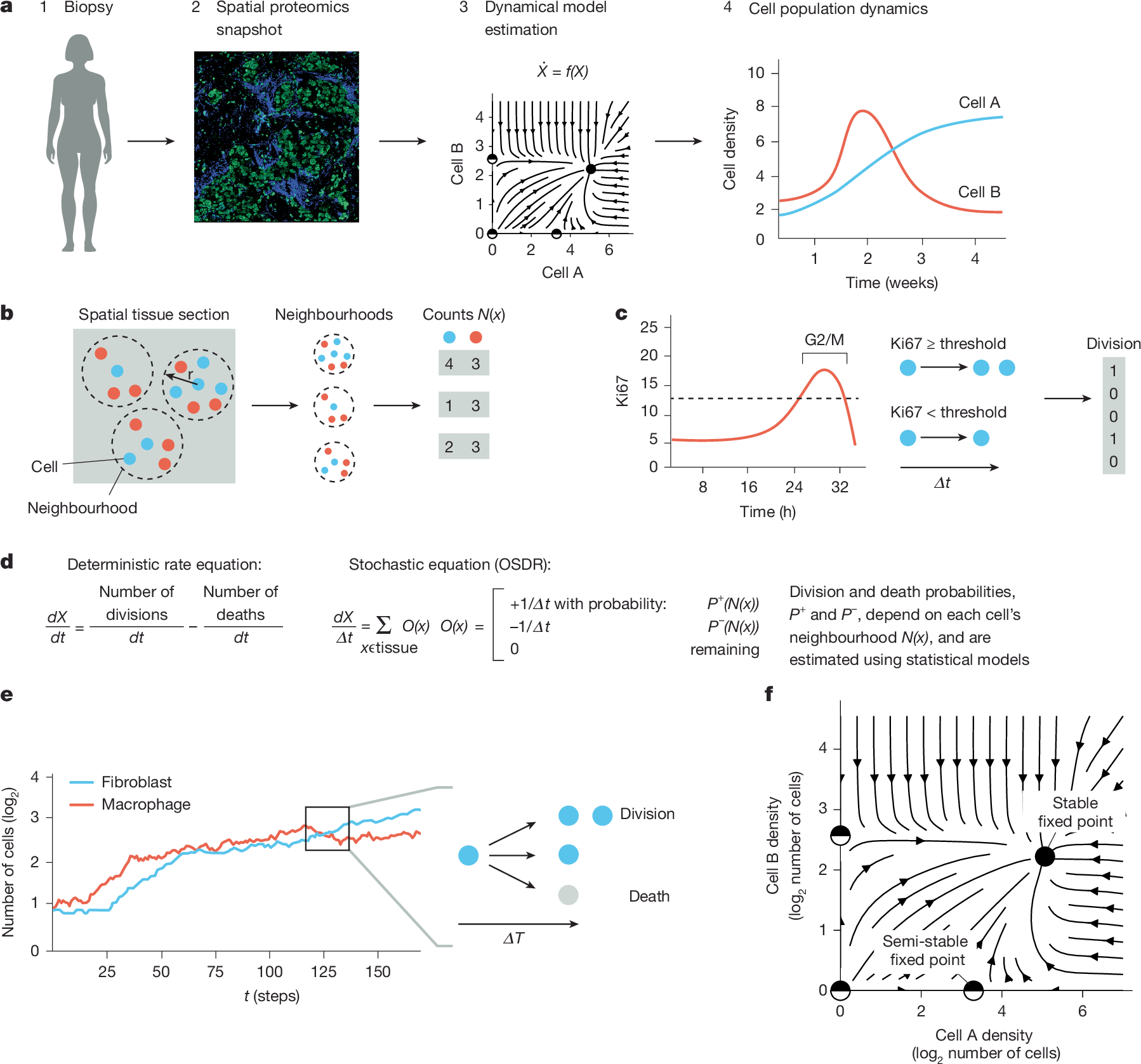
Temporal tissue dynamics from a spatial snapshot
Physiological and pathological processes such as inflammation and cancer emerge from interactions between cells over time1. However, methods to follow cell populations over time within the native context of a human tissue are lacking because a biopsy offers only a single snapshot. Here we present one-shot tissue dynamics reconstruction (OSDR), an approach to estimate a dynamical model of cell populations based on a single tissue sample. OSDR uses spatial proteomics to learn how the composition of cellular neighbourhoods influences division rate, providing a dynamical model of cell population change over time. We apply OSDR to human breast cancer data2–4, and reconstruct two fixed points of fibroblasts and macrophage interactions5,6. These fixed points correspond to hot and cold fibrosis7, in agreement with co-culture experiments that measured these dynamics directly8. We then use OSDR to discover a pulse-generating excitable circuit of T and B cells in the tumour microenvironment, suggesting temporal flares of anticancer immune responses. Finally, we study longitudinal biopsies from a triple-negative breast cancer clinical trial3, in which OSDR predicts the collapse of the tumour cell population in responders but not in non-responders, based on early-treatment biopsies. OSDR can be applied to a wide range of spatial proteomics assays to enable analysis of tissue dynamics based on patient biopsies.
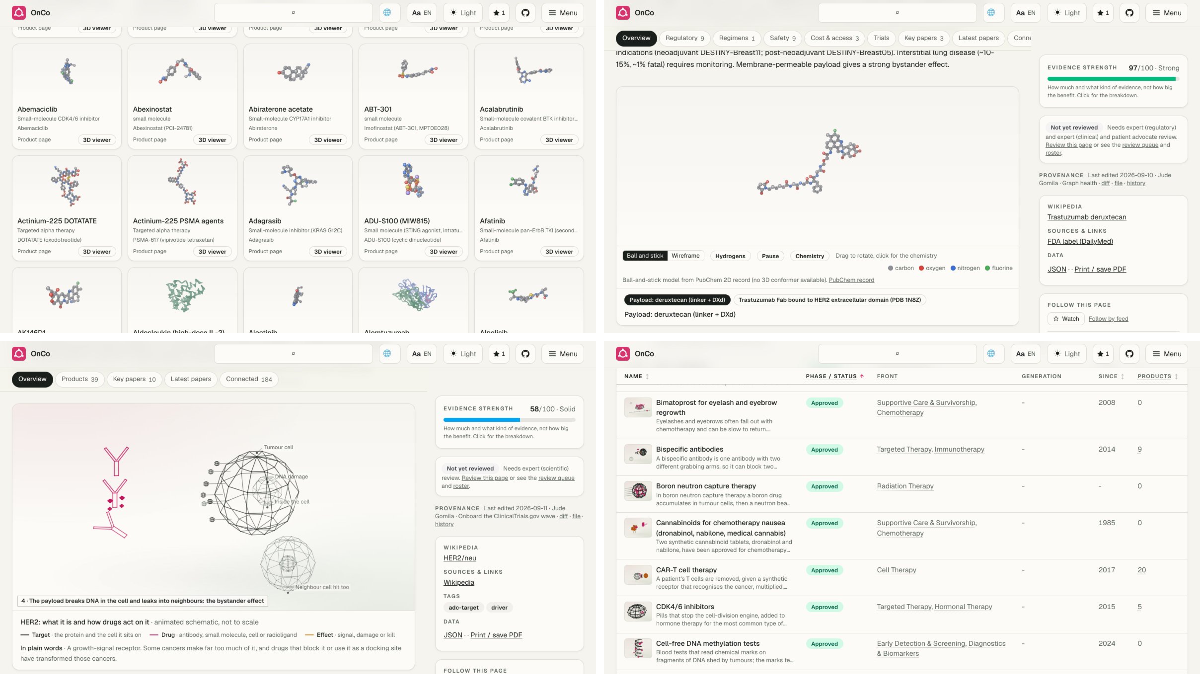
OnCo: the open, cited map of cancer: treatments, targets, trials, and what is coming
The open, cited map of oncology: every cancer, treatment, target, trial, company, institution and idea on one page each, in plain English first, with…

Jude Gomila on Twitter / X
I've attempted to map everything in oncology in a public website and open source repo for all. The site is trying to get all cancers, products, technologies, bottlenecks, people, startup opportunities with 1000+ ideas for upgrading the field. If you have a loved one with… pic.twitter.com/ff5Bdss5BT— Jude Gomila (@judegomila) September 16, 2026
Fighting Cancer - Hintjens.com
Biography | Portfolio | GitHub Books | Videos | Slides | Stories | Wiki Contact
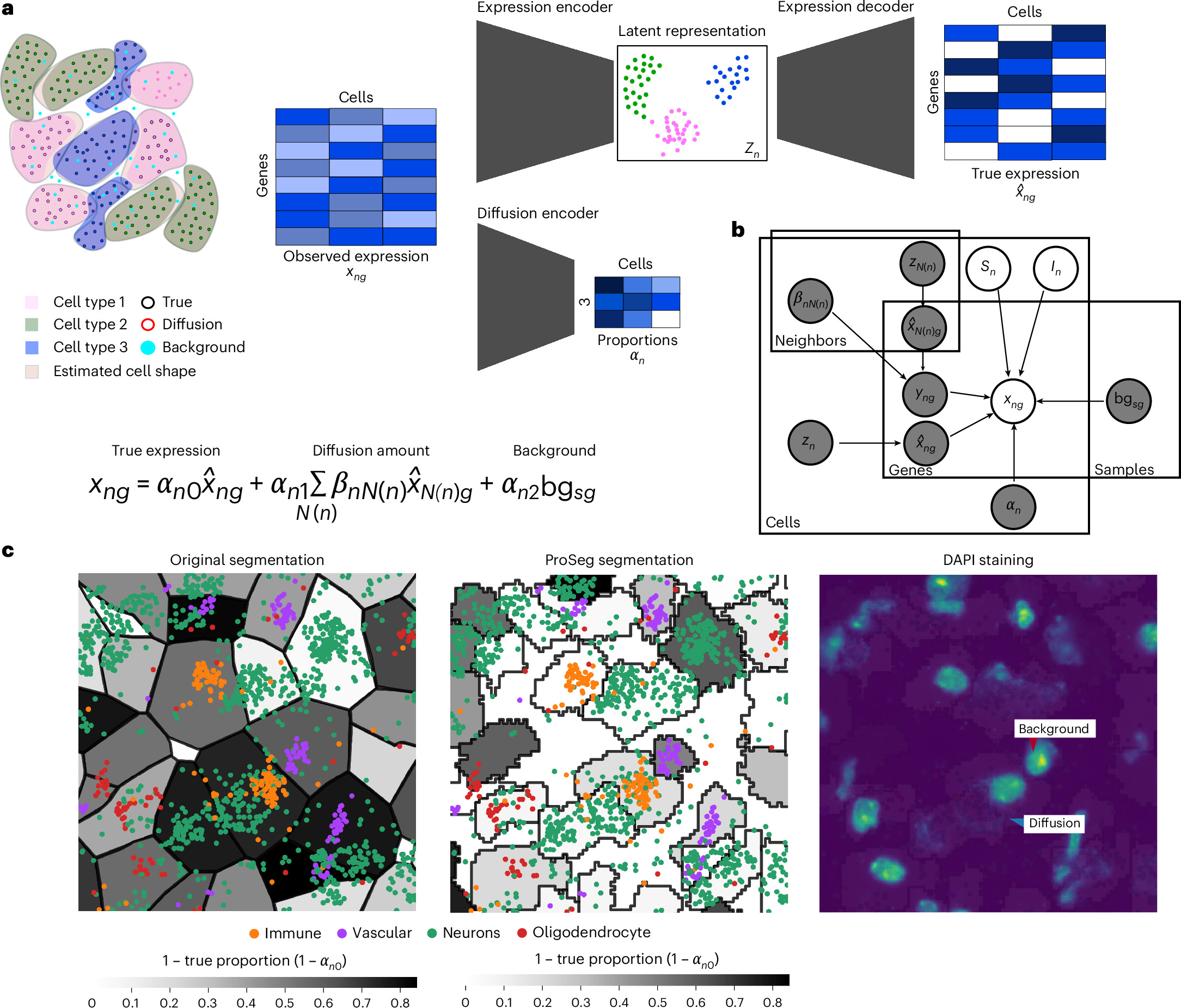
ResolVI: addressing noise and bias in spatial transcriptomics
Technologies for estimating RNA expression at high throughput, in intact tissue slices and with high spatial resolution (spatial transcriptomics) shed new light on how cells communicate and tissues function. A fundamental step in analyzing data generated by subcellular resolution spatial transcriptomics technologies is quantification, namely, segmenting the plane into regions, each approximating a cell, and then collating the molecules inside each region to estimate the cellular expression profile. Despite many advances in this area, a persistent problem is that of the incorrect assignment of molecules to cells, which limits many current applications to the level of a priori-defined cell subsets and complicates the discovery of novel cell states. Here we develop resolVI, a model that operates downstream of any segmentation algorithm to generate a probabilistic representation, correcting for the misassignment of molecules, as well as for batch effects and other nuisance factors. We demonstrate that resolVI improves our ability to distinguish between cell states, identify subtle expression changes in space and perform integrated analysis across datasets. ResolVI is available as open source software within scvi-tools.
Mathematical Discovery of Potential Therapeutic Targets: Application to Rare Melanomas
Patients with rare types of melanoma such as acral, mucosal, or uveal melanoma, have lower survival rates than patients with cutaneous melanoma; these lower survival rates reflect the lower objective response rates to immunotherapy compared to cutaneous melanoma. Understanding tumor-immune dynamics in rare melanomas is critical for the development of new therapies and for improving response rates to current cancer therapies. Progress has been hindered by the lack of clinical data and the need for better preclinical models of rare melanomas. Canine melanoma provides a valuable comparative oncology model for rare types of human melanomas. We analyzed RNA sequencing data from canine melanoma patients and combined this with literature information to create a novel mechanistic mathematical model of melanoma-immune dynamics. Sensitivity analysis of the mathematical model indicated influential pathways in the dynamics, providing support for potential new therapeutic targets and future combinations of therapies. We share our learnings from this work, to help enable the application of this proof-of-concept workflow to other rare disease settings with sparse available data.

LLM-Assisted Reanalysis of Unsolved Rare Disease Genomes Increases Diagnostic Yield
Rare and undiagnosed genetic disorders affect millions of patients globally, and many patients endure years of inconclusive testing. Conventional genomic interpretation can be insufficiently sensit...

Long-term use of denosumab and its association with skeletal-related events and osteonecrosis of the jaw
Denosumab, an inhibitor of receptor activator of nuclear factor kappa-B ligand, reduces skeletal-related events (SREs) and is approved for solid tumors with bone metastases. We studied long-term denosumab efficacy and safety because real-world data is scarce. This single-arm, single-center retrospective study included denosumab-treated breast cancer patients with bone metastases. Kaplan–Meier survival curves assessed exposure, SREs, osteonecrosis of the jaw (ONJ), and death. 132 patients were enrolled. The median denosumab exposure was 28.3 months (range 1.0–84.9). In the first year, 11.1% experienced SREs. This increased to 18.6% in the second, 21% in the third, and 35.1% in the fourth year and beyond. The median time to first on-study SRE has not been reached. 10 denosumab users (7.6%) developed ONJ. ONJ incidence was 0.9% in the first year, 6.2% in the second, 13.6% in the third, and 16.2% in subsequent years. The median time to first on-study ONJ has not been reached yet. Seven patients resumed denosumab after careful management of ONJ. Our data suggest that long-term treatment with denosumab may further prevent or postpone SREs at the cost of an increased risk of ONJ. The majority of patients who resumed denosumab did not experience a recurrence of ONJ.

Martin Krzywinski - Data Visualization, Design, Science and Art - Canada's Michael Smith Genome Sciences Centre
I present clearly, connect broadly, spark imagination and encourage enthusiasm for inquiry and explanation. I create visuals with analytical clarity and artistic dimensions.
On cell types and cell states
The advent of single-cell genomics has brought about new efforts to characterize and catalog all of the cell types in the human body. Despite these efforts, the very definition of a “cell type” is under debate. In this post, I will discuss a conceptual framework for defining cell types as subsets of states in an underlying cellular state space. Moreover, I will link the cellular state space to biomedical ontologies that attempt to capture biological knowledge regarding cell types.
International, cross-sector collaboration commits nearly $2 billion to build foundational data for AI models to predict and treat disease
Biohub, DOE, NIH, and partners will generate open, standardized data to train AI models that predict how cells respond to interventions.

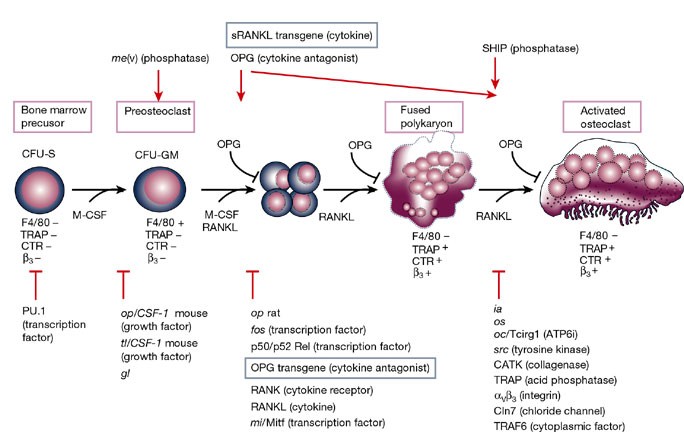
Osteoclast differentiation and activation
Osteoclasts are specialized cells derived from the monocyte/macrophage haematopoietic lineage that develop and adhere to bone matrix, then secrete acid and lytic enzymes that degrade it in a specialized, extracellular compartment. Discovery of the RANK signalling pathway in the osteoclast has provided insight into the mechanisms of osteoclastogenesis and activation of bone resorption, and how hormonal signals impact bone structure and mass. Further study of this pathway is providing the molecular basis for developing therapeutics to treat osteoporosis and other diseases of bone loss.
Osteoimmunology: The Conceptual Framework Unifying the Immune and Skeletal Systems
The immune and skeletal systems share a variety of molecules, including cytokines, chemokines, hormones, receptors, and transcription factors. Bone cells interact with immune cells under physiological and pathological conditions. Osteoimmunology was created as a new interdisciplinary field in large part to highlight the shared molecules and reciprocal interactions between the two systems in both heath and disease. Receptor activator of NF-κB ligand (RANKL) plays an essential role not only in the development of immune organs and bones, but also in autoimmune diseases affecting bone, thus effectively comprising the molecule that links the two systems. Here we review the function, gene regulation, and signal transduction of osteoimmune molecules, including RANKL, in the context of osteoclastogenesis as well as multiple other regulatory functions. Osteoimmunology has become indispensable for understanding the pathogenesis of a number of diseases such as rheumatoid arthritis (RA). We review the various osteoimmune pathologies, including the bone destruction in RA, in which pathogenic helper T cell subsets [such as IL-17-expressing helper T (Th17) cells] induce bone erosion through aberrant RANKL expression. We also focus on cellular interactions and the identification of the communication factors in the bone marrow, discussing the contribution of bone cells to the maintenance and regulation of hematopoietic stem and progenitors cells. Thus the time has come for a basic reappraisal of the framework for understanding both the immune and bone systems. The concept of a unified osteoimmune system will be absolutely indispensable for basic and translational approaches to diseases related to bone and/or the immune system.

Spatial Transcriptomics As Rasterized Image Tensors (STARIT) characterizes cell states with subcellular molecular heterogeneity
Imaging-based spatially resolved transcriptomics (imSRT) technologies provide high-throughput molecular-resolution spatial characterization of genes within cells. Conventional analysis methods to identify cell-types and states in imSRT data rely on gene count matrices derived from tallying the number of mRNA molecules detected for each gene per segmented cell, thereby overlooking subcellular heterogeneity that can be useful in defining cell states. To take advantage of the molecular-resolution information in imSRT data and potentially identify cell-states based on subcellular heterogeneity, we developed STARIT (Spatial Transcriptomics As Rasterized Image Tensors). STARIT converts transcripts within segmented cells in imSRT data into an image-based tensor representation that can be combined with deep learning computer vision models for downstream analysis. Using simulated and real imSRT data, we demonstrate that STARIT distinguishes transcriptionally distinct cell-types and further separates cell states based on subcellular transcript localization, which conventional gene count analysis fails to capture. By providing a standardized framework to encode subcellular molecular information in imSRT data, STARIT will enable deeper insights into subcellular heterogeneity and enhance the identification and characterization of cell-types and states that are overlooked by gene count representations.