

When I give Code of Conduct Incident Response workshops, one of the subjects I cover is discrimination. Sometimes there’s an attendee who has questions about “reverse discrimination”. This is a tough subject to pick apart, so this post is a little long.
Fairness is what the powerful ‘can get away with’ study shows
The willingness of those in power to act fairly depends on how easily others can collectively push back against unfair treatment
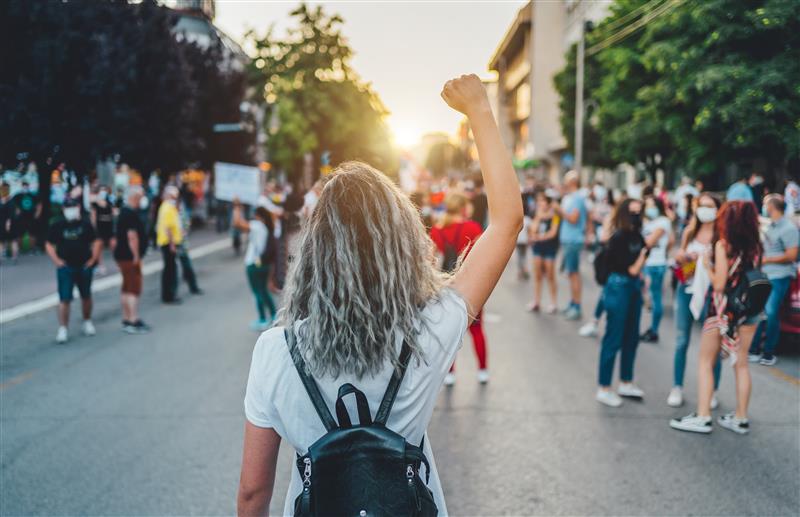
Les mesures de discrimination positive bénéficient-elles aux populations qu’elles ciblent ?
Les mesures de discrimination positive sont apparues il y a un demi-siècle : elles instaurant un traitement inégal des individus en vue de réduire les inégalités. Aux Etats-Unis, des politiques de discrimination positive (sous le nom d’« affirmative action...
How We’re Making Code of Conduct Enforcement Real — and Scaling it.
Interested in learning from other individuals, projects and organizations investing in diversity and inclusion in open source? Join our…

Why Diversity Programs Fail
After Wall Street firms repeatedly had to shell out millions to settle discrimination lawsuits, businesses started to get serious about their efforts to increase diversity. But unfortunately, they don’t seem to be getting results: Women and minorities have not gained much ground in management over the past 20 years. The problem is, organizations are trying to reduce bias with the same kinds of programs they’ve been using since the 1960s. And the usual tools—diversity training, hiring tests, performance ratings, grievance systems—tend to make things worse, not better. The authors’ analysis of data from 829 firms over three decades shows that these tools actually decrease the proportion of women and minorities in management. They’re designed to preempt lawsuits by policing managers’ decisions and actions. But as lab studies show, this kind of force-feeding can activate bias and encourage rebellion. However, in their analysis the authors uncovered numerous diversity tactics that do move the needle, such as recruiting initiatives, mentoring programs, and diversity task forces. They engage managers in solving the problem, increase contact with women and minority workers, and promote social accountability. In this article, the authors dig into the data, executive interviews, and several examples to shed light on what doesn’t work and what does.

Choosing a Sex Worker-Affirmative Therapist
Due to the stigma of sex work, sex workers can be vulnerable to micro-aggressions and minority stress and experience discrimination when the

Certifying and Removing Disparate Impact
What does it mean for an algorithm to be biased? In U.S. law, unintentional bias is encoded via disparate impact, which occurs when a selection process has widely different outcomes for different groups, even as it appears to be neutral. This legal determination hinges on a definition of a protected class (ethnicity, gender) and an explicit description of the process.When computers are involved, determining disparate impact (and hence bias) is harder. It might not be possible to disclose the process. In addition, even if the process is open, it might be hard to elucidate in a legal setting how the algorithm makes its decisions. Instead of requiring access to the process, we propose making inferences based on the data it uses.We present four contributions. First, we link disparate impact to a measure of classification accuracy that while known, has received relatively little attention. Second, we propose a test for disparate impact based on how well the protected class can be predicted from the other attributes. Third, we describe methods by which data might be made unbiased. Finally, we present empirical evidence supporting the effectiveness of our test for disparate impact and our approach for both masking bias and preserving relevant information in the data. Interestingly, our approach resembles some actual selection practices that have recently received legal scrutiny.

How white engineers built racist code – and why it's dangerous for black people
As facial recognition tools play a bigger role in fighting crime, inbuilt racial biases raise troubling questions about the systems that create them
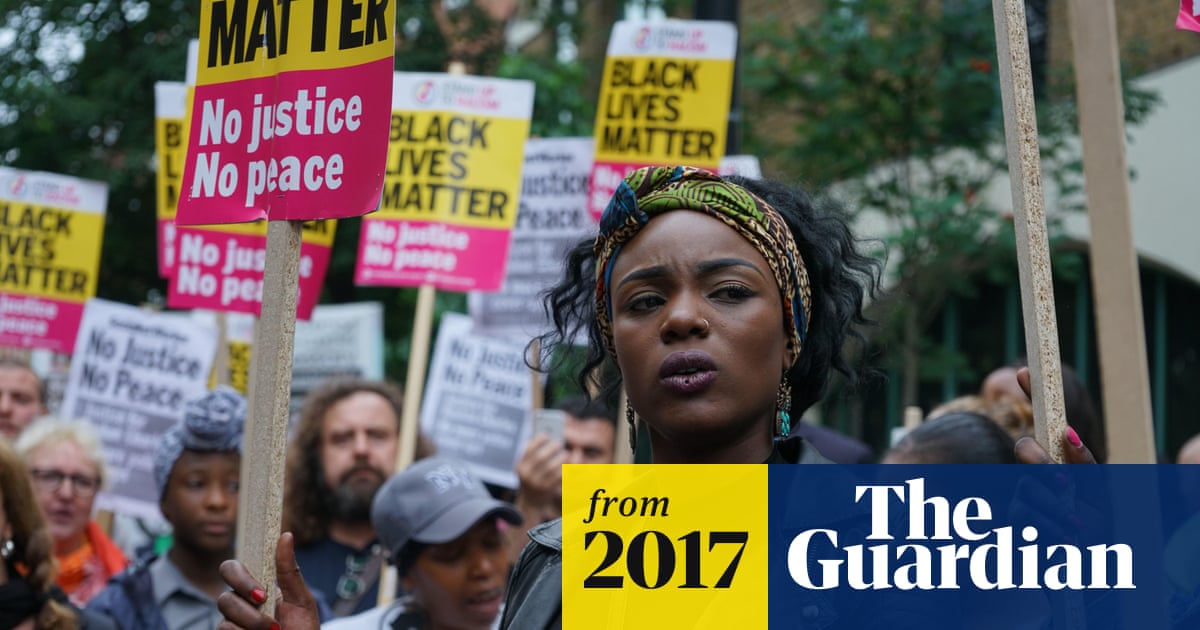
Mx. Aria Stewart (@aredridel@kolektiva.social)
https://github.com/GlasgowEmbedded/glasgow/blob/main/CODE_OF_CONDUCT.md Now that's how you write a code of conduct.
The Racist Beginnings of Standardized Testing | NEA
From grade school to college, students of color have suffered from the effects of biased testing.
Policy:Friendly Space Policy for Wikimedia Foundation Events
The Wikimedia Foundation is dedicated to providing a harassment-free experience for everyone at all venues and events – such as conferences, virtual events, and related social events – that this policy applies to regardless of gender, sexual orientation, gender identity or expression, disability, physical appearance, age, race, ethnicity, political affiliation, national origin, or religion—and not limited to these aspects. We do not tolerate any form of harassment of conference participants. Sexual language and imagery is not appropriate for any conference venue or talks. Any participants violating these rules may be sanctioned or expelled from the conference at the discretion of the conference organizers.
On applying ethics to the LLMs and coding assistants situation
It often frustrates technologists that there isn't an algorithm for deciding ethical behavior. You can't follow a checklist or a set of rules to decide whether something's ethical or not (or you...


Code of Conduct | Hack for Western Mass
Code of Conduct Adapted from the Drupal Code of […]
Another now: dispatches from an alternative present
What would a fair and equal society actually look like?…

AI and the Future of Accessible Work
Many countries have legislation that prohibits discrimination against people with disabilitiesa in the context of employment. For example, the U.S. Americans with Disabilities Act (ADA),b the U.K.’s Equality Act of 2010,c and European Union policyd prohibit employment-related discrimination and require employers to provide reasonable accommodations or adjustments so disabled employees can perform their jobs. More broadly, the United Nations Convention on the Rights of Persons with Disabilities (UNCRPD)e has influenced legal frameworks across the globe. Despite these anti-discrimination policies, disabled people remain significantly underrepresented in the workforce. Employment gaps between disabled and non-disabled people exist globally.28 Among blind and low-vision Americans, for instance, only 44% are employed compared to 79% of those without disabilities.f Only 54% of d/Deaf peopleg in the U.S. are employed, compared to 70% of hearing people.8 These discrepancies are worse for multiply marginalized disabled people. For example, employment rates for disabled women are significantly lower than rates for disabled men.21

British Educational Research Association: - receive complaint from me about a dodgy special issue - investigate, agree it’s dodgy - take all credit, say the problem was ‘uncovered independently’ by them - Call me ‘ethically problematic’ Only academia can be this much of a joke.

Steve Vainker
BERA has begun retractions - 19 from the British Educational Research Journal. Hilariously, they are trying to claim that the issues were 'uncovered independently' by them, amongst other delusionally self-serving claims. Sadly, they will learn nothing. open.substack.com/pub/stephenvainker/p/beras-de…