

Today we’re doing one of our occasional episodes where host Mack Hagood talks about a new essay he’s written for our newsletter “Feed Logic and the Failure to Thrive” Mack writes that students and professors are struggling, both academically and spiritually. He tries to diagnose the issue he felt in his classrooms this year and the role technology may play in it. For new listeners, Mack is a writer and researcher who studies sound, technology, and culture. He is the author of Hush: Media and Sonic Self-Control, a book on noise-canceling headphones, white noise, tinnitus, and the ways people use sound to manage modern life. He is currently writing a new book for Penguin Press, and he also hosts this podcast Phantom Power, where he interviews artists, scholars, musicians, and sound designers about the invisible power of sound in everyday life. Besides all that, Mack is a university professor and that’s what his most recent essay is about. Click here to read the newsletter for free. Cited Media: Film:Mary…
Silence is a Commons by Ivan Illich
Ivan Illich is doing to computers what he did to education (De-Schooling Society, 1971), to energy (Energy and Equity, 1974), to medicine (Medical Nemesis, 1975), and to sex roles (Vernacular Gender, 1983). Each time it has been radical analysis that changes our perception of what is really going on. Each time, and with growing clarity, it is an economic/historical analysis having to do with the idea of scarcity as a means of exploitation. This article is from Illich's remarks at the "Asahi Symposium Science and Man - The computer-managed Society," Tokyo, Japan, March 21, 1982. The ideas here are part of a book Illich is working on, The History of Scarcity. - Stewart Brand The CoEvolution Quarterly, Winter 1983
Digital Echoes and Unquiet Minds - Christopher Butler
There's a psychological burden of digital life even heavier than distraction.

Re: The Noisy Room | The Paper Pilot
The Paper Pilot's digital garden of thoughts on philosophy, politics, and sociology
Sound Obsessed — collection
Music
The Paper Pilot's digital garden of thoughts on philosophy, politics, and sociology. Reading time: ~4 minute read | Published: Aug 18, 2026 | Updated: Sep 12, 2026

Signal v. Noise moves to Medium
When Jason Fried a few months ago suggested that we should start posting articles on Medium, I was skeptical. What possible gain could we have from sharing our stories on someone else’s platform ra…

Design Must Learn to Decompose
A meditation on the quiet death of digital things.
A Compilation of Students Booing AI Graduation Speeches
Reading, and Understanding Media
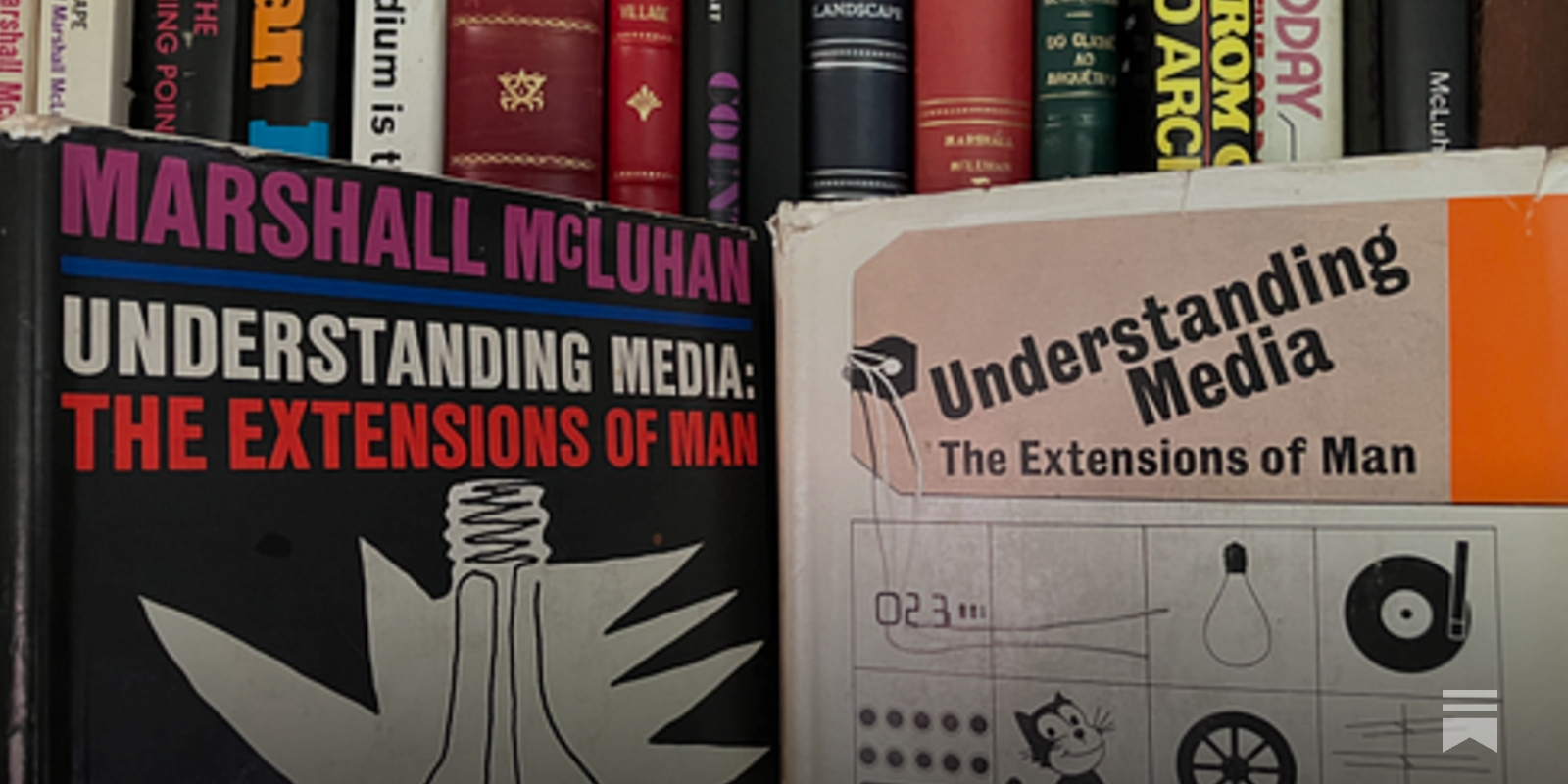
A guidebook, and poetry more than prose, Marshall McLuhan's 1964 work remains one of our best resources for exploring the nature and effects of new media. It's not an easy read, so I'm going to help.
how do you a call a person who is interacting with digital media ?
We use tools from computer science, media design, and digital art to study massive cultural data sets. Directed by Dr. Lev Manovich.
Medium has been great for us
More readers, wider distribution, new audiences. An enjoyable place to write. Win, win, win. Win. Just about a year ago we switched this blog, Signal vs. Noise, to Medium. Here’s the post announcin…
Person Overview ‹ Mitchel Resnick – MIT Media Lab
Mitchel Resnick, LEGO Papert Professor of Learning Research at the MIT Media Lab, develops new technologies and activities to engage people (particularly child…
Video: A Reader on What He Thinks We Get Wrong About Trump
In this first installment of “Sound Off,” Patrick Healy, assistant managing editor for The New York Times, speaks with Mark Jacob, former metro editor for The Chicago Tribune, who shares his criticism of Times coverage.

The Noise Floor of Latent Dissent // Harry Halpin
This is an interview with Harry Halpin. Harry Halpin is a technologist and philosopher who moved from building Indymedia during the anti-globalisation protests to earning a Ph.D. in Informatics und…

How Big Tech Co-opted DIY – and how to Fight Back | The Quietus
As technology has developed in the last twenty years, it has brought with it a sense of enablement. Over time, access to nearly everything has become simpler, and as such, the message from Silicon Valley and its offshoots was that you can do it all. I have worked in the music industry since the late […]
