

AI can read anything, but without shared standards it only reinforces PDF-era incentives. The interfaces we build shape what science becomes, and transforming scientific culture requires modular, structured, contextual foundations beneath every interface.
Will AI spark a scientific renaissance — or a diffuse monoculture?
Artificial intelligence’s ability to enrich science will depend not only on model capability, but also on whether researchers, reviewers and funders reward originality over speed.

Artificial intelligence and illusions of understanding in scientific research
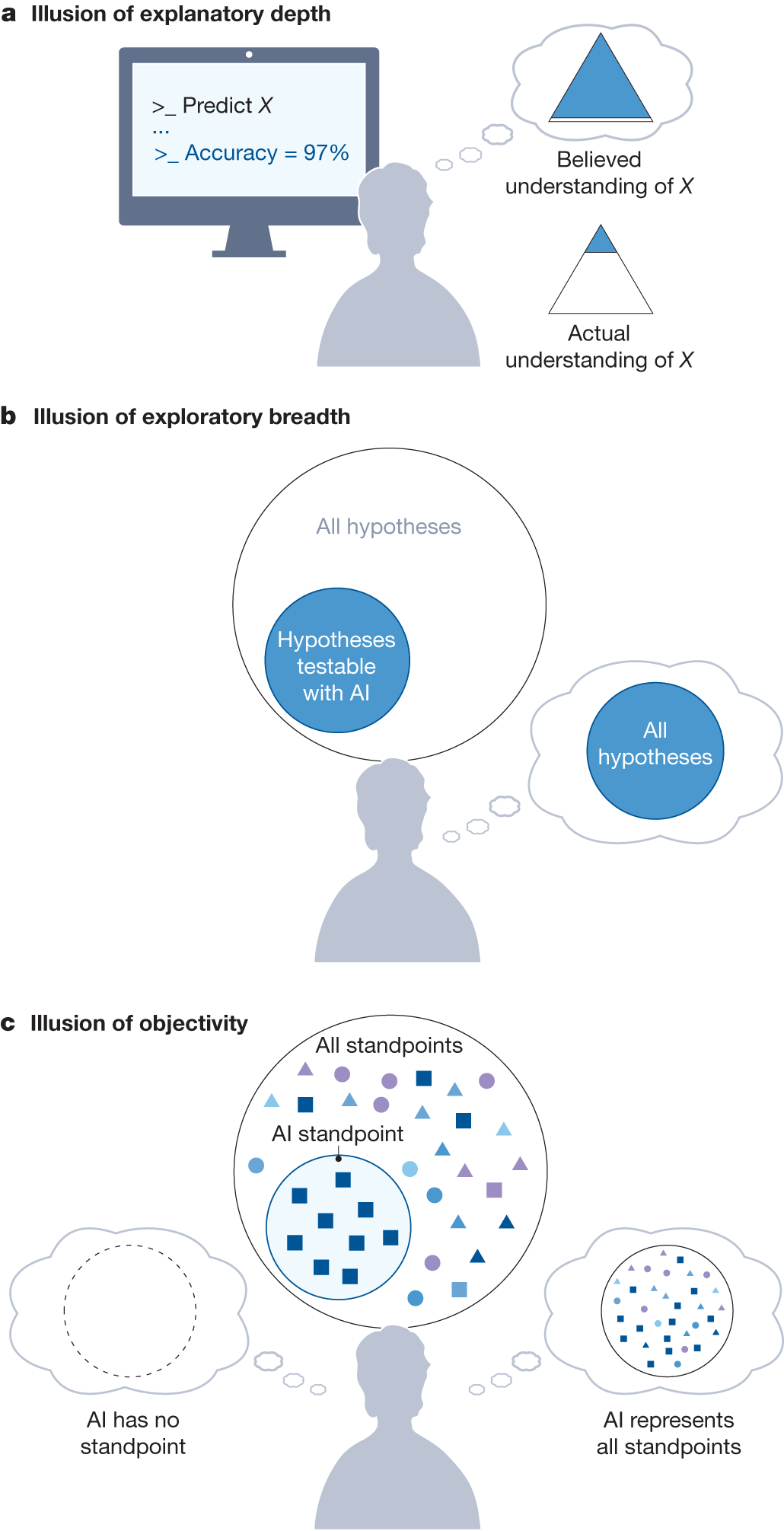
Scientists are enthusiastically imagining ways in which artificial intelligence (AI) tools might improve research. Why are AI tools so attractive and what are the risks of implementing them across the research pipeline? Here we develop a taxonomy of scientists’ visions for AI, observing that their appeal comes from promises to improve productivity and objectivity by overcoming human shortcomings. But proposed AI solutions can also exploit our cognitive limitations, making us vulnerable to illusions of understanding in which we believe we understand more about the world than we actually do. Such illusions obscure the scientific community’s ability to see the formation of scientific monocultures, in which some types of methods, questions and viewpoints come to dominate alternative approaches, making science less innovative and more vulnerable to errors. The proliferation of AI tools in science risks introducing a phase of scientific enquiry in which we produce more but understand less. By analysing the appeal of these tools, we provide a framework for advancing discussions of responsible knowledge production in the age of AI.
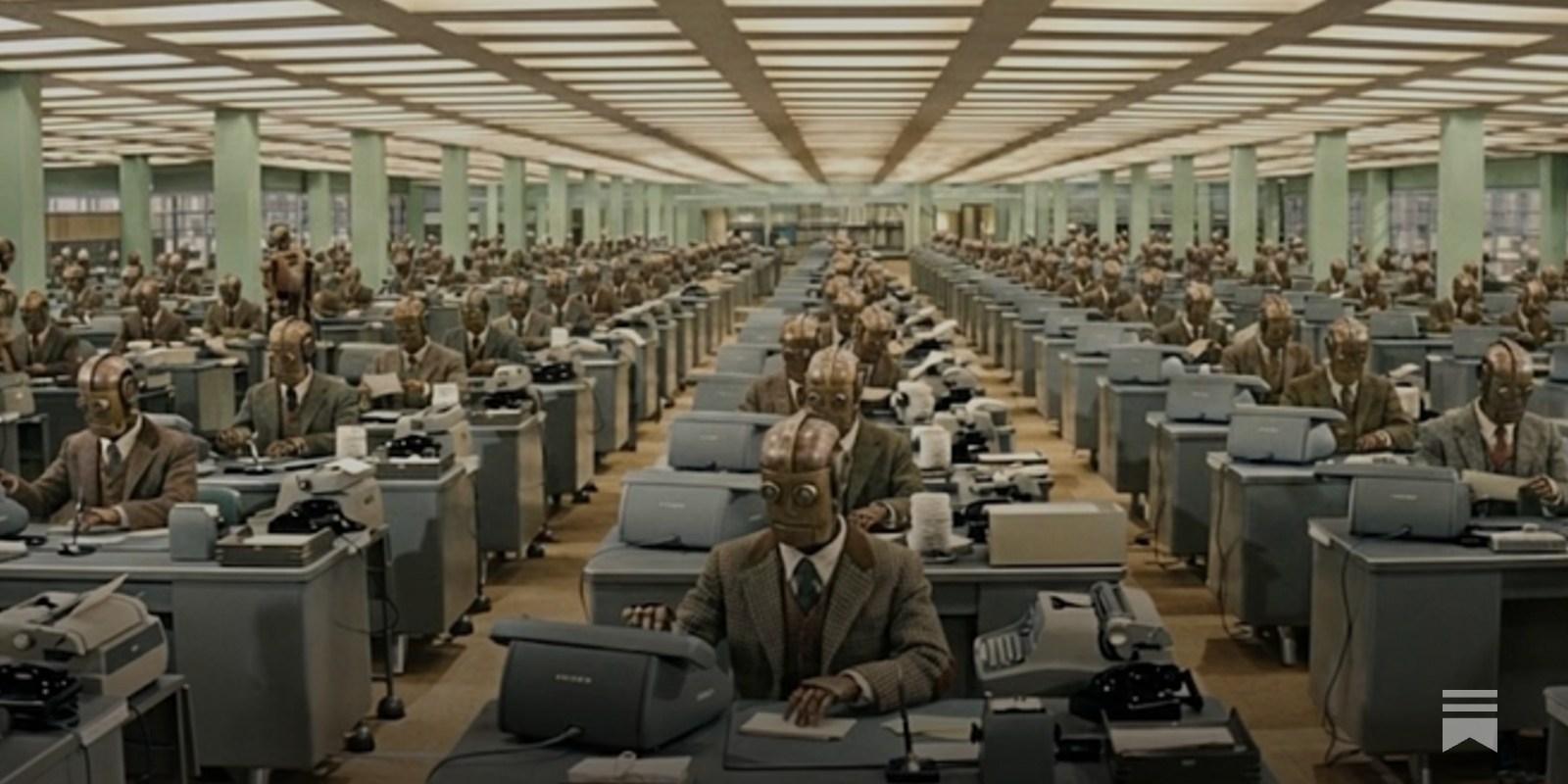
From Genius Science to Scenius Science - Cosmik Labs
Why personal AI tools might not be all we need to revolutionize science
Designing AI for Disruptive Science
Why scaling AI won’t automatically lead to paradigm shifts.
AI Standards Lab
AI safety standards worldwide must keep up with the rapid development and deployment of AI technology. Our mission is to help accelerate the writing of AI safety standards.
Science that Compounds: The Need for A New Substrate for Research in the Age of AI
This paper is a perspective from Lightcone Research, an open-source initiative building tooling for scientific research in the age of agentic AI.
No. 010: AutoScientists governance, AI-agent monoculture, nonsense-term retractions - The Hallway Track
The Hallway Track No. 010 - How AI is affecting the practice of science
No. 008: AI co-mathematician, compiler-verified protocols, open infrastructure bets - The Hallway Track
The Hallway Track No. 008 - How AI is affecting the practice of science
AI is turning research into a scientific monoculture
Generative AI deserves scientific attention. But the rush to study it is producing a feedback loop of topical and methodological convergence, flattening scientific imagination and crowding out the pluralism needed to keep research adaptive, resilient, and intellectually generative.

A golden age of science is coming
AI can do things humans researchers can’t, even in groups.

No. 026: AI use in science study, astronomy disclosure gap, Paper2Agent, SAIR initiative - The Hallway Track
The Hallway Track No. 026 - How AI is affecting the practice of science
AI Use in The Scholarly Kitchen - The Scholarly Kitchen
Some thoughts on the reader response the Scholarly Kitchen has seen regarding AI use by authors, a recent Nature News article on the efficacy of AI detection tools, and why it's important to keep experimenting to figure out what's ethically acceptable.
The Scaling Era: An Oral History of AI, 2019–2025
An inside view of the AI revolution, from the people an…

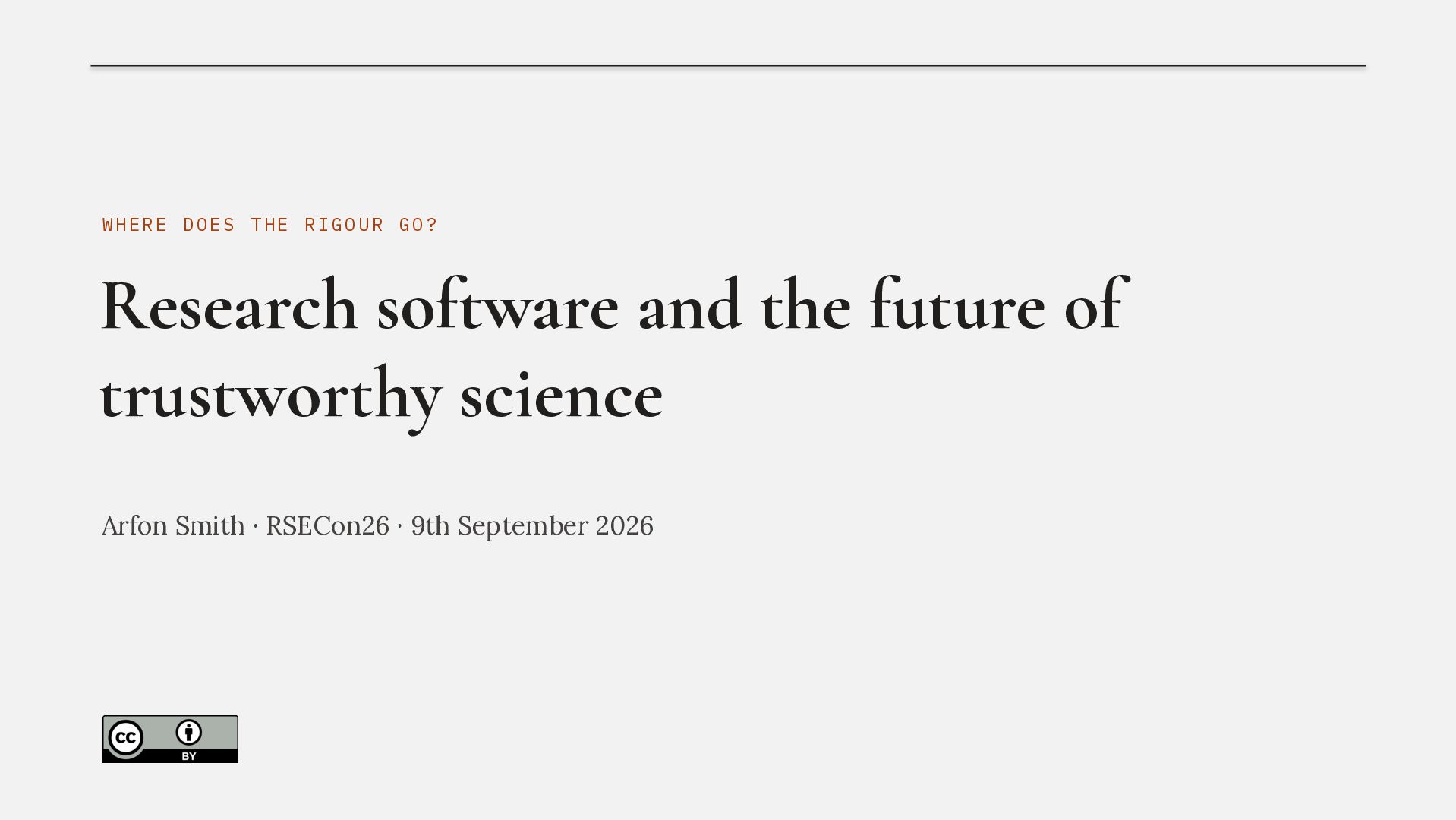
Where does the rigor go? Research software and the future of trustworthy science.
Generative AI now makes it dramatically easier to produce something that looks like research: analysis code, figures, literature reviews, even whole pap…
AI as the Catalyst of the New Paradigm of Science? | Cadmus Journal
The rapid advancement of Artificial Intelligence (AI) is reshaping the landscape of scientific inquiry. This article examines the challenges confronting modern science, including knowledge fragmentation, diminishing returns of current paradigms, and the disconnect between science and society. It explores how AI offers solutions enhancing collaboration and integrating knowledge—as well as considers the possible “darker side” of using AI in research. However, the advent of AI in science not only enhances scientific research but also redefines the role of human researchers and fosters a new paradigm of human understanding. By embracing these transformations, a more cohesive and responsive scientific enterprise can emerge.