


Why translated interfaces fail Arabic-speaking customers in the UAE: 12 things that break, from mirroring and numerals to forms, with an audit checklist.
Arabic English Website: Cost, Structure and SEO | OXEDGE
Arabic English website guide for UAE businesses: bilingual build costs in AED, translation and plugin fees, /ar/ URL structure, hreflang and a cost calculator.

Lane's Lexicon | 47,000+ Entries
The most powerful Arabic English dictionary: Lane's Lexicon and al-Mufradat in one search — advanced root analysis for scholars and students.

An interactive introduction to the terrific experience of rendering Arabic typography and its technical debt
This post was discussed in Lobsters and HackerNews

A new Arabic grammar of the written language
687 pages 19 cm; "Replaces the sixth edition of Thatcher's Arabic grammar."

Illuminating Typography Books
'Cultural Connectives', a book by Rana Abou Rjeily, bridges the divide between Arabic and Latin-based languages by cleverly comparing their typography.
Ecommerce SEO in Dubai: Categories, Schema, Arabic | OXEDGE
Ecommerce SEO in Dubai and the UAE: category pages that rank, filters without crawl traps, product schema with AED prices and Arabic pages Google can pair.

Neither Corpus Nor Edition: Building a Pipeline to Make Data Analysis Possible on Medieval Arabic Commentary Traditions
We have built a suite of tools in Python to proficiently analyze text reuse and intertextuality for a specific kind of set of medieval Arabic texts (commentaries) available in print. We take these printed editions, scan them, pre-process the images, give it to an OCR engine, clean the results, and store it in a data structure that mimics the explicit intertextual relation the texts have, and continue to perform data analysis on it. Digital approaches to medieval Arabic texts have either been at the micro-level in what has become known as a ‘digital edition’, i.e. the digital representation of one text, densely annotated, most commonly in TEI-XML, or it has been done at the macro-level in what is called a ‘digital corpus’, consisting of thousands of loosely encoded and sparsely annotated plain text files, accompanied by an entire infrastructure and high-performing software to perform broadly scoped queries. The micro-level generally is at the level of tens of thousands of words while the macro-level can be at the level of over a billion words. The micro-level is explicitly designed to be human readable first, while the macro-level is built to be machine readable first. At the micro-level, every little detail needs to be correct and in order, while at the macro-level a fairly large margin of error is still negligible as a mere rounding error. Amidst these levels we have been seeking a meso-level of digital analysis: neither edition nor corpus, but rather a group of texts at the level of hundreds of thousands to millions of words, with a small but perceptible margin of error, and a light but noticeable level of annotations, principally geared towards machine readability, but with ample opportunity for visual inspection and manual correction. In this paper we explain the rationale for our approach, the technical achievements it has led us to, and the results we so far obtained.

Ecommerce Website Development in Dubai | OXEDGE
Shopify, WooCommerce, Salla and custom ecommerce for UAE brands: local payments, COD, VAT invoices, couriers and Arabic, built by OXEDGE in Dubai.
New Google Translate Interface

The Quranic Arabic Corpus - Word by Word Grammar, Syntax and Morphology of the Holy Quran
Welcome to the Quranic Arabic Corpus, an annotated linguistic resource which shows the Arabic grammar, syntax and morphology for each word in the Holy Quran. The corpus provides three levels of analysis: morphological annotation, a syntactic treebank and a semantic ontology.
Useful phrases in Lebanese Arabic
A collection of useful phrases in Lebanese Arabic, a variety of Arabic spoken mainly in Lebannon with recorded mp3 audio sound files for all of them.
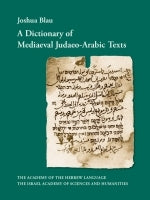
A Dictionary of Mediaeval Judaeo-Arabic Texts
In the Middle Ages, Jews in Arab lands used both Judaeo-Arabic and Hebrew as their literary languages. Mediaeval Judaeo-Arabic texts are written in Middle Arabic, which contains classical and later elements. The latter do not appear in standard dictionaries of Classical Arabic, and it is to these post-classical, neo-Arabic, and pseudo-correct terms and expressions, which to a great extent are identical with Middle Arabic elements found in other Arabic writings of the period, that Joshua Blau’s Dictionary of Mediaeval Judaeo-Arabic Texts is primarily devoted. The Dictionary is based largely on the works of the leading Jewish scholars of the period, including Saadia Gaon, Judah Halevi, and Maimonides, but it also refers to the Responsa literature, legal documents, and personal and commercial letters. This first comprehensive dictionary of Mediaeval Judaeo-Arabic contains about 9,000 entries. The lemmas are presented in both Arabic and Hebrew scripts, and are translated into Hebrew and English. A special section is devoted to lexicographical literature.
Arabica
Arabica is a coffee brew tracking app built on AT Protocol. Your brewing data is stored in your own Personal Data Server, giving you full ownership and portability.