

Paperclip — search, read, and analyze 11M+ biomedical papers, regulatory documents, clinical trials, and biological databases (UniProt, PDB, ChEMBL) from the command line.
Paperclip
Paperclip — search, read, and analyze 11M+ biomedical papers, regulatory documents, clinical trials, and biological databases (UniProt, PDB, ChEMBL) from the command line.
Paperclip
Paperclip — search, read, and analyze 11M+ biomedical papers, regulatory documents, clinical trials, and biological databases (UniProt, PDB, ChEMBL) from the command line.
Paperclip – The app people use to manage AI agents for work
Manage a team of AI agents to run your business. Org charts, budgets, governance, and goals — all in one deployment.

OpenMD Medical Reference
Medical reference platform and search engine indexing billions of documents from government agencies, global health organizations, and medical journals.


Rigor and Transparency Index, a new metric of quality for assessing biological and medical science methods
Abstract The reproducibility crisis in science is a multifaceted problem involving practices and incentives, both in the laboratory and in publication. Fortunately, some of the root causes are known and can be addressed by scientists and authors alike. After careful consideration of the available literature, the National Institutes of Health identified several key problems with the way that scientists conduct and report their research and introduced guidelines to improve the rigor and reproducibility of pre-clinical studies. Many journals have implemented policies addressing these same criteria. We currently have, however, no comprehensive data on how these guidelines are impacting the reporting of research. Using SciScore, an automated tool developed to review the methods sections of manuscripts for the presence of criteria associated with the NIH and other reporting guidelines, e.g., ARRIVE, RRIDs, we have analyzed ~1.6 million PubMed Central papers to determine the degree to which articles were addressing these criteria. The tool scores each paper on a ten point scale identifying sentences that are associated with compliance with criteria associated with increased rigor (5 pts) and those associated with key resource identification and authentication (5 pts). From these data, we have built the Rigor and Transparency Index, which is the average score for analyzed papers in a particular journal. Our analyses show that the average score over all journals has increased since 1997, but remains below five, indicating that less than half of the rigor and reproducibility criteria are routinely addressed by authors. To analyze the data further, we examined the prevalence of individual criteria across the literature, e.g., the reporting of a subject’s sex (21-37% of studies between 1997 and 2019), the inclusion of sample size calculations (2-10%), whether the study addressed blinding (3-9%), or the identifiability of key biological resources such as antibodies (11-43%), transgenic organisms (14-22%), and cell lines (33-39%). The greatest increase in prevalence for rigor criteria was seen in the use of randomization of subjects (10-30%), while software tool identifiability improved the most among key resource types (42-87%). We further analyzed individual journals over time that had implemented specific author guidelines covering rigor criteria, and found that in some journals, they had a big impact, whereas in others they did not. We speculate that unless they are enforced, author guidelines alone do little to improve the number of criteria addressed by authors. Our Rigor and Transparency Index did not correlate with the impact factors of journals.
Bioprinting: From a DIY revolution to patients
Bioprinting, a technology that emerged from open source communities, has the potential to improve medical science.

Curvenote Reader brings a better reading experience to half a million openRxiv preprints
Curvenote Reader is now live across half a million bioRxiv preprints - bringing inline citations, zoomable figures, and connected context directly into the reading flow. Find out how we modernized one of science's biggest preprint repositories without disrupting a single workflow.
We are starting to live RESTful times in Biosciences | El Cau del Drac
It's a long time since Molecular Biology data (from sequence strings to protein structural coordinates) are being released openly to the public, as it's the Web an interface for exploring and visualizing those data. Indeed, my first approaches to Bioinformatics and to, more or less, serious programing were preparing CGI points to command-line applications or to results of analysed data.
Connected Papers | Find and explore academic papers
A unique, visual tool to help researchers and applied scientists find and explore papers relevant to their field of work.
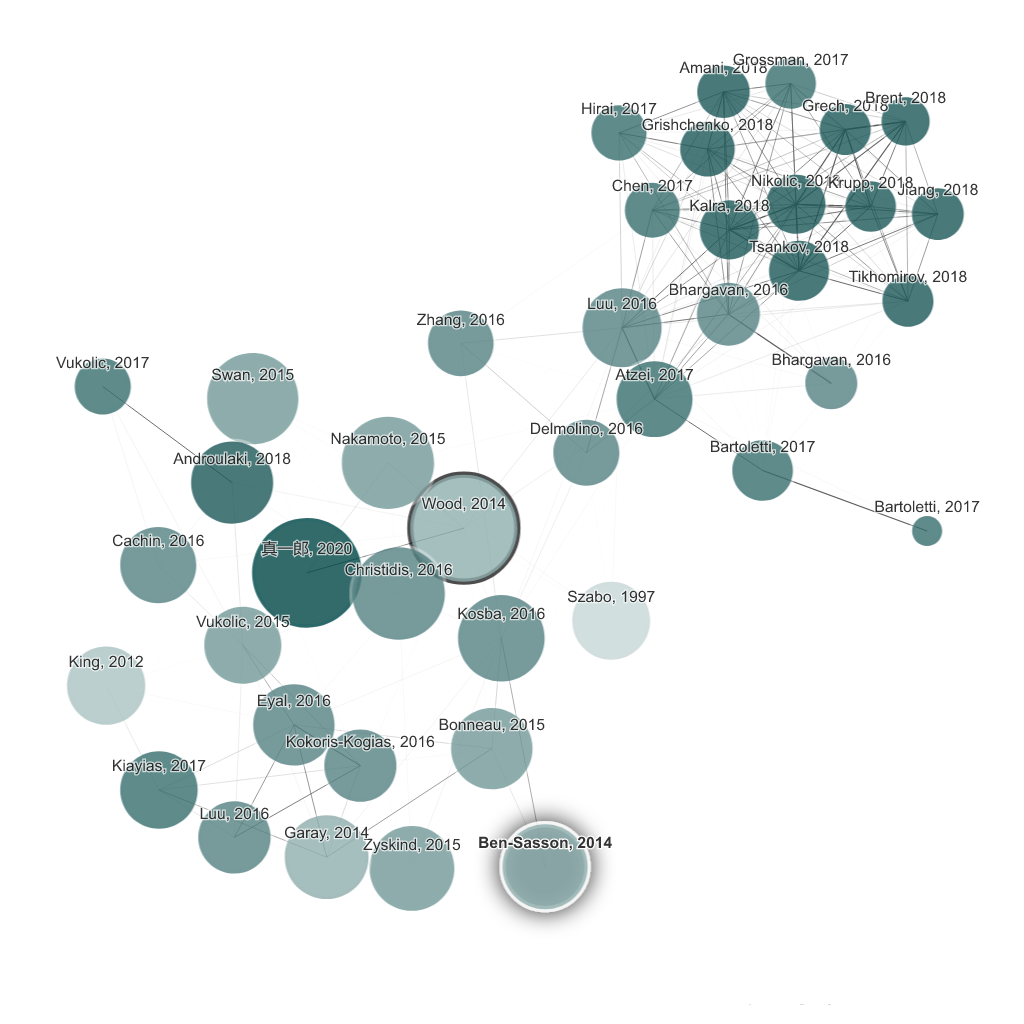
Connected Papers | Find and explore academic papers
A unique, visual tool to help researchers and applied scientists find and explore papers relevant to their field of work.
A tale of two citations
Are scientists publishing more duplicate papers? An automated search of seven million biomedical abstracts suggests that they are, report Mounir Errami and Harold Garner.

Papertrail
Papertrail — your reading life on the AT Protocol, built on BookHive.
millipds/src/millipds/repo_ops.py at main · DavidBuchanan314/millipds
A from-scratch atproto PDS implementation in Python - DavidBuchanan314/millipds
Docracy Opens Up Document Genome Project To Let You Compare And Contrast Contracts And Patents | TechCrunch
Docracy, a TechCrunch Hackathon winner aimed at creating a database of open legal documents, has been relatively quiet over the past few months. After taking a $225k investment from Reed Elsevier and Jeff Zwelling, Docracy is now ready to unveil what it's been working on for so long: The Document Genome project.

Researcher Pages

All things related to personal pages for researchers on atproto
Sifa — Portable professional identity on the open web

Lanyards - Researcher Profiles on AT Protocol

Ronen Tamari (@ronentk.me)

Mosh Lee (@mosh.bsky.social)