From the renewed controversies over financial regulation and the problem of too-big-to-fail (TBTF) financial firms, to the clash over the FCC’s ‘net neutrality’
Infrastructural Regulation and the New Utilities
From too-big-to-fail financial firms to net neutrality to internet platforms and the water crisis in Flint, Michigan, we now face a variety of legal and public
Owning media again - Kedara.eu
This year, one of my aspirations is to rely less on the big streaming services for my entertainment. Why? Well, for one thing, if we give too much power to large corporations by getting overly …

The Antitrust Revolution, by Barry C. Lynn
Liberal democracy’s last stand against Big Tech

What happened to the fight for the Internet? -- Dustycloud Brainstorms
At the moment I am writing this, bad internet bills are being proposed across the US, Canada, Europe, and the UK. They're using the usual tactics: they claim they're fighting for kids or fighting security risks, but in general, that's what surveillance and censorship bills have always claimed.
How One 1990s Browser Decision Created Big Tech’s Data Monopolies (And How We Might Finally Fix It) - Above the Law
From the take-back-control dept

Internet for the People: The Fight for Our Digital Future
"For all the informational convenience the internet offers, it is deeply flawed. How can it be improved? Writer Ben Tarnoff proposes one possibility in this intriguing book, which urges the development of 'a public lane on the information superhighway.' It's worth checking out for yourself." – Seth MacFarlane Why is the internet so broken, and what could ever possibly fix it? In Internet for the People, leading tech writer Ben Tarnoff offers an answer. The internet is broken, he argues, because it is owned by private firms and run for profit. Google annihilates your privacy and Facebook amplifies right-wing propaganda because it is profitable to do so. But the internet wasn't always like this—it had to be remade for the purposes of profit maximization, through a years-long process of privatization that turned a small research network into a powerhouse of global capitalism. Tarnoff tells the story of the privatization that made the modern internet, and which set in motion the crises that consume it today. The solution to those crises is straightforward: deprivatize the internet. Deprivatization aims at creating an internet where people, and not profit, rule. It calls for shrinking the space of the market and diminishing the power of the profit motive. It calls for abolishing the walled gardens of Google, Facebook, and the other giants that dominate our digital lives and developing publicly and cooperatively owned alternatives that encode real democratic control. To build a better internet, we need to change how it is owned and organized. Not with an eye towards making markets work better, but towards making them less dominant. Not in order to create a more competitive or more rule-bound version of privatization, but to overturn it. Otherwise, a small number of executives and investors will continue to make choices on everyone’s behalf, and these choices will remain tightly bound by the demands of the market. It's time to demand an internet by, and for, the people now.
Internet for the People: The Fight for Our Digital Future
"For all the informational convenience the internet offers, it is deeply flawed. How can it be improved? Writer Ben Tarnoff proposes one possibility in this intriguing book, which urges the development of 'a public lane on the information superhighway.' It's worth checking out for yourself." – Seth MacFarlane Why is the internet so broken, and what could ever possibly fix it? In Internet for the People, leading tech writer Ben Tarnoff offers an answer. The internet is broken, he argues, because it is owned by private firms and run for profit. Google annihilates your privacy and Facebook amplifies right-wing propaganda because it is profitable to do so. But the internet wasn't always like this—it had to be remade for the purposes of profit maximization, through a years-long process of privatization that turned a small research network into a powerhouse of global capitalism. Tarnoff tells the story of the privatization that made the modern internet, and which set in motion the crises that consume it today. The solution to those crises is straightforward: deprivatize the internet. Deprivatization aims at creating an internet where people, and not profit, rule. It calls for shrinking the space of the market and diminishing the power of the profit motive. It calls for abolishing the walled gardens of Google, Facebook, and the other giants that dominate our digital lives and developing publicly and cooperatively owned alternatives that encode real democratic control. To build a better internet, we need to change how it is owned and organized. Not with an eye towards making markets work better, but towards making them less dominant. Not in order to create a more competitive or more rule-bound version of privatization, but to overturn it. Otherwise, a small number of executives and investors will continue to make choices on everyone’s behalf, and these choices will remain tightly bound by the demands of the market. It's time to demand an internet by, and for, the people now.
Eaten by the Internet
This book makes internet infrastructure visible as a force of political power, which is transforming the social world, from the bottom up—through fifteen chapters contributed by a global set of researchers, activists, and techies. We are living a unique moment: internet technologies are the default infrastructure for society, not just how we communicate but also how we organise our social life, politics, and economy, all the way down to our material environments, like cities. Our world is eaten by the internet. This means that those who control the internet control the bounds of public speech, economic production, social cohesion, and politics, making its infrastructure a core political terrain in the networked age. The book’s chapters cover a wide set of topics, spanning from the global politics of content moderation by internet infrastructure to the colonialism inherent in the race to plug the moon, from the harms wrought by blockchain companies in rural America to the particularities of online censorship across Asia. The chapters take on thorny topics, discussing power consolidation in the advertisement and cloud industry, the role of internet infrastructure in the war in Ukraine, and tech’s environmental impact—amongst others. In doing so, this book roots contemporary technology debates in the politics of internet infrastructure and urges us to ask how can we ensure our infrastructures sustain us, rather than consume us?

Unlocking the commons
"The most powerful and interesting media model will remain raising money from members who don't just permit but <em>insist</em> that the product be given away for free."

The Desktop Regulatory State
Kevin A. Carson The Desktop Regulatory State The Countervailing Power of Individuals and Networks March 2016

Symposium: A Skeptical View of Information Fiduciaries
In recent years, the concept of “information fiduciaries” has surged to the forefront of debates on platform regulation. In a forthcoming essay, we question the wisdom of applying a fiduciary framework to dominant digital platforms.

The Wealth of Networks
The Wealth of Networks: How Social Production Transforms Markets and Freedom is a book by Harvard Law School professor Yochai Benkler published by Yale University Press on April 3, 2006. The book has been recognized as one of the most influential works of its time concerning the rise and impact of the Internet on the society, particularly in the sphere of economics. It also helped popularize the term Benkler coined few years earlier, the commons-based peer production (CBPP).

'It's digital colonialism': how Facebook's free internet service has failed its users
Free Basics, built for developing markets, focuses on ‘western corporate content’ and violates net neutrality principles, researchers say

As tech companies race to build data centers, more communities are pushing back
Concerns about electricity bills and local impacts are fueling bipartisan opposition to the massive data centers that power the digital economy, from cloud services to AI chatbots. In Wisconsin, as in other states, the tussles are personal – and fraught.

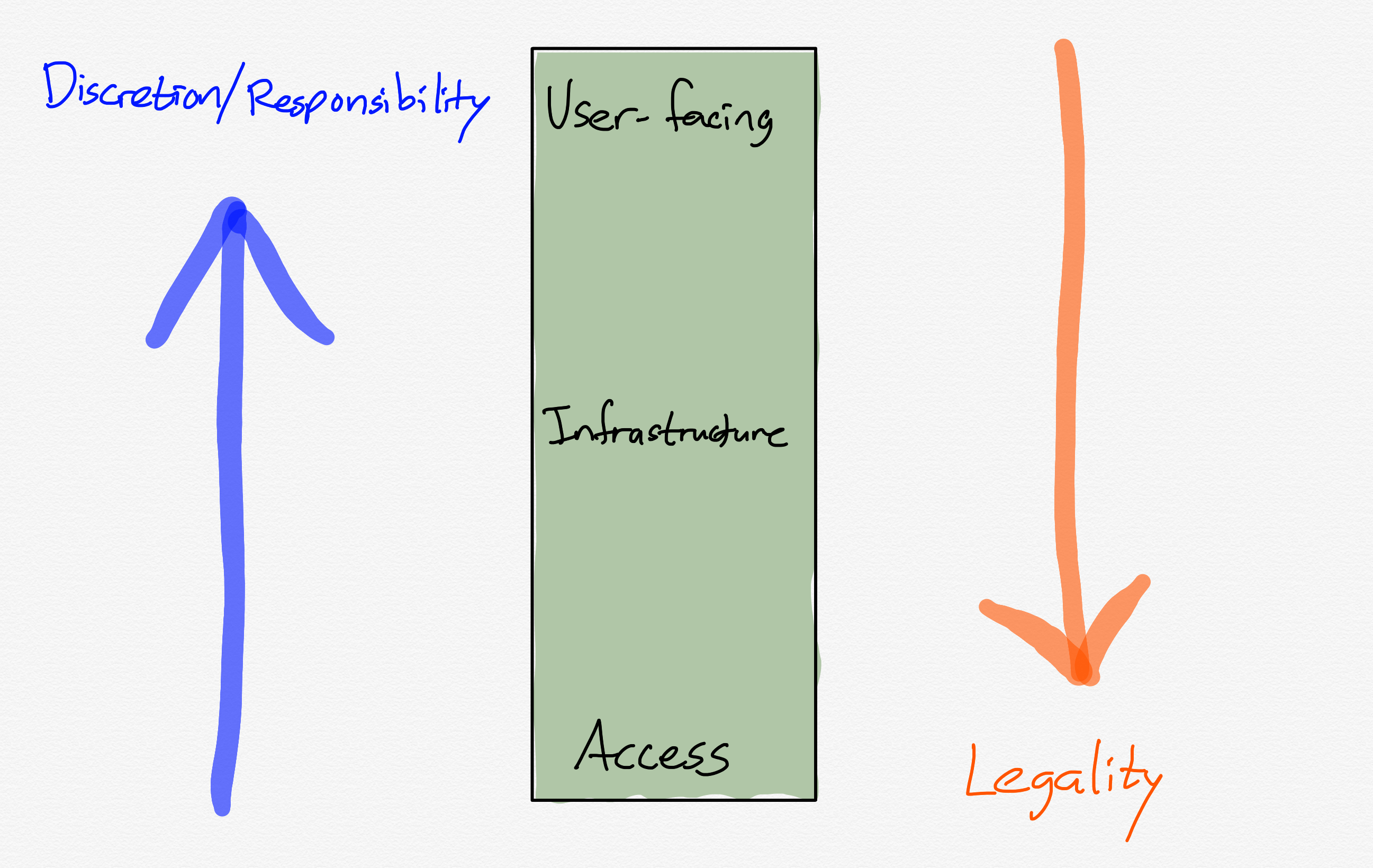
Is this a viable theory of change that points to an actual coherent vision for the future of a safe internet? There’s a lot of poor theories of change in current legislation on both sides of the aisle. Who is championing public utility moderation as an alternative to panopticon age gating?
Tynan Purdy ⁂
More and more I think moderation as a whole should be publicly funded. Lots of institutions providing lots of diverse moderation services would unlock product creators and communities to thrive safely.

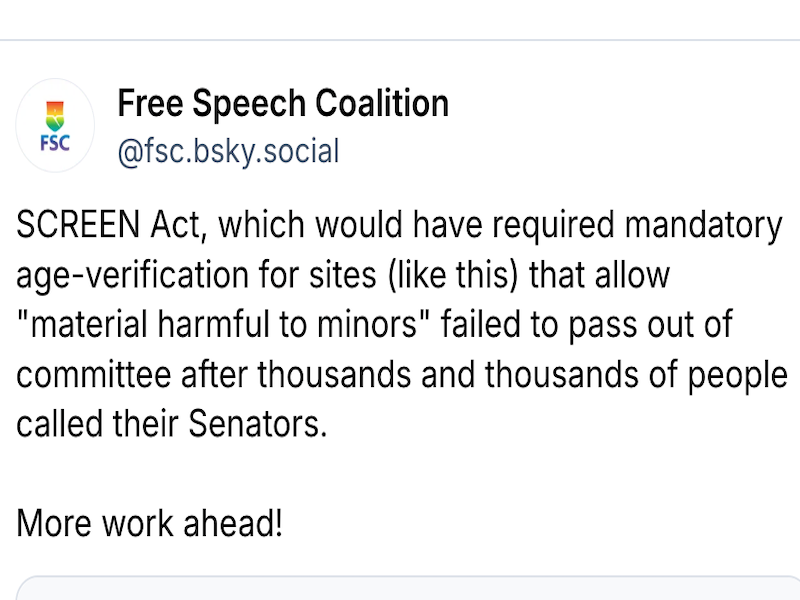
Activism makes a difference: the SCREEN Act unexpectedly fails in committee! But KOSA advances, so keep up the pressure
Congress Wants To Hand Your Parenting to Big Tech

Should Have Known Is the Wrong Standard for Kids’ Safety Laws

The SCREEN Act is a Christian Nationalist Nightmare

The Senate Should Reject KOSA's Privacy Risks
"The S is for surveillance": fighting KOSA and bad internet bills in the ATmosphere and the fediverses