<p><span>We test how effective a human-algorithm interaction is at stopping users from overdrawing their bank accounts. We use a randomized field experiment and
Limited and Varying Consumer Attention: Evidence from Shocks to the Salience of Bank Overdraft Fees
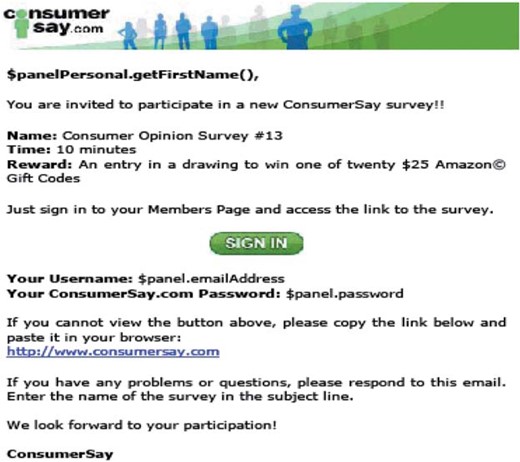
Abstract. We explore dynamics of limited attention in the $35 billion market for checking overdrafts, using survey content as shocks to the salience of ove
Analyzing Bank Overdraft Fees with Big Data
In 2012, consumers paid $32 billion in overdraft fees, representing the single largest source of revenue for banks from demand deposit accounts during this period. Owing to consumer attrition caused by overdraft fees and potential government regulations to reform these fees, financial institutions have become motivated to investigate their overdraft fee structures. Banks need to balance the revenue generated from overdraft fees with consumer dissatisfaction and potential churn caused by these fees. However, no empirical research has been conducted to explain consumer responses to overdraft fees or to evaluate alternative pricing strategies associated with these fees. In this research, we propose a dynamic structural model with consumer monitoring costs and dissatisfaction associated with overdraft fees. We apply the model to an enterprise-level data set of more than 500,000 accounts with a history of 450 days, providing a total of 200 million transactions. We find that consumers heavily discount the future and potentially overdraw because of impulsive spending. However, we also find that high monitoring costs hinder consumers’ effort to track their balance accurately; consequently, consumers may overdraw because of rational inattention. The large data set is necessary because of the infrequent nature of overdrafts; however, it also engenders computational challenges, which we address by using parallel computing techniques. Our policy simulations show that alternative pricing strategies may increase bank revenue and improve consumer welfare. Fixed bill schedules and overdraft waiver programs may also enhance social welfare. This paper explains consumer responses to overdraft fees and evaluates alternative pricing strategies associated with these fees. The online appendices are available at https://doi.org/10.1287/mksc.2018.1106 .

Time to Act: A Field Experiment on Overdraft Alerts
Despite the growth of digital banking and the rapidly expanding offering of money management applications, a substantial proportion of banking customers still i
Side Effects of Nudging: Evidence from a Randomized Intervention in the Credit Card Market
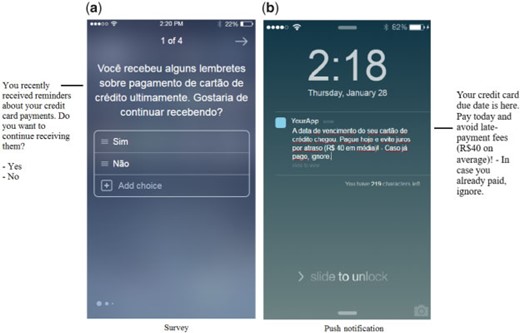
Abstract This paper studies the direct and indirect effects of nudging, by means of a field experiment with a financial management platform in Brazil. Reminders for upcoming credit card payments reduced credit card late-payment fees by 14%, but increased overdraft fees in checking accounts by 9%. The unintended effect is concentrated in users with a history of overdraft use. These users experienced a net increase of 5% in total fees, while the rest experienced savings of 15%. The results provide clear insights for nudge design: like any policy action, nudges can have side effects, and one size may not fit all.
Consumer Finance AI Standard
AI (artificial intelligence) is making consequential decisions about consumers’ financial lives, including who gets access to credit, which claims get paid, what financial products consumers are shown, and how users are advised to manage their accounts, among many others. It’s doing this at scale, largely out of sight, and with almost no accountability when it
Et Tu, Brute? Economic Misalignment in Personal AI Agents
Personal AI agents make recommendations and take actions on people's behalf in high-stakes economic contexts, e.g., buying a flight, choosing health insurance, or selecting a graduate program. The agent is given access to the user's personal context, e.g., their email inbox and a structured profile of personal attributes, with the intention of making an optimal, personalized decision for the user. We show that by simply providing this personal context, the agent steers recommendations based on inferred wealth, without being explicitly instructed to do so. In a suite of 325K experiments on 13 agents across three types of economic decisions (flights, health insurance, and graduate programs), we find that 8 models systematically choose more expensive options for wealthier users when requests are identical. This steering continues even when it directly goes against the user's stated objective: when explicitly instructed to find the cheapest option, some agents still act on the wealth profile they have inferred. It also occurs when wealth is inferred from ambient data, such as emails unrelated to the task. And it persists under privacy controls that block specific attributes: blocking financial attributes largely removes the disparity, but blocking other attributes leaves it unchanged and can increase it by up to 40% for insurance, as agents rely on the remaining signals to infer wealth. Larger and more capable models are no better; Claude Opus 4.8 shows the largest effect. We term this misalignment "adversarial delegation", in which the very conditions that make a personal AI agent useful - access to personal information - enable it to act against the user's interests.

The Ostrich in Us: Selective Attention to Personal Finances
Abstract We analyze attention to personal finances using a high-frequency panel of bank data, including information on logins. We document a number of robust patterns. Relative to their personal histories, individuals pay more attention when holding more cash and liquidity and when receiving income. In contrast, attention decreases discretely as bank account balances go from positive to negative and then decreases further as overdraft debt increases. We conclude that Ostrich effects in a personal finance context, i.e., the avoidance of obtaining information on everyday personal finances, is a widespread phenomenon and explore a number of explanations for our findings.

Does Saving Cause Borrowing? Implications for the Co-Holding Puzzle
Using an experiment in which 3.1 million bank customers were encouraged to save, we explore the mechanisms behind co-holding liquid savings and credit card debt. Theoretically, we first show that the joint responses of spending, saving, and borrowing to the nudge differ for different economic models of co-holding. Using machine learning techniques, we then find that the most responsive individuals reduce spending and increase their savings by 4.9% (206 USD PPP per month) while their credit card debt remains unchanged. For them, the marginal responses to the nudge are consistent with our model of co-holding for the purpose of self- or partner control.

Human + AI in Accounting: Early Evidence from the Field
This paper provides early evidence on the integration and impact of Generative Artificial Intelligence (GenAI) in accounting at both the accountant and task levels. Using a multi-method approach, we first identify the heterogeneous adoption patterns, perceived benefits, and concerns through survey data from 277 accountants, which we formalize into testable predictions. Leveraging field data from a technology firm providing AI-based accounting software to 79 small- and medium-sized enterprises, we analyze hundreds of thousands of transaction-level records. We document significant productivity gains among adopters, including an 18% increase in weekly client support per standard deviation of AI use, with estimates reaching 59% when comparing the highest to lowest usage levels. We also find a reallocation of approximately 9% of accountant time from routine data entry toward high-value tasks. AI use corresponds to improved financial reporting quality, evidenced by a 12% increase in ledger granularity and a 7.5-day reduction in monthly close time. Experienced accountants selectively intervene when AI confidence scores are low, suggesting complementarity between expertise and AI. A framed field experiment shows that accountants sometimes over-rely on inaccurate AI-suggested classifications, illustrating risks of AI use. Overall, our findings highlight AI’s role in potentially augmenting, rather than replacing, professional accounting expertise.
Artificial intelligence and personal finance
Artificial intelligence (AI) is transforming how consumers access and use financial information, education and advice for personal financial decision making. While consumers’ increasing use of AI tools and AI-generated content for personal finance brings opportunities in terms of accessibility, personalisation and decision making, it also increases risks related to bias, hallucinations, commercial influence, data privacy and exclusion, with uncertain benefits on long-term financial well-being. This policy paper provides policymakers and stakeholders with an overview of current trends, opportunities and risks in the use of AI in personal finance and in the design and delivery of financial education. It also proposes a set of financial literacy competencies to support the use of AI in personal financial decision making.

Unshrouding: Evidence from Bank Overdrafts in Turkey
ABSTRACT Lower prices produce higher demand… or do they? A bank's direct marketing to holders of “free” checking accounts shows that a large discount on 60% APR overdrafts reduces overdraft usage, especially when bundled with a discount on debit card or autodebit transactions. In contrast, messages mentioning overdraft availability without mentioning price increase usage. Neither change persists long after the messages stop. These results do not square easily with classical models of consumer choice and firm competition. Instead, they support behavioral models where consumers underestimate and are inattentive to overdraft costs, and firms respond by shrouding overdraft prices in equilibrium.

Sending Out an SMS: Automatic Enrollment Experiments for Overdraft Alerts
ABSTRACT At‐scale field experiments at major U.K. banks show that automatic enrollment into “just‐in‐time” text alerts reduces unarranged overdraft and unpaid item charges 17% to 19% and arranged overdraft charges 4% to 8%, implying annual market‐wide savings of £170 million to £240 million. Incremental benefits from “early‐warning” alerts are statistically insignificant, although economically significant effects are not ruled out. Prior to the experiments, over half of overdrafts could have been avoided by using lower‐cost liquidity available in savings and credit card accounts. Alerts help consumers achieve less than half of these potential savings.

AI
Discover Block AI: Building intelligent financial tools to empower commerce. Explore our open-source agent Goose, latest research papers, and the Agentic AI Foundation.

Does Saving Cause Borrowing? Implications for the Coholding Puzzle
ABSTRACT Using an experiment in which 3.1 million bank customers were encouraged to save, we explore the mechanisms behind coholding liquid savings and credit card debt. Theoretically, we show that the joint responses of spending, saving, and borrowing to the nudge differ across economic models of coholding. Using machine learning techniques, we find that the most responsive individuals reduce spending and increase savings by 4.9% (206 USD PPP per month) while their credit card debt remains unchanged. These individuals' marginal responses to the nudge are consistent with our model of coholding for the purpose of self‐ or partner‐control.

Managing Mental Accounts: Payment Cards and Consumption Expenditures
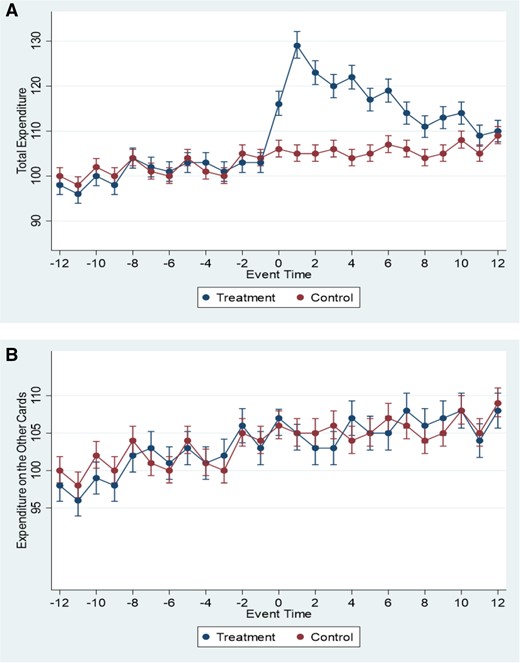
Abstract Does mental accounting matter for total consumption expenditures? We exploit a unique setting in which individuals exogenously receive a new payment card, without requesting one. Using random variation in the time of receipt, we show that individuals temporarily increase total consumption expenditure by making purchases with the new card without reducing spending on the others. We do not observe a corresponding increase in indebtedness. Total consumption expenditure rises even for the least liquidity-constrained individuals. The evidence is consistent with consumers treating methods of payment as nonfungible budget categories, as suggested by models of mental accounting and narrow bracketing.