


Despite the growth of digital banking and the rapidly expanding offering of money management applications, a substantial proportion of banking customers still i
Sending Out an SMS: Automatic Enrollment Experiments for Overdraft Alerts
ABSTRACT At‐scale field experiments at major U.K. banks show that automatic enrollment into “just‐in‐time” text alerts reduces unarranged overdraft and unpaid item charges 17% to 19% and arranged overdraft charges 4% to 8%, implying annual market‐wide savings of £170 million to £240 million. Incremental benefits from “early‐warning” alerts are statistically insignificant, although economically significant effects are not ruled out. Prior to the experiments, over half of overdrafts could have been avoided by using lower‐cost liquidity available in savings and credit card accounts. Alerts help consumers achieve less than half of these potential savings.

Limited and Varying Consumer Attention: Evidence from Shocks to the Salience of Bank Overdraft Fees
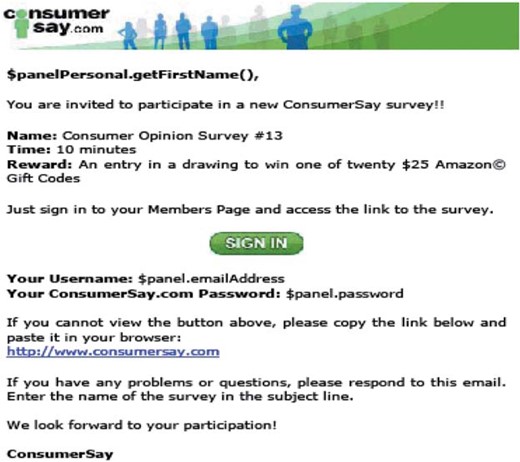
Abstract. We explore dynamics of limited attention in the $35 billion market for checking overdrafts, using survey content as shocks to the salience of ove
Analyzing Bank Overdraft Fees with Big Data
In 2012, consumers paid $32 billion in overdraft fees, representing the single largest source of revenue for banks from demand deposit accounts during this period. Owing to consumer attrition caused by overdraft fees and potential government regulations to reform these fees, financial institutions have become motivated to investigate their overdraft fee structures. Banks need to balance the revenue generated from overdraft fees with consumer dissatisfaction and potential churn caused by these fees. However, no empirical research has been conducted to explain consumer responses to overdraft fees or to evaluate alternative pricing strategies associated with these fees. In this research, we propose a dynamic structural model with consumer monitoring costs and dissatisfaction associated with overdraft fees. We apply the model to an enterprise-level data set of more than 500,000 accounts with a history of 450 days, providing a total of 200 million transactions. We find that consumers heavily discount the future and potentially overdraw because of impulsive spending. However, we also find that high monitoring costs hinder consumers’ effort to track their balance accurately; consequently, consumers may overdraw because of rational inattention. The large data set is necessary because of the infrequent nature of overdrafts; however, it also engenders computational challenges, which we address by using parallel computing techniques. Our policy simulations show that alternative pricing strategies may increase bank revenue and improve consumer welfare. Fixed bill schedules and overdraft waiver programs may also enhance social welfare. This paper explains consumer responses to overdraft fees and evaluates alternative pricing strategies associated with these fees. The online appendices are available at https://doi.org/10.1287/mksc.2018.1106 .

Sending Out an SMS: The Impact of Automatically Enrolling Consumers Into Overdraft Alerts
Incidental charges incurred by UK consumers on their Personal Current Account (PCA) are steep, especially for small amounts of unplanned borrowing and unpaid it
Using AI and Behavioral Finance to Cope with Limited Attention and Reduce Overdraft Fees
<p><span>We test how effective a human-algorithm interaction is at stopping users from overdrawing their bank accounts. We use a randomized field experiment and
Side Effects of Nudging: Evidence from a Randomized Intervention in the Credit Card Market
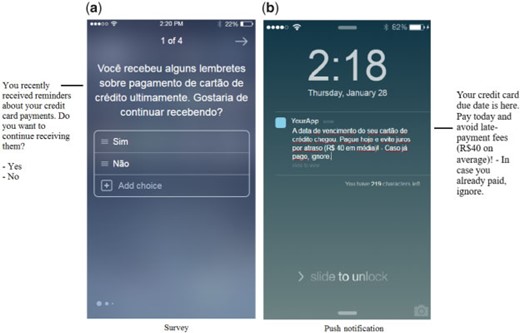
Abstract This paper studies the direct and indirect effects of nudging, by means of a field experiment with a financial management platform in Brazil. Reminders for upcoming credit card payments reduced credit card late-payment fees by 14%, but increased overdraft fees in checking accounts by 9%. The unintended effect is concentrated in users with a history of overdraft use. These users experienced a net increase of 5% in total fees, while the rest experienced savings of 15%. The results provide clear insights for nudge design: like any policy action, nudges can have side effects, and one size may not fit all.
Unshrouding: Evidence from Bank Overdrafts in Turkey
ABSTRACT Lower prices produce higher demand… or do they? A bank's direct marketing to holders of “free” checking accounts shows that a large discount on 60% APR overdrafts reduces overdraft usage, especially when bundled with a discount on debit card or autodebit transactions. In contrast, messages mentioning overdraft availability without mentioning price increase usage. Neither change persists long after the messages stop. These results do not square easily with classical models of consumer choice and firm competition. Instead, they support behavioral models where consumers underestimate and are inattentive to overdraft costs, and firms respond by shrouding overdraft prices in equilibrium.

The Ostrich in Us: Selective Attention to Personal Finances
Abstract We analyze attention to personal finances using a high-frequency panel of bank data, including information on logins. We document a number of robust patterns. Relative to their personal histories, individuals pay more attention when holding more cash and liquidity and when receiving income. In contrast, attention decreases discretely as bank account balances go from positive to negative and then decreases further as overdraft debt increases. We conclude that Ostrich effects in a personal finance context, i.e., the avoidance of obtaining information on everyday personal finances, is a widespread phenomenon and explore a number of explanations for our findings.

Disclosing the costs of co-holding liquid assets and high-interest debt has limited impact on behavior
Abstract Why do consumers simultaneously maintain low-yield liquid assets and high-interest revolving debt? This behavior, known as ``co-holding,'' affects 23\% of credit card users in our sample from a major international bank and costs the typical co-holder hundreds of dollars annually in unnecessary interest charges. Our analysis of 38 months of detailed banking records reveals that co-holding is remarkably persistent, with typical co-holders maintaining this behavior for most months observed. Our analysis also reveals that co-holding is not a static financial position: co-holders regularly deposit and withdraw from asset accounts while simultaneously making new credit card purchases. To test whether co-holding could be addressed through information disclosure, we conducted a large-scale field experiment (n = 125,328), providing clear information about co-holding behavior and its costs. Customers received targeted messages through their bank's mobile app, where they could easily transfer money from assets to pay down debt. Despite sufficient power to detect economically small effects, we found no meaningful changes in debt repayment amount, though customers did respond in other ways---making more frequent repayments and paying above required minimums. These results challenge explanations based on limited attention or information gaps and suggest that simple information disclosure, even when carefully designed and delivered through trusted channels, may not effectively address costly financial behaviors.

The Future of Money: How the Digital Revolution Is Tran…
A cutting-edge look at how accelerating financial chang…

How Do Consumers Avoid Penalty Fees? Evidence from Credit Cards
Using data from multiple card issuers, we show that the most common penalty fee type incurred by credit card holders, late payment fees, declines sharply over the first few months of card life. This phenomenon is wholly due to some consumers adopting automatic payments after a late payment event, thereby insuring themselves against future late payment fees. Nonadopters, who remain on manual-only payments, experience an unchanged high likelihood of future fees, despite exhibiting ample levels of available liquidity. Our results show that heterogeneity in adopting account management features of financial products, such as automatic payments, is important for understanding who avoids financial mistakes. This paper was accepted by Gustavo Manso, finance.

Do Liquidity Constraints and Interest Rates Matter for Consumer Behavior? Evidence from Credit Card Data
Abstract. This paper utilizes a unique data set of credit card accounts to analyze how people respond to credit supply. Increases in credit limits generate
Consumption Response to Credit Expansions: Evidence from Experimental Assignment of 45,307 Credit Lines
In a field experiment that constructs a randomized credit limit shock, participants borrow to spend 11 cents on the dollar in the first quarter and 28 cents by the third year. Effects extend to those far from the limit, those who had the new limits as available credit, and those with a liquid asset buffer. In the short-run, flexible and installment contracts are used in tandem, with unconstrained using installments more. Long-run borrowing is predominantly using installments. Near limits, participants borrow when credit expands but save out of constraints when limits are tight. Findings support a buffer-stock interpretation emphasizing precautionary saving.
Do Customers Learn from Experience? Evidence from Retail Banking
We study customers' adoption and subsequent switching decisions with regard to a menu of three-part tariff plans offered by a commercial bank. Using a rich panel data set covering 70,510 fee-based checking accounts over 30 months, before and after the introduction of the plans, we find that most customers adopt non-cost-minimizing plans, preferring plans with large monthly allowances and high fixed payments. Furthermore, after adoption, customers who exceed their allowances and consequently pay overage fees are more likely to switch to plans with larger allowances than customers who do not experience such fees. Notably, after switching, these overage-paying customers pay higher monthly payments than before. In contrast, switching customers who did not pay overage payments before switching pay less after switching. Our findings, unlike those of previous research on experience-based learning, suggest that the behavior of experienced customers does not converge to the predictions of neoclassical models. We propose that “overage aversion,” which is closely related to loss aversion and mental accounting, is the most plausible explanation for our findings. This paper was accepted by John List, behavioral economics.
Getting to the Top of Mind: How Reminders Increase Saving
We provide evidence from field experiments with three different banks that reminder messages increase commitment attainment for clients who recently opened commitment savings accounts. Messages that mention both savings goals and financial incentives are particularly effective, whereas other content variations such as gain versus loss framing do not have significantly different effects. Nor do we find evidence that receiving additional late reminders has an additive effect. These empirical results do not map neatly into existing models, so we provide a simple model where limited attention to exceptional expenses can generate undersaving that is in turn mitigated by reminders. Data, as supplemental material, are available at http://dx.doi.org/10.1287/mnsc.2015.2296 . This paper was accepted by Teck-Hua Ho, behavioral economics.
Timing to the Statement: Understanding Fluctuations in Consumer Credit Use
We show that consumers spend 15% more per day in the first week following the receipt of a credit card statement than in the days just prior to the statement. This increase in spending includes both an increase in the likelihood that they use the credit card in the first weeks following their statement and an increase in transaction amount on days they use the credit card. In contrast to the effect on credit card spending, debit card spending is unaffected by credit card statement issuance, suggesting that consumers are not simply switching among modes of payment. Our estimates are based on exogenous variation from bank-assigned statement dates. We propose and test several alternative explanations to this spending puzzle: optimization of the free float, salience effect of the credit card statement, mental accounting, liquidity constraints, and automatic payments. We find that the consumers most apt to spend early in the credit card cycle tend to be those who do not revolve balances and are not close to their credit limit. Thus, this paper documents a puzzle with mixed support for several alternative explanations. This paper was accepted by David Simchi-Levi, finance.