


This paper examines the effects of real-time payments on financially fragile individuals in the United States. Consumers rely on friends and family money to cop
Is cash perceived as more valuable than digital money? The mediating effect of psychological ownership and psychological distance
This research examines how the type of money (cash vs. digital) affects consumers’ perceived purchasing power (PPP) of the money and the mediating mechanisms of psychological ownership and psychological distance. Three lab experiments confirm that cash results in higher PPP than does digital money, and that both psychological ownership and psychological distance contribute to the effect of money type on PPP. Our findings provide theoretical implications for the psychological research on the type of money and its influence and practical implications for e-payment and online shopping behaviors.

Household Need for Liquidity and the Credit Card Debt Puzzle
Abstract. In the 2001 U.S. Survey of Consumer Finances, 27% of households report simultaneously revolving significant credit card debt and holding sizeable
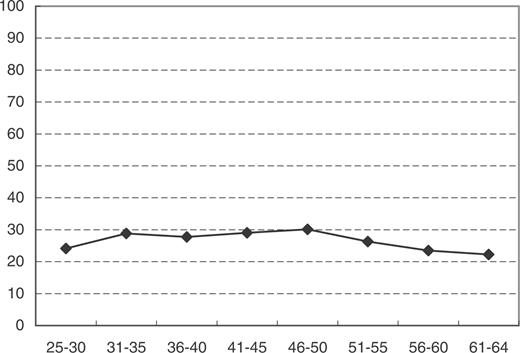
Effort for Payment: A Tale of Two Markets
The standard model of labor is one in which individuals trade their time and energy in return for monetary rewards. Building on Fiske's relational theory (1992), we propose that there are two types of markets that determine relationships between effort and payment: monetary and social. We hypothesize that monetary markets are highly sensitive to the magnitude of compensation, whereas social markets are not. This perspective can shed light on the well-established observation that people sometimes expend more effort in exchange for no payment (a social market) than they expend when they receive low payment (a monetary market). Three experiments support these ideas. The experimental evidence also demonstrates that mixed markets (markets that include aspects of both social and monetary markets) more closely resemble monetary than social markets.

Prosocial Compliance in P2P Lending: A Natural Field Experiment
We implement behavioral mechanisms in a natural field experiment to increase loan repayment rates on a peer-to-peer (P2P) lending website. The results show that text message reminders that convey lenders’ positive expectations considerably increase the likelihood that borrowers will repay their loans, whereas reminders emphasizing the adverse consequences of failure to repay loans do not have enduring effects. Our experiment results in an increase in loan repayments in the sample period. In addition, our reminders are cost-free to implement, showing the potential importance of such interventions in enhancing prosocial compliance in P2P lending. This paper was accepted by John List, behavioral economics.

Monopoly money: The effect of payment coupling and form on spending behavior.
Intra-Household Frictions, Anchoring, and the Credit Card Debt Puzzle
Abstract I study how intra-household frictions and anchoring contribute to the credit card debt puzzle, the co-holding of high-cost debt, and low-yield liquid assets. First, I find couples co-hold 42% more as units than as individuals relative to income. Moreover, in a natural experiment, couples do not cooperate to reduce high-cost debt, suggesting that intra-household frictions contribute to co-holding. Second, I find individuals who regularly make credit card debt payments equal to or near the minimum account for 59% of individual co-holding. The evidence suggests anchoring to the minimum payment contributes to co-holding via these low payments.
Cash versus Debit Card: The Role of Budget Control
Due to the financial crisis, an increasing number of households face financial problems. This may lead to an increasing need for monitoring spending and budgets. We demonstrate that both cash and the debit card are perceived as helpful in this respect. We show that, on average, consumers responsible for financial decision making within a household find cash and the debit card equally helpful for monitoring their household finances. Individuals differ in major respects, however. In particular, low earners and the liquidity‐constrained prefer cash as a budgeting tool. Finally, we present evidence that at an aggregated level, such preferences strongly affect consumer payment behavior. These findings suggest that the substitution of cash by cards may slow down because of the financial crisis.

Do Liquidity Constraints and Interest Rates Matter for Consumer Behavior? Evidence from Credit Card Data
Abstract. This paper utilizes a unique data set of credit card accounts to analyze how people respond to credit supply. Increases in credit limits generate
Families' Use of Payment Instruments During a Decade of Change in the U.S. Payment System
The Federal Reserve Board of Governors in Washington DC.
The Impact of Payment Frequency on Consumer Spending and Subjective Wealth Perceptions
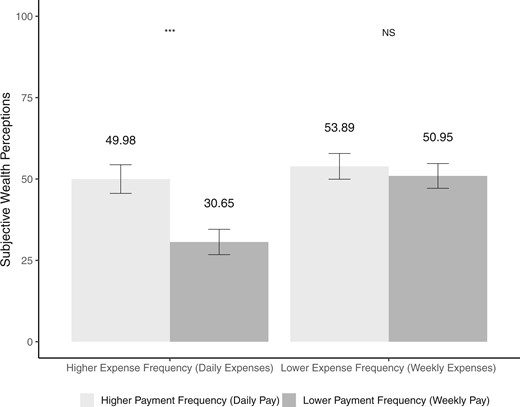
Abstract Payment frequency is a fundamental yet underexplored feature of consumers’ finances. As higher payment frequencies are becoming more prevalent, consumers are receiving more frequent yet smaller paychecks. An analysis of income and expenditure data of over 30,000 consumers from a financial services provider demonstrates a naturally occurring relationship between higher payment frequencies and increased spending. A series of lab studies support this finding, providing causal evidence that higher (vs. lower) payment frequencies increase spending. The effect of payment frequency on spending is driven by changes in consumers’ subjective wealth perceptions. Specifically, higher payment frequencies reduce consumers’ uncertainty in predicting whether they will have enough resources throughout a period, increasing their subjective wealth perceptions. As such, situational factors that reduce prediction uncertainty for those paid less frequently (e.g., the timing of consumers’ expenses, income levels) moderate the impact of payment frequency. The effects of payment frequency on subjective wealth and spending can occur even when objective wealth favors those with lower payment frequencies. More broadly, the current work underscores a need to understand how timing variations in consumers’ income impact their perceptions, behaviors, and general well-being.
Managing Mental Accounts: Payment Cards and Consumption Expenditures
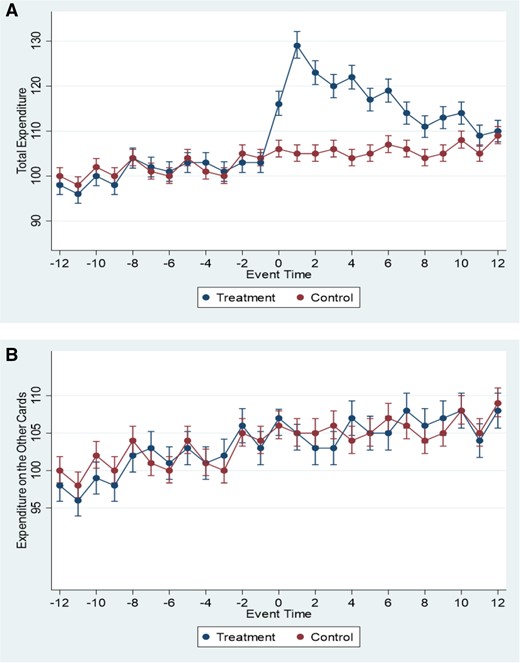
Abstract Does mental accounting matter for total consumption expenditures? We exploit a unique setting in which individuals exogenously receive a new payment card, without requesting one. Using random variation in the time of receipt, we show that individuals temporarily increase total consumption expenditure by making purchases with the new card without reducing spending on the others. We do not observe a corresponding increase in indebtedness. Total consumption expenditure rises even for the least liquidity-constrained individuals. The evidence is consistent with consumers treating methods of payment as nonfungible budget categories, as suggested by models of mental accounting and narrow bracketing.
Effects of Payment Mechanism on Spending Behavior: The Role of Rehearsal and Immediacy of Payments
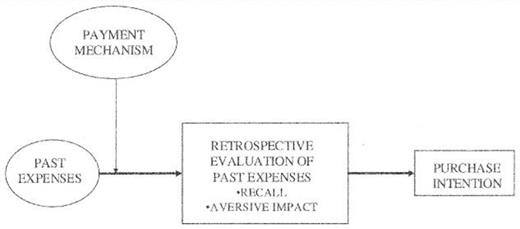
Abstract. Past expenses have been shown to influence future spending behavior by depleting available budgets. However, a prerequisite for this relationship
Explaining adoption and use of payment instruments by US consumers
Motivated by recent policy intervention into payments markets, we develop and estimate a structural model of adoption and use of payment instruments by U.S. consumers. Our structural model differentiates between the adoption and use of payment instruments. We evaluate substitution among payment instruments and welfare implications. Cash is the most significant substitute to debit cards in retail settings, whereas checks are the most significant in bill‐pay settings. Furthermore, low income consumers lose proportionally more than high income consumers when debit cards become more expensive, whereas the reverse is true when credit cards do.

Payment Depreciation: the Behavioral Effects of Temporally Separating Payments From Consumption
Abstract. Research suggests that individuals mentally track the costs and benefits of a consumer transaction for the purpose of reconciling those costs and
Debt and the Response to Household Income Shocks: Validation and Application of Linked Financial Account Data
The increasing availability of data derived from linked consumer financial accounts has the potential to dramatically expand the potential for research. Examining the most comprehensive existing set of linked-account data, consisting of transaction and balance sheet data for millions of Americans, I demonstrate the power and versatility of such sources. I discuss advantages and concerns arising from this type of data and match a range of distributional moments to external sources. As one application, I test consumption elasticities across households with varying levels, and types, of debt. I find that heterogeneity in consumption elasticity can be explained entirely by credit and liquidity.

The Co-holding Puzzle: New Evidence from Transaction-Level Data
Using detailed and highly disaggregated data on household finances, we examine the<br>tendency of consumers to “co-hold” savings and debt simultaneously. The di