


The newborn brain is busy processing information, searching for patterns, and learning. Here's a fascinating look at newborn cognitive development.
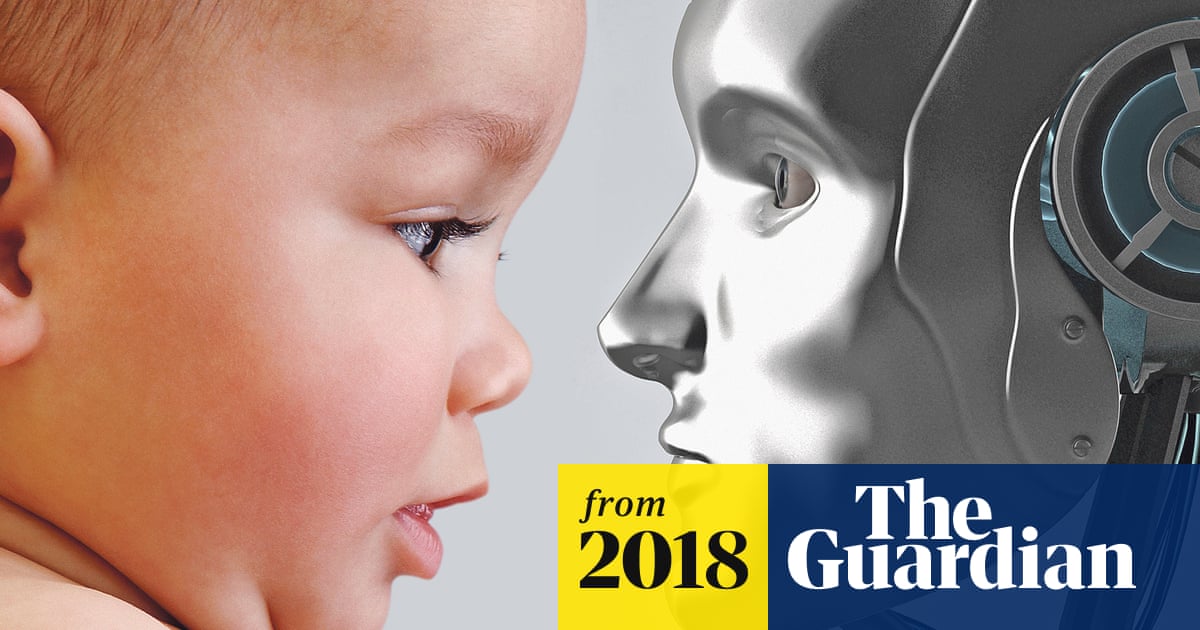
How babies learn – and why robots can’t compete
The long read: If we could understand how the infant mind develops, it might help every child reach their full potential. But seeing them as learning machines is not the answer
Infantilizing babies helps them learn language
Pretend conversations early on lead to better vocabularies later.

Babies Are Prewired To Perceive the World - Slashdot
In an investigation of neural connectivity in 30 infants ranging from six to 57 days old (with an average age of 27 days), neuroscientists found that circuit wiring precedes, and thus may guide, regional specialization, shedding light on how knowledge systems emerge in the brain. An anonymous reader...

Brainchildren
Minds are complex artifacts, partly biological and partly social; only a unified, multidisciplinary approach will yield a realistic theory of how they came i...
Innate connectivity patterns drive the development of the visual word form area
What determines the functional organization of cortex? One hypothesis is that innate connectivity patterns, either structural or functional connectivity, set up a scaffold upon which functional specialization can later take place. We tested this hypothesis by asking whether the visual word form area (VWFA), an experience-driven region, was already functionally connected to proto language networks in neonates scanned within one week of birth. Using the data from the Human Connectone Project (HCP) and the Developing Human Connectome Project (dHCP), we calculated intrinsic functional connectivity during resting-state functional magnetic resonance imaging (fMRI), and found that neonates showed similar functional connectivity patterns to adults. We observed that (1) language regions connected more strongly with the putative VWFA than other adjacent ventral visual regions that also show foveal bias, and (2) the VWFA connected more strongly with frontotemporal language regions than with regions adjacent to these language regions. These data suggest that the location of the VWFA is earmarked at birth due to its connectivity with the language network, providing evidence that innate connectivity instructs the later refinement of cortex.

“Infantile amnesia” occurs despite babies showing memory activity
It looks like humans actively suppress our earliest memories.

Babies Learning Language: My lab's AI policies and norms
Blog about fatherhood, langauge, developmental psychology, and cognitive science.
The Busy Person's Guide to Thinking
Thinking better isn't about learning more; it's about doing a few simple things that really help create unstoppable progress.

Social-information seeking in development: The child as experimental psychologist
Research has established that children are “naive psychologists”, adept at understanding and navigating the social world from an early age. However, most of this work has focused on how children process information that they acquire incidentally, for example by passively observing others’ actions. Here, we draw on literature framing children as intuitive scientists, who actively seek information and test hypotheses, to propose a view of children as naive experimental psychologists. From this perspective, children play an active role in selecting and pursuing relevant social information (e.g., about agents’ goals, traits, or relationships), whereby their search strategies are influenced both by context and task demands, as well as their prior beliefs, concepts, and domain-specific naive theories. We argue that the particular challenges associated with learning and reasoning about other minds may necessitate that children leverage their active learning competences, and we outline how the social domain uniquely constrains and shapes the learning process. We review existing research on social-information seeking in children and adults, and identify directions for future research, emphasizing that children’s developing social cognition should be understood in terms of the active, exploratory role they take in learning about and participating in the social world.
Social-Information Seeking in Development: The Child as Experimental Psychologist
Research has established that children are “naive psychologists,” adept at understanding and navigating the social world from an early age. However, most of this work has focused on how children process information that they acquire incidentally, for example, by passively observing others’ actions. Here, we draw on literature framing children as intuitive scientists who actively seek information and test hypotheses to propose a view of children as naive experimental psychologists. From this perspective, children play an active role in selecting and pursuing relevant social information (e.g., about agents’ goals, traits, or relationships), whereby their search strategies are influenced both by context and task demands, as well as their prior beliefs, concepts, and domain-specific naive theories. We argue that the particular challenges associated with learning and reasoning about other minds may necessitate that children leverage their active learning competences, and we outline how the social domain uniquely constrains and shapes the learning process. We review existing research on social-information seeking in children and adults and identify directions for future research, emphasizing that children’s developing social cognition should be understood in terms of the active, exploratory role they take in learning about and participating in the social world.

Learning Outside the Brain: Integrating Cognitive Science and Systems Biology
Learning is commonplace in organisms such as ourselves and even in organisms as far distant as the bee and the octopus. Such learning is implemented by brains, or neuronal networks, and has been extensively studied within ethology, psychology, cognitive science, and neuroscience. Whether learning also takes place in nonneuronal settings has remained a matter of sustained controversy, too often dominated by ideological views. In this survey, I will explain how learning can be rigorously interpreted as a form of information processing and then explore the evidence for whether learning also takes place in organismal contexts outside the brain, such as physiology, development, and individual cells. I will try to explain why it is important to build bridges in this way between cognitive science and systems biology, why concepts and methods from various branches of engineering may be helpful in this task, and what the eventual impact may be on how we think about the organism.
Natural Intelligence: Growing Emotional-Rational Minds
Evolving and Developing Intuitive, Emotional, Inferential, Deductive, and Healthy AI Minds - Part 2 of an Introductory Series of Four Posts

Study: Names change how an infant's memory encodes objects
A new study shows that naming conventions will change how infants represent objects in their memories.

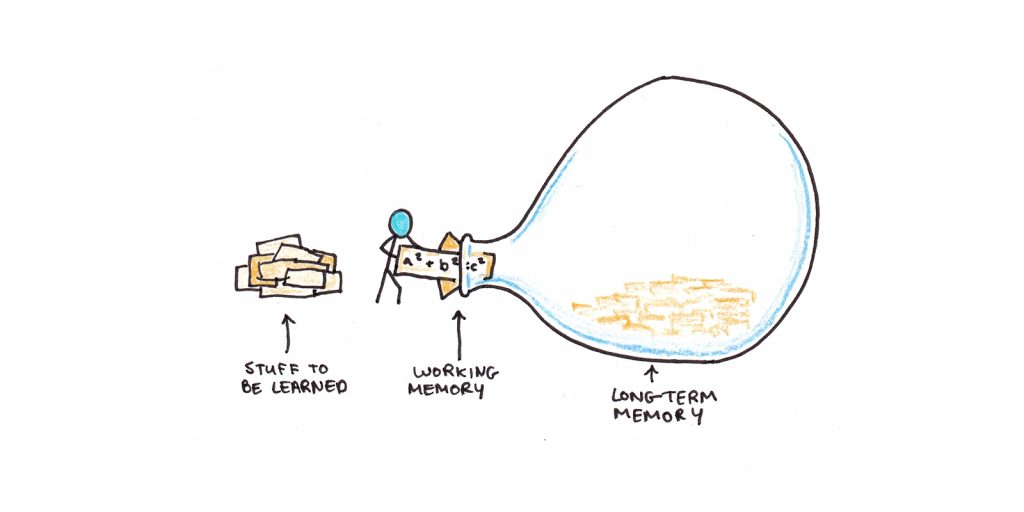
Cognitive Load Theory and its Applications for Learning - Scott H Young
What makes learning hard? How can we make it easier? Cognitive load theory explains how we learn and how to do it better.
The Triadic Mind: How Language Reveals the Limits of Human Cognition
Languages are the most complex symbolic systems humans have ever created. Yet children acquire them effortlessly, without formal…

Neuroscientists show how neurons respond to sequences of familiar objects
The world grows increasingly more chaotic year after year, and our brains are constantly bombarded with images. A new study from Center for the Neural Basis of Cognition (CNBC), a joint project between ...
