


We pay respect to our Elders and acknowledge the Traditional Owners who’ve cared for country since time immemorial. Sovereignty over this land was never ceded - it always was, and always will be, Aboriginal land.
On whose land?
I am once again asking Canadian journalists to ask the most basic-ass question of on whose land will these be built? How is it that every other major industry must consider Indigenous rights but with tech it's like meh.

Indigenous Data Sovereignty (DDN3-A11)
This article explores Indigenous data sovereignty, identifies some of the data-related challenges faced by Indigenous Peoples and highlights the work done to overcome these challenges.

Native Land Pod
Treating data like land — data sovereignty in the AI age - ICT
Artificial intelligence front and center at North America’s largest Indigenous tech conference
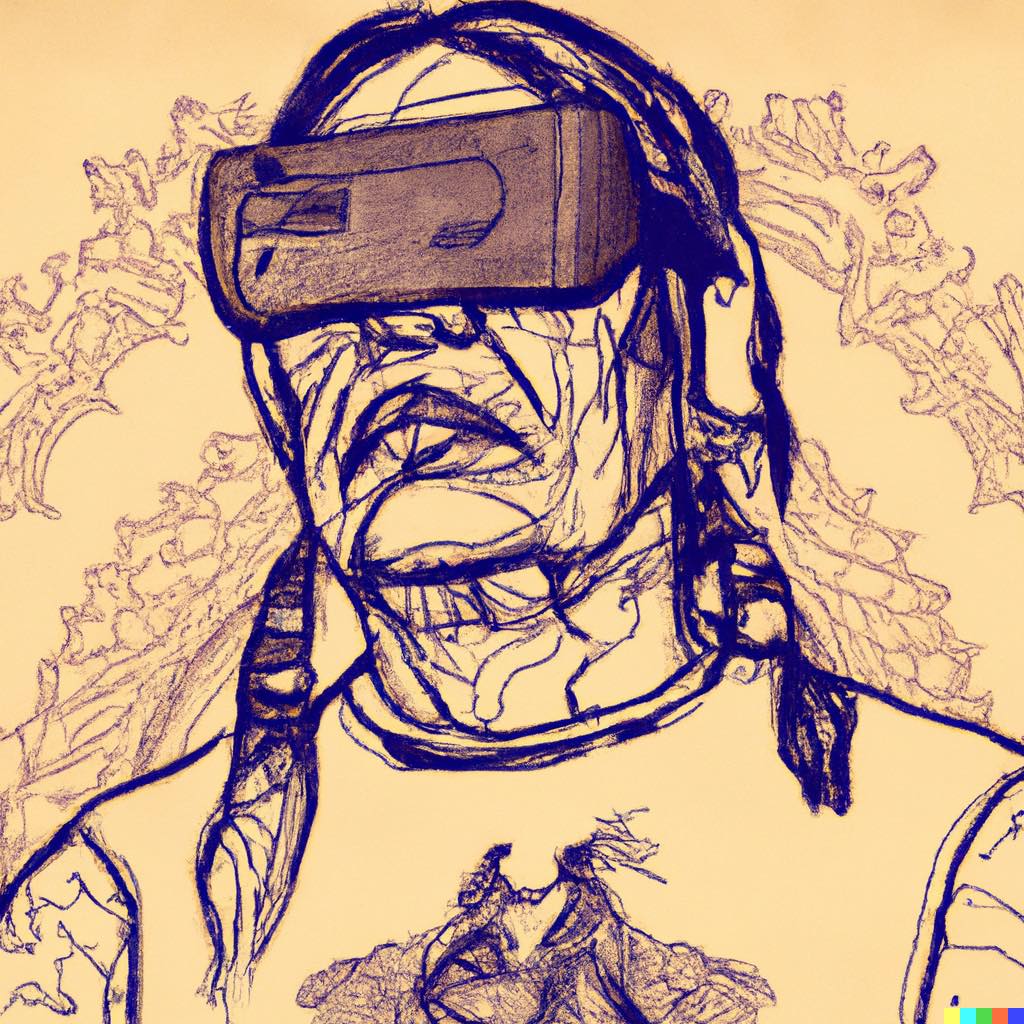
Indigenous Knowledges and Data Governance Protocol — Indigenous Innovation Initiative
Between March 2020 and March 2021, the Indigenous Innovation Initiative co-created the Indigenous Knowledges and Data Governance Protocol with the community, to guide how we collect and use Indigenous Knowledges and Data. Click on the image below to learn more about this Protocol. Since then, t

Animikii: Indigenous Technology for an Equitable Future
Animikii empowers Indigenous communities with culturally informed technology solutions like Niiwin—our groundbreaking tool for Indigenous data sovereignty and community empowerment.

Solidarity Syllabus: Indigenous Peoples, Rematriation, and Resisting AI Data Centers — Solidarity Is
For this Solidarity Syllabus, we are learning alongside Indigenous organizers, leaders, and communities whose work offers important solidarity lessons and invitations for how we might understand land, water, sovereignty, and resistance to data centers. Indigenous Peoples Day is observed

A Short History of Enclosure in Britain | The Land Magazine
Over the course of a few hundred years, much of Britain's land has been privatized — that is to say taken out of some form of collective ownership and management and handed over to individuals.
Armies Seize Territory. Empires Seize Language. | Jason G. Butterfield | Offprint
What renaming a lake tells us about sovereignty, and the normalization of ownership

The Shared Patterns of Indigenous Culture, Permaculture and Digital Commons | David Bollier
Rarely have I read an essay that knits together some very different commons with such wisdom and depth. Joline Blais' 2006 essay, “Indigenous Domain: Pilgrims, Permaculture and Perl,” is a wonderfully insightful analysis that reveals the underlying unity and logic of commons principles. Her piece appeared in Intelligent Agent (vol. 6, no. 2), published by the Inter-Society for the Electronic Arts.
Japan's overlooked indigenous people fight for return of ancestor's remains
A group of indigenous people are suing the Japanese government for the return of ancestral remains taken during the brutal colonisation of Hokkaido.
Aboriginal Memories of Inundation of the Australian Coast Dating from More than 7000 Years Ago (Australian Geographer)
"Some stories belonging to Australian Aboriginal groups tell of a time when the former coastline of mainland Australia was inundated by rising sea level. Stories are presented from 21 locations from every part of this coastline. In most instances it is plausible to assume that these stories refer to events that occurred more than about 7000 years ago, the approximate time at which sea level reached its present level around Australia. They therefore provide empirical corroboration of postglacial sea-level rise. For each of the 21 locations, the minimum water depth (below present sea level) needed for the details of the particular group of local-area stories to be true is calculated. This is then compared with the sea-level envelope for Australia (Lewis et al., Quaternary Science Reviews, 2013) and maximum and minimum ages for the most recent time that these details could have been observed are calculated. This method of dating Aboriginal stories show that they appear to have endured since 7250-13,070 cal yr BP (5300-11,120 BC). The implications of this extraordinary longevity of oral traditions are discussed, including those aspects of Aboriginal culture that ensured effective transgenerational communication and the possibility that traditions of comparable antiquity may exist in similar cultures."

Seven Generations Principle: Healing the Past & Shaping the Future — The Indigenous Foundation
This is adapted from an Unrooted podcast episode by Breanne Smith @breazieboozhoo What if I told you that the choices we make today could shape the lives of those who come seven generations after us? And that we are the bridge between our ancestors’ resilience & our descendants’ future.

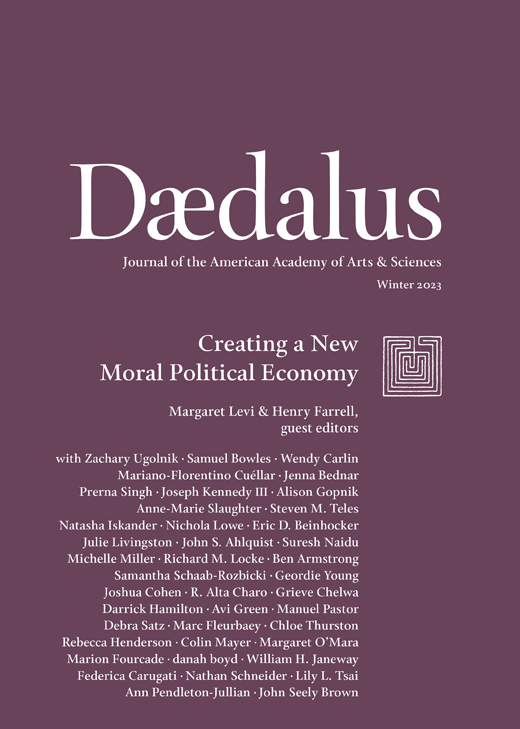
Governance Archaeology: Research as Ancestry
Abstract. This essay presents the idea of governance archaeology, an approach to learning from the past to inform the politics of the future. By reporting on a prototype historical database, we outline a strategy for co-producing a global commons of collective governance practices that can inspire institutional learning and experimentation, particularly in the face of rapid technological change and vexing global crises. Embedded in our approach is an orientation of ancestry whereby practitioners cultivate relationships of accountability and responsibility to the legacies they learn from, recognizing the harm from past patterns of exploitation. By taking seriously a wide range of historical governance practices, particularly those outside the Western canon, governance archaeology seeks to expand the options available for the design of more moral political economies.
Framework for Economic Reconciliation
Drawing on Indigenous worldviews about wealth and sustainability, along with the wisdom and lived experiences of Indigenous thought leaders and practitioners in the economic sector in BC, Step into the River: A Framework for Economic Reconcilation explores ways in which economic reconciliation can be a catalyst for transforming our economic system.

Preventing AI extractivism: the case for braiding indigenous data justice with ABS for stronger AI data governance
Artificial-intelligence systems are rapidly reproducing colonial extractivism by harvesting Indigenous linguistic, biometric, geospatial, and ecological data without consent, compensation, or accountability. Biotechnology offers a blueprint for curbing such practices: the Convention on Biological Diversity and its Nagoya Protocol obligate users of genetic resources to obtain Prior Informed Consent, negotiate Mutually Agreed Terms, and share benefits fairly. No comparable framework restrains the digital appropriation that underpins many AI products. Consequently, corporations and states monetize Indigenous knowledge systems under the banners of “open data” and “scientific neutrality,” eroding rights affirmed in the United Nations Declaration on the Rights of Indigenous Peoples (UNDRIP). In response to this rising risk of AI extractivism, we make the case for a binding, sui generis ABS protocol for AI data governance. First, through a series of case studies we demonstrate that AI extraction mirrors the colonial and biopiracy controversies that originally triggered Access‑and‑Benefit‑Sharing (ABS) rules in biotechnology. Second, we translate those rules into a digital register by braiding two Indigenous data‑governance frameworks—OCAP® (Ownership, Control, Access, Possession) and the CARE Principles (Collective Benefit, Authority to Control, Responsibility, Ethics)—inside the ABS triad of consent, terms, and benefit‑sharing. The resulting model grounds technical safeguards in relational accountability and Indigenous legal orders. Such an instrument would compel transparent negotiations with Indigenous rights‑holders, assign enforceable authority over data across the AI lifecycle, and require equitable redistribution of the economic value generated by models trained on Indigenous data. Embedding ABS principles into AI governance offers a decolonial pathway that centers Indigenous epistemologies, promotes ethical foresight, and transforms AI from a vehicle of digital colonialism into a space for algorithmic justice.
