


Burda*, Edwards*, Pathak* et.al. (* equal contribution, alphabetical order) Large-Scale Study of Curiosity-Driven Learning. 2018.
The Buffett Formula: Going to Bed Smarter Than When You Woke Up
Learn how Warren Buffett and Charlie Munger turn curiosity into insight. Discover how interest-driven learning builds understanding and reveals hidden opportunities.

The Curiosity Box – The Subscription for Thinkers
Vsauce delivers viral science toys, brain-busting puzzles, and other cerebral wonders to your door each season.
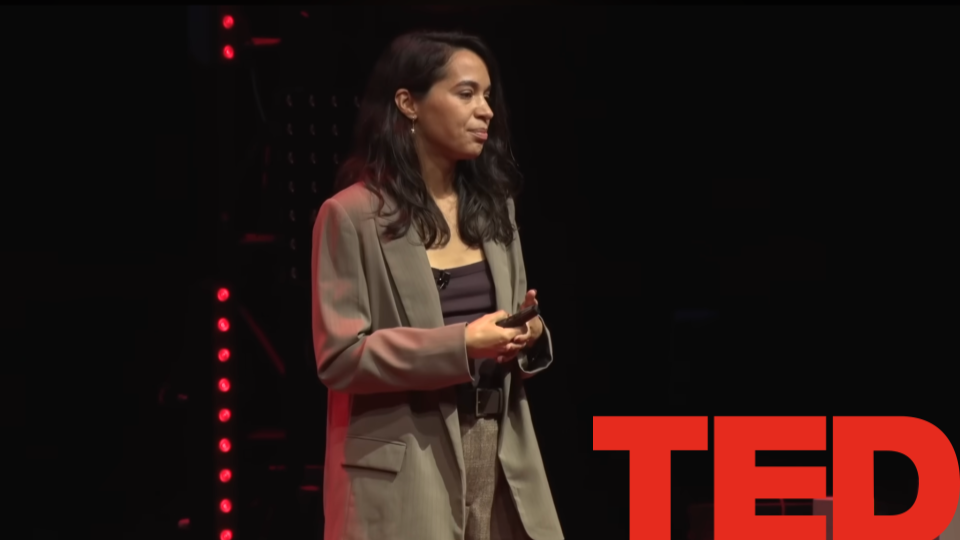
How tiny experiments can set you free | Anne-Laure Le Cunff | TEDxNashville | Transcript
When Dr Anne-Laure Le Cunff was told she might die, her first instinct was to check her calendar. In this talk, she reveals how our desperate need for control keeps us stuck and how tiny experiments can set us free. Dr Anne-Laure Le Cunff is a neuroscientist, author, and entrepreneur who studies curiosity – both in the lab and in life. Her research at King’s College London explores how our brains seek, learn, and adapt, spanning areas from ADHD to AI and mental health. She founded Ness Labs, a science-based learning platform helping people live more experimental lives. Her bestselling book Tiny Experiments offers a practical guide to transforming uncertainty into curiosity, creativity, and self-discovery. Through her research and writing, she bridges science and everyday life, showing how curiosity can help us loosen control, embrace change, and uncover who we truly are.
On Taste, Effort & Curiosity - again
When AI collapses how long it takes to ship, what’s left is judgment, experimentation, and knowing what not to build.
Introducing Nested Learning: A new ML paradigm for continual learning
Ali Behrouz, Student Researcher, and Vahab Mirrokni, VP and Google Fellow, Google Research

A Season of Learning
Credit: Unsplash / Patty Spahr There’s a concept in computer science called explore vs. exploit. Exploitation means using what you know to get reliable returns; exploration means trying new t…

Human Adults and LLMs as Scientists: Who Benefits from Active Exploration?
A long-standing finding in the causal learning literature is that adults struggle to identify conjunctive causal rules, where an effect requires the simultaneous presence of multiple causes, while...

#Exploration: A Study of Count-Based Exploration for Deep...
Count-based exploration algorithms are known to perform near-optimally when used in conjunction with tabular reinforcement learning (RL) methods for solving small discrete Markov decision...

Learning to Learn: You, Too, Can Rewire Your Brain (Published 2017)
How an engineering professor who “flunked my way” through high school math and science went on to create the world’s most popular online course.

Hyperactive–impulsive ADHD traits predict higher curiosity in adults: evidence from a cross-sectional study
Attention-deficit/hyperactivity disorder (ADHD) is typically framed in terms of difficulties with sustained attention, behavioral regulation, and impulse control, yet growing work suggests that some associated traits may also relate to potentially adaptive tendencies. Curiosity has been highlighted in qualitative research as one such trait that can function as both a strength and a challenge for adults with ADHD, but quantitative evidence examining its relationship to ADHD traits remains limited. This study examined whether ADHD traits are associated with individual differences in trait curiosity in adults.
How the Substack feed is learning to understand your reading journey
Modeling sequences of user behavior makes discovery feel alive

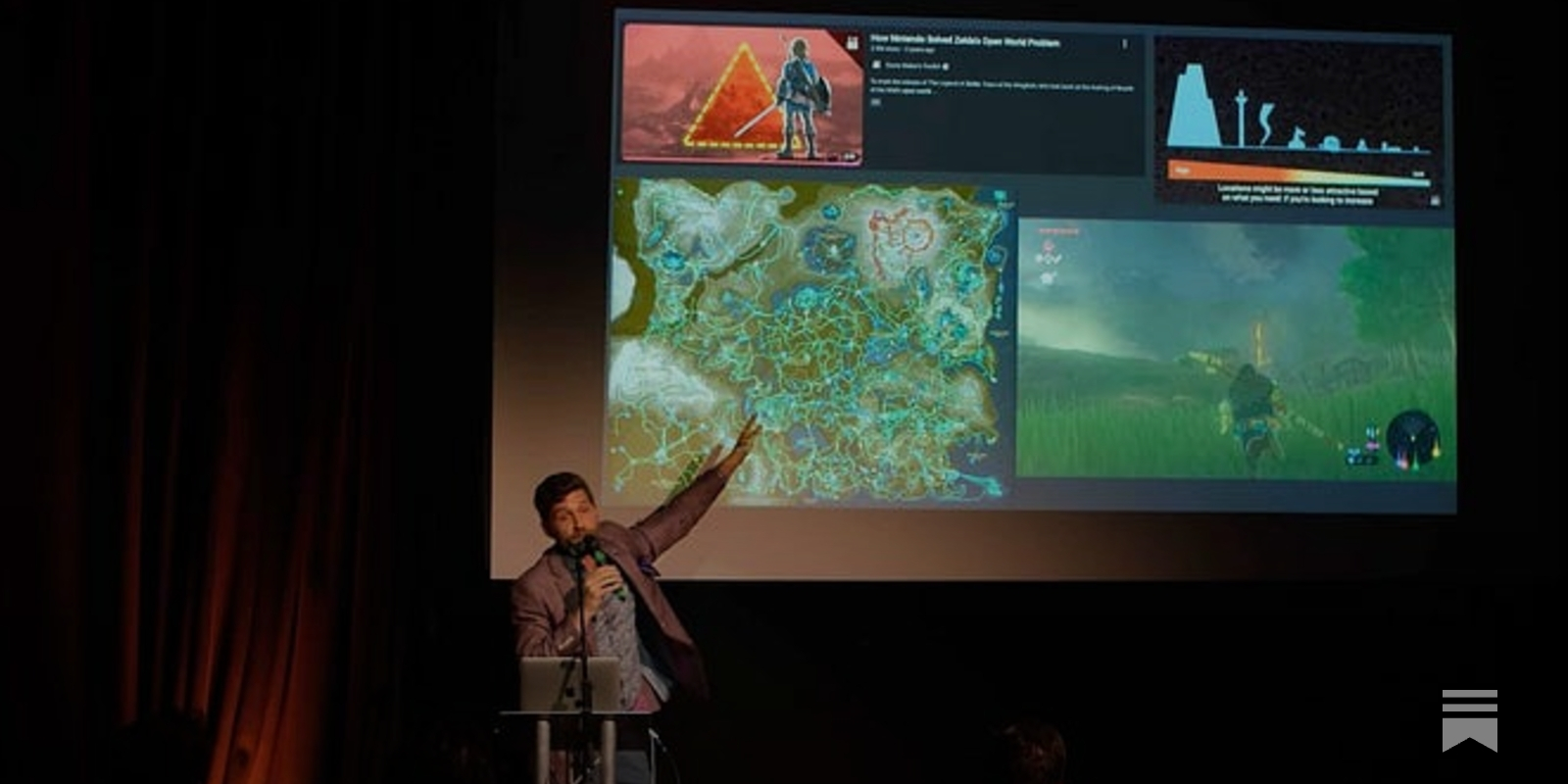
🌿 Foraging in High-Dimensional Data
My talk from the Diverse Intelligences Summer Institute 2025 on how we can draw from thinking in complex systems science and game design to heal our relationship to the Web.
Being a curious leader
Being a curious leader, by Emma Wilson, explores how curiosity can reshape leadership in research environments. Drawing on personal experience, this piece highlights the value of listening, asking questions, and embracing uncertainty as strengths rather than weaknesses. It reflects on how curiosity, reflexivity, and openness to different perspectives can foster more inclusive, collaborative, and supportive research cultures.
Ever thought we acquire generalizable knowledge by discarding details and compressing our experiences? In a new BBS paper, @sabinasloman.bsky.social and I argue otherwise, proposing a novel way of studying human learning inspired by double descent in ML. Disagree? Propose a commentary by May 15 :)
I’ve been hearing about this project for years from @fernpizza.bsky.social and I’m stoked to see it out. It’s wildly elegant mixture of theory and empirics, with novel methods that manages to ask and answer deep questions about selection. Paper of the year. science.org/doi/10.1126/science.adx0665

Intracellular competition shapes plasmid population dynamics
www.science.org
