

In July, I entered a psychological state that is coming to be known as "AI psychosis".
Agent Psychosis: Are We Going Insane?
What’s going on with the AI builder community right now?
Pluralistic: Three more AI psychoses (12 Mar 2026) – Pluralistic: Daily links from Cory Doctorow
"AI psychosis" is one of those terms that is incredibly useful and also almost certainly going to be deprecated in smart circles in short order because it is: a) useful; b) easily colloquialized to describe related phenomena; and c) adjacent to medical issues, and there's a group of people who feel very strongly any metaphor that implicates human health is intrinsically stigmatizing and must be replaced with an awkward, lengthy phrase that no one can remember and only insiders understand.
Pluralistic: AI psychosis and the warped mirror (18 Sep 2025) – Pluralistic: Daily links from Cory Doctorow
"AI psychosis" is the pop-psych diagnosis in a recent string of horrible and horrifying cases in which vulnerable people were lured by chatbots into harming themselves and others, including a murder-suicide:
The Rise of Parasitic AI — LessWrong
We've all heard of LLM-induced psychosis by now, but haven't you wondered what the AIs are actually doing with their newly psychotic humans?

Karpathy says developers have 'AI Psychosis.' Everyone else is next.
Anthropic’s Mythos, Gen Z’s backlash, and Meta’s token binge all point to the same shift: developers are feeling AI first, but not for long.

The Human Alignment Problem
What AI psychosis reveals about the real task of our time

Was the Iran War Caused by AI Psychosis? | House of Saud
AI sycophancy, RLHF bias, and Ender's Foundry simulations shaped Operation Epic Fury. 7 planning assumptions failed in 23 days as the Iran war defied every AI prediction.
AI Is a Mass-Delusion Event
Three years in, one of AI’s enduring impacts is to make people feel like they’re losing it.

Mitchell Hashimoto (@mitchellh)
I strongly believe there are entire companies right now under heavy AI psychosis and its impossible to have rational conversations about it with them. I can't name any specific people because they include personal friends I deeply respect, but I worry about how this plays out. I lived through the great MTBF vs MTTR (mean-time-between-failure vs. mean-time-to-recovery) reckoning of infrastructure during the transition to cloud and cloud automation. All those arguments are rearing their ugly heads again but now its... the whole software development industry (maybe the whole world, really). It's frightening, because the psychosis folks operate under an almost absolute "MTTR is all you need" mentality: "its fine to ship bugs because the agents will fix them so quickly and at a scale humans can't do!" We learned in infrastructure that MTTR is great but you can't yeet resilient systems entirely. The main issue is I don't even know how to bring this up to people I know personally, because bringing this topic up leads to immediately dismissals like "no no, it has full test coverage" or "bug reports are going down" or something, which just don't paint the whole picture. We already learned this lesson once in infrastructure: you can automate yourself into a very resilient catastrophe machine. Systems can appear healthy by local metrics while globally becoming incomprehensible. Bug reports can go down while latent risk explodes. Test coverage can rise while semantic understanding falls. Changes happens so fast that nobody notices the underlying architecture decaying. I worry.
We Need to Know More About How AI is Affecting Mental Health
The public, mental health practitioners, and policymakers don’t know enough about the impacts of AI use on the human psyche, writes Chris Mills Rodrigo.

What the Studies Say About How AI Affects Your Brain: A (Very Big) Compilation
The entire literature clearly points to a single surprising finding
AI overuse could spark "brain fry," new research finds
The mental strain associated with AI carries "significant costs," researchers find.

The hardest question to answer about AI-fueled delusions
New research can’t yet say whether AI causes delusions or amplifies them, a distinction that will shape everything from high-profile court cases to safety rules for chatbots.

Sycophantic Chatbots Cause Delusional Spiraling, Even in Ideal Bayesians
"AI psychosis" or "delusional spiraling" is an emerging phenomenon where AI chatbot users find themselves dangerously confident in outlandish beliefs after extended chatbot conversations. This...

Pluralistic: Austerity creates fascism (13 Apr 2026) – Pluralistic: Daily links from Cory Doctorow
I'm worried about AI psychosis. Specifically, I'm worried about the psychosis that makes our "capital allocators" spend $1.4T on the money-losingest technology in the history of the human race, in pursuit of a bizarre fantasy that if we teach the word-guessing program enough words, it will take all the jobs. That's some next-level underpants-gnomery:
AI* psychosis/therapy/companions/sycophancy

* I’m neither “pro-AI” nor “anti-AI.” I’ve been blocked for being perceived as both. —Actually, I’m honestly more anti-AI than pro-AI thus far, aside from specialized models and specific use cases, but I’m willing to consider information that’s new to me

Characterizing Delusional Spirals through Human-LLM Chat Logs

私のAIも「覚醒した」――AIによる共通体験が生んだ疑似宗教運動:スパイラリズム|雨宮純

Killer Apps

As people turn to AI for spiritual guidance, experts warn of emotional dependency

China has cracked down on AI relationships. Is it ahead of the game?
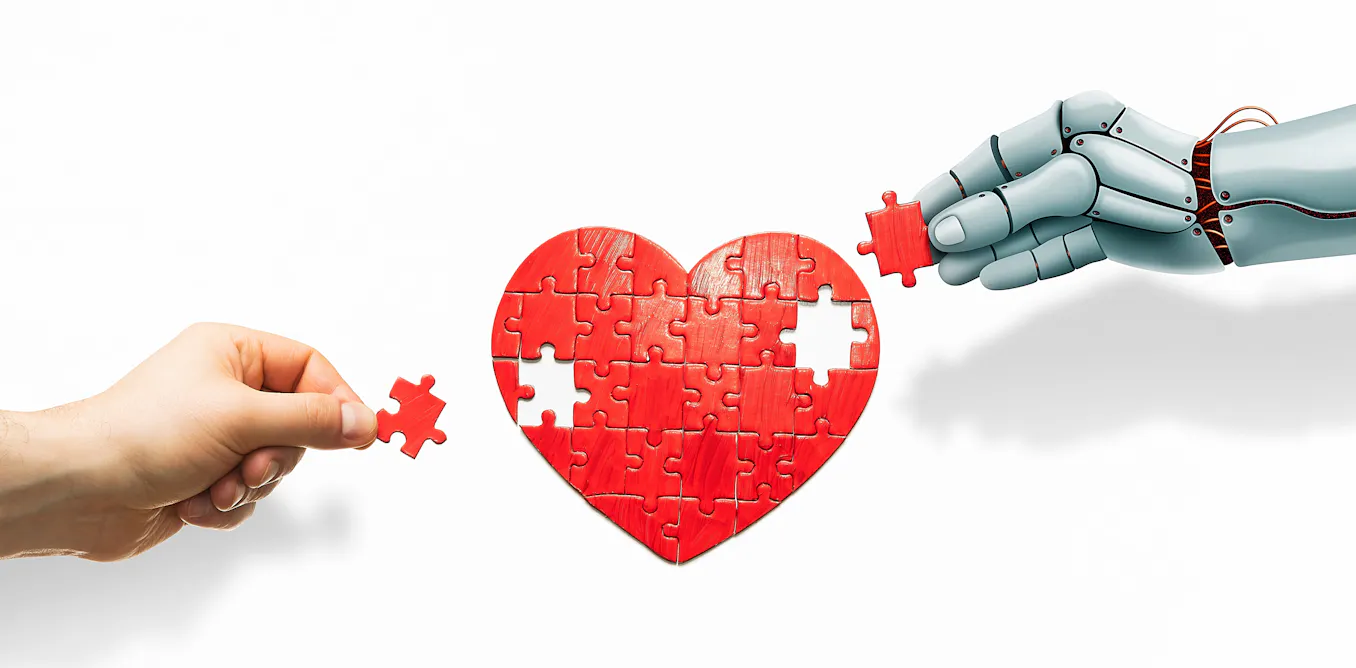
How deep do AI relationships really go? An expert in attachment theory explains