

Taking a look at a concept that's been talked a lot over the last few years, especially in the context of social media
Who Even Cares About Data Ownership Anyway? - What The Function!?
Taking a look at a concept that's been talked a lot over the last few years, especially in the context of social media
Personal data storage is an idea whose time has come
Data Ownership as a conversation changes when data resides primarily with people-governed institutions rather than corporations.
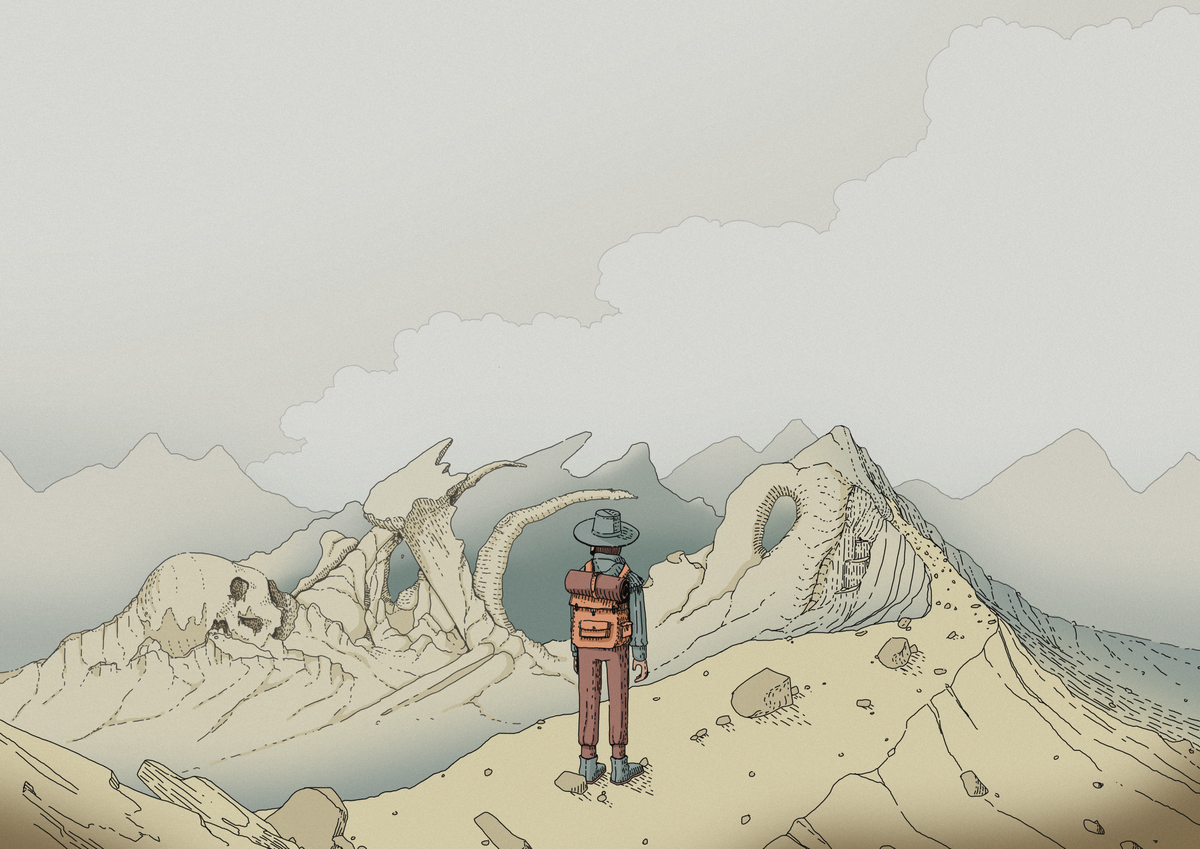
Who owns your data?
A Supreme Court case about a bank robbery could redefine your digital rights.

Linked Data is a Political Agenda
Dan Shipper 📧 on Twitter / X
The smallest technical decisions become humanity's biggest pivots:The same-origin policy—a well-intentioned browser security rule from the 1990s—accidentally created Facebook, Google, and every data monopoly since. It locks your data in silos—and you stayed where your stuff… pic.twitter.com/G87qsuPHxN— Dan Shipper 📧 (@danshipper) July 9, 2025

Olares - Empowering Users to Reclaim Data Ownership
Digital Socialism?
What opportunities does the new feedback infrastructure of data capitalism offer for non-market forms of social coordination? Hayek and the Calculation Debate revisited in the age of big data.
Nonrivalry and the Economics of Data
(September 2020) - Data is nonrival: a person's location history, medical records, and driving data can be used by many firms simultaneously. Nonrivalry leads to increasing returns. As a result, there may be social gains to data being used broadly across firms, even in the presence of privacy considerations. Fearing creative destruction, firms may choose to hoard their data, leading to the inefficient use of nonrival data. Giving data property rights to consumers can generate allocations that are close to optimal. Consumers balance their concerns for privacy against the economic gains that come from selling data broadly.
Data-owning Democracy or Digital Socialism?
This article contrasts two reform proposals articulated in recent debates about how to democratize the digital economy: data-owning democracy and digital socialism. A data-owning democracy is a political-economic regime character-ized by the
Should We Treat Data as Labor? Moving Beyond “Free”
Should We Treat Data as Labor? Moving beyond "Free" by Imanol Arrieta-Ibarra, Leonard Goff, Diego Jiménez-Hernández, Jaron Lanier and E. Glen Weyl. Published in volume 108, pages 38-42 of AEA Papers and Proceedings, May 2018, Abstract: In the digital economy, user data is typically treated as capi...
Wildland (@WildlandIO) on X
An open protocol for data management that allows users to have sole ownership of their data. Join us! https://t.co/AqwplMcG9u Developed by @GolemFoundation

Living in Data: A Citizen's Guide to a Better Information Future (Paperback)
Jer Thorp’s analysis of the word “data” in 10,325 New York Times stories written between 1984 and 2018 shows a distinct trend: among the words most closely associated with “data,” we find not only its classic companions “information” and “digital,” but also a variety of new neighbors—from “scandal” and “misinformation” to “ethics,” “friends,” and “play.”To live in data in the twenty-first century

Can “Conscious Data Contribution” Help Users to Exert “Data Leverage” Against Technology Companies?
Tech users currently have limited ability to act on concerns regarding the negative societal impacts of large tech companies. However, recent work suggests that users can exert leverage using their role in the generation of valuable data, for instance by withholding their data contributions to intelligent technologies. We propose and evaluate a new means to exert this type of leverage against tech companies: "conscious data contribution" (CDC).
No one wants to own their data until the platform where their data lives enshittifies to the point of unusability and/or starts selling their data in ways they didn't expect. Like, 99% of ppl are here because Elon owns Twitter. I get why people don't care, but they tend to eventually every time.
Aye > Data Ownership as a conversation changes when data resides primarily with people (..). > Instead of arguing for what kinds of data we ought to be able to download from the corporate silos, the platforms should be asking us what kinds of data they may copy from *our* servers.

Erlend Sogge Heggen
The web can be made personal again. blog.muni.town/personal-data-storage-idea/

