

forthcoming — on the quiet enclosure of the transcript commons.
Data Refusal from Below: A Framework for Understanding, Evaluating, and Envisioning Refusal as Design
Amidst calls for public accountability over large data-driven systems, feminist and indigenous scholars have developed refusal as a practice that challenges the authority of data collectors. However, because data affect so many aspects of daily life, it can be hard to see seemingly different refusal strategies as part of the same repertoire. Furthermore, conversations about refusal often happen from the standpoint of designers and policymakers rather than the people and communities most affected by data collection. In this article, we introduce a framework for data refusal from below —writing from the standpoint of people who refuse, rather than the institutions that seek their compliance. Because refusers work to reshape socio-technical systems, we argue that refusal is an act of design and that design-based frameworks and methods can contribute to refusal. We characterize refusal strategies across four constituent facets common to all refusal, whatever strategies are used: autonomy , or how refusal accounts for individual and collective interests; time , or whether refusal reacts to past harm or proactively prevents future harm; power , or the extent to which refusal makes change possible; and cost , or whether or not refusal can reduce or redistribute penalties experienced by refusers. We illustrate each facet by drawing on cases of people and collectives that have refused data systems. Together, the four facets of our framework are designed to help scholars and activists describe, evaluate, and imagine new forms of refusal.

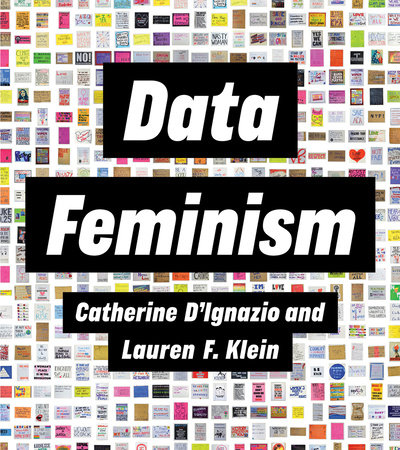
Data Feminism
A new way of thinking about data science and data ethics that is informed by the ideas of intersectional feminism.Today, data science is a form of power. I
Living in Data: A Citizen's Guide to a Better Information Future (Paperback)
Jer Thorp’s analysis of the word “data” in 10,325 New York Times stories written between 1984 and 2018 shows a distinct trend: among the words most closely associated with “data,” we find not only its classic companions “information” and “digital,” but also a variety of new neighbors—from “scandal” and “misinformation” to “ethics,” “friends,” and “play.”To live in data in the twenty-first century

Data Feminism
A new way of thinking about data science and data ethics that is informed by the ideas of intersectional feminism.

Data Feminism
Today, data science is a form of power. It has been used to expose injustice, improve health outcomes, and topple governments. But it has also been used to d...
Indigenous Data Sovereignty (DDN3-A11)
This article explores Indigenous data sovereignty, identifies some of the data-related challenges faced by Indigenous Peoples and highlights the work done to overcome these challenges.

MyData
The human-centric approach to data is aimed at a fair, sustainable, and prosperous digital society. In such a society, people get value from their data and set the agenda on how it is used. And for organisations, the ethical use of data is always the most attractive option.

We Need A New Kind Of Data Rights
Associational data rights would empower communities to reclaim power from Big Tech

Treating data like land — data sovereignty in the AI age - ICT
Artificial intelligence front and center at North America’s largest Indigenous tech conference

Governing by dismantling: tech oligarchy and the stifling of public data infrastructure
Published in Science as Culture (Ahead of Print, 2026)

Preventing AI extractivism: the case for braiding indigenous data justice with ABS for stronger AI data governance
Artificial-intelligence systems are rapidly reproducing colonial extractivism by harvesting Indigenous linguistic, biometric, geospatial, and ecological data without consent, compensation, or accountability. Biotechnology offers a blueprint for curbing such practices: the Convention on Biological Diversity and its Nagoya Protocol obligate users of genetic resources to obtain Prior Informed Consent, negotiate Mutually Agreed Terms, and share benefits fairly. No comparable framework restrains the digital appropriation that underpins many AI products. Consequently, corporations and states monetize Indigenous knowledge systems under the banners of “open data” and “scientific neutrality,” eroding rights affirmed in the United Nations Declaration on the Rights of Indigenous Peoples (UNDRIP). In response to this rising risk of AI extractivism, we make the case for a binding, sui generis ABS protocol for AI data governance. First, through a series of case studies we demonstrate that AI extraction mirrors the colonial and biopiracy controversies that originally triggered Access‑and‑Benefit‑Sharing (ABS) rules in biotechnology. Second, we translate those rules into a digital register by braiding two Indigenous data‑governance frameworks—OCAP® (Ownership, Control, Access, Possession) and the CARE Principles (Collective Benefit, Authority to Control, Responsibility, Ethics)—inside the ABS triad of consent, terms, and benefit‑sharing. The resulting model grounds technical safeguards in relational accountability and Indigenous legal orders. Such an instrument would compel transparent negotiations with Indigenous rights‑holders, assign enforceable authority over data across the AI lifecycle, and require equitable redistribution of the economic value generated by models trained on Indigenous data. Embedding ABS principles into AI governance offers a decolonial pathway that centers Indigenous epistemologies, promotes ethical foresight, and transforms AI from a vehicle of digital colonialism into a space for algorithmic justice.

Resilient Data Futures — Discourse Graph
A living, content-addressed, contributable form of the SciOS Resilient Data Futures whitepaper.

Resilient Data Futures — Discourse Graph
A living, content-addressed, contributable form of the SciOS Resilient Data Futures whitepaper.
Resilient Data Futures — Discourse Graph
A living, content-addressed, contributable form of the SciOS Resilient Data Futures whitepaper.
Resilient Data Futures — Discourse Graph
A living, content-addressed, contributable form of the SciOS Resilient Data Futures whitepaper.
Resilient Data Futures — Discourse Graph
A living, content-addressed, contributable form of the SciOS Resilient Data Futures whitepaper.