

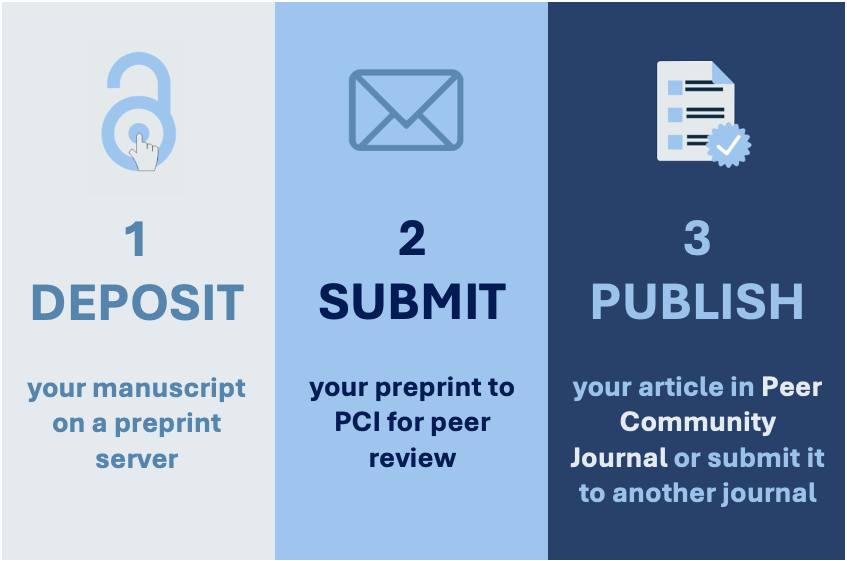
PCI is a non-profit open science organization of scientists to evaluate, recommend and publish research preprints in free open access
Making sense of preprints by adding context – The Publish Your Reviews initiative - LSE Impact
Improving scientific publishing is often framed as an issue of openness and speed and less often as one of context. In this post, Ludo Waltman and Jessica Polka make the case for a more contextualised approach to open access publishing and preprinting, and introduce the Publish Your Reviews initiative. Launched today by ASAPbio, the initiative

Empowering science communities with open, democratic, researcher-owned infrastructure.
We’re building communities and tech for publishing, curating, sharing, and discussing research online using ATProto and other decentralized protocols.
Empowering science communities with open, democratic, researcher-owned infrastructure.
We’re building communities and tech for publishing, curating, sharing, and discussing research online using ATProto and other decentralized protocols.
Authorea: multi-disciplinary research preprints
Authorea is the leading collaborative platform to read, write, and publish research.
PREreview: Open preprint reviews. For all researchers.

Center for Open Science
At the Center for Open Science, our mission is to increase openness, integrity, and reproducibility of scholarly research. Promoting these practices within the research funding and publishing communities accelerates scientific progress

Reviewing post-publication peer review
Post-publication peer review (PPPR) is transforming how the life sciences community evaluates published manuscripts and data. Unsurprisingly, however, PPPR is experiencing growing pains, and some elements of the process distinct from standard pre-publication review remain controversial. I discuss the rapid evolution of PPPR, its impact, and the challenges associated with it.

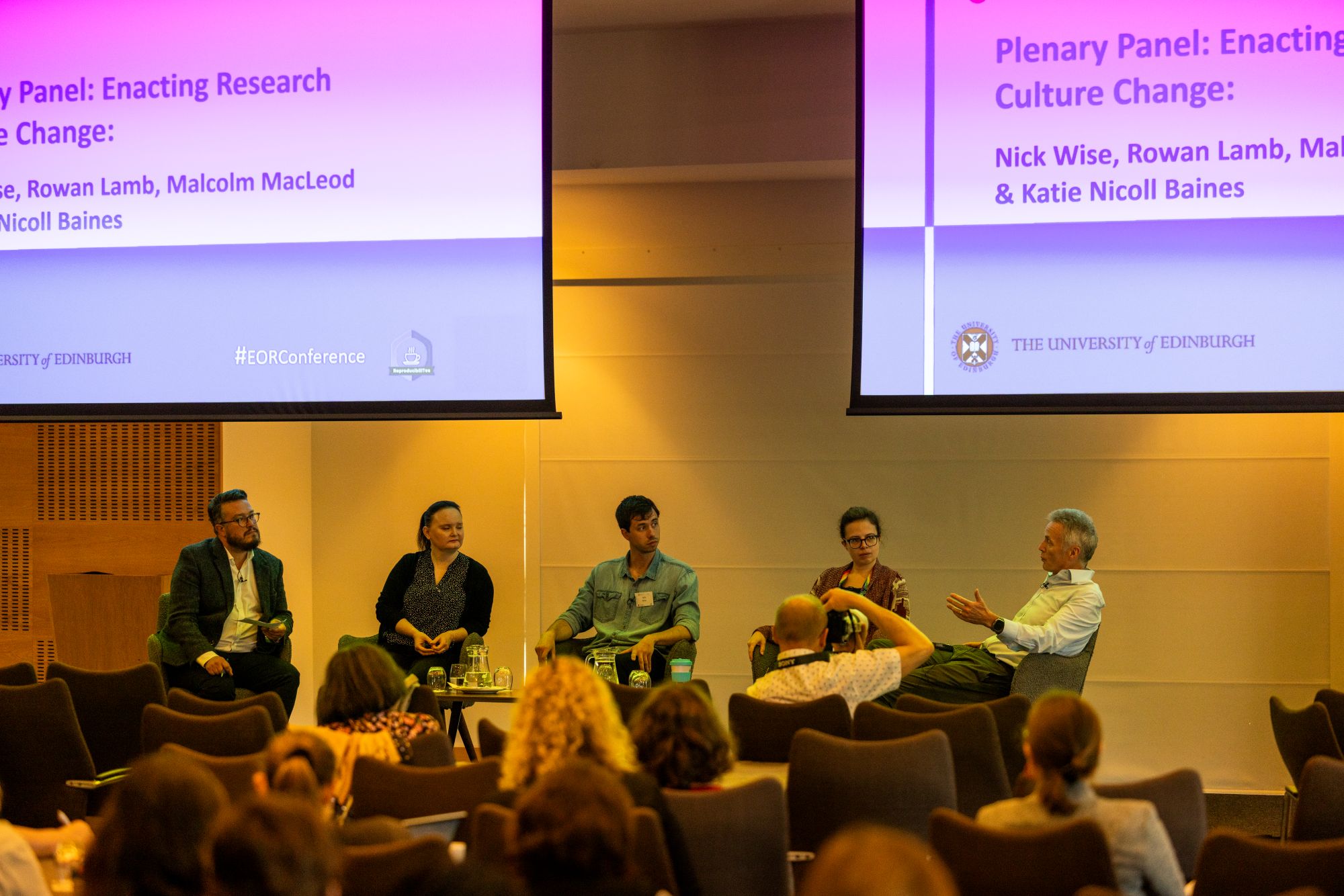
Edinburgh Open Research Conference 2026 | Library | Library
Join us for the Edinburgh Open Research Conference. This year our conference centres on UNESCO's "Recommendations for Open Science", reflecting our new institutional focus on these recommendations.
Open Evaluation: A Vision for Entirely Transparent Post-Publication Peer Review and Rating for Science
The two major functions of a scientific publishing system are to provide access to and evaluation of scientific papers. While open access (OA) is becoming a reality, open evaluation (OE), the other side of coin, has received less attention. Evaluation steers the attention of the scientific community and thus the very course of science. It also influences the use of scientific findings in public policy. The current system of scientific publishing provides only journal prestige as an indication of the quality of new papers and relies on a non-transparent and noisy pre-publication peer review process, which delays publication by many months on average. Here I propose an OE system, in which papers are evaluated post-publication in an ongoing fashion by means of open peer review and rating. Through signed ratings and reviews, scientists steer the attention of their field and build their reputation. Reviewers are motivated to be objective, because low-quality or self-serving signed evaluations will negatively impact their reputation. A core feature of this proposal is a division of powers between the accumulation of evaluative evidence and the analysis of this evidence by paper evaluation functions (PEFs). PEFs can be freely defined by individuals or groups (e.g. scientific societies) and provide a plurality of perspectives on the scientific literature. Simple PEFs will use averages of ratings, weighting reviewers (e.g. by H-factor) and rating scales (e.g. by relevance to a decision process) in different ways. Complex PEFs will use advanced statistical techniques to infer the quality of a paper. Papers with initially promising ratings will be more deeply evaluated. The continual refinement of PEFs in response to attempts by individuals to influence evaluations in their own favor will make the system ungameable. OA and OE together have the power to revolutionize scientific publishing and usher in a new culture of transparency, constructive criticism, and collaboration.

Open Science Community & Research Platform
ResearchHub is a collaborative platform for sharing, reviewing, and funding scientific research. Join the open science community.
modular research preprint server demo with meaningful social context
a concept preprint server demonstrating what kinds of features would be possible in the future with more modular research publishing and an open social protocol to layer in the public discourse in meaningful ways.
A Claude skill for pre-submission peer review
Open-source skill to use Claude + Consensus for pre-submission mock peer review backed by citations to published, peer-reviewed literature.

The Story behind the Science: Preprints of pandemic potential—how bioRxiv and medRxiv brought preprints to the life sciences
ABSTRACT The bioRxiv and medRxiv preprint servers brought preprinting to the life sciences and played a critical role in disseminating COVID research during the pandemic. Here, I reflect on the birth of bioRxiv and medRxiv and the crucial role so many members of the community played, our experience during the pandemic, and the launch of the new non-profit organization set up to oversee the servers. The pandemic was a stress test for bioRxiv and medRxiv that demonstrated their value and robustness. Under the umbrella of openRxiv, they are now poised to become long-term infrastructure underpinning a new publishing ecosystem.

Faster science, penalties in evaluation, and concerns on quality and impact: Researchers’ use and perceptions of preprints
The preprint ecosystem has expanded rapidly over the past decade, fundamentally altering science communication. Yet, the scholarly community’s attitudes toward this shift remain underexplored. Through a large-scale survey of US and Canadian biomedical scholars, we provide a comprehensive analysis of preprint utilization, perceived impact, and integration into academic credit systems. We find robust engagement across reading, citing, and submitting preprints; however, this activity is driven primarily by a desire for rapid dissemination rather than a foundational commitment to open science. Furthermore, while preprints are valued as networking assets, perceived career penalties during formal academic evaluations stifle broader cultural adoption. Crucially, to navigate the absence of formal peer review, scholars report a heavy reliance on author reputation as a primary heuristic to evaluate a preprint’s credibility and guide their reading and citation decisions. Notably, despite acknowledging preprints’ role in accelerating knowledge sharing, scholars express significant concerns regarding fraud and misinformation, particularly amid declining public trust in science and emerging threats to scientific integrity from artificial intelligence. To resolve these tensions, the preprint ecosystem must evolve beyond prioritizing speed to foster genuine academic dialogue. Simultaneously, evaluation frameworks must adapt to the realities of preprinting, and innovative quality-control mechanisms are urgently needed to balance rapid dissemination with rigorous scientific integrity.

A New Paradigm for Scientific Publishing, Peer Review, and Impact Assessment
Scientific publishing and peer review have evolved little in three centuries, while the demands placed on them have grown profoundly. The growing role of artificial intelligence has underscored deep, systemic shortcomings of an aging system that has largely evaded innovation, a system whose origins are appallingly closer to the invention of the printing press than to the internet. We can do better – much better. This article is intended as the beginning of a communal experiment: a living document that critically reviews the modern academic publishing and peer-review system and presents a concrete framework to address what bibliometrics experts¹ have characterized as "the pervasive misapplication of indicators to the evaluation of scientific performance". Building on the Leiden Manifesto, DORA, and a body of scholarship spanning many disciplines and decades, we present a community-governed, non-profit platform organized around three trust-weighted impact factors, for articles, authors, and reviewers, with full algorithmic transparency, an open development log, and structural decoupling of credibility scoring from content moderation and from monetization. We invite the community to discuss, critique, and help shape it.