


A collective storytelling project to build a more representative history that reflects the human impacts of technology.
Collective Action School
Explore how you can remake tech. Tech worker organizing, unionizing, and building different technologies

Appropriating Technology | Public Sphere Project — Liberating Voices Pattern Language
Dematerialization, Participatory Design, Techno-Criticism, Intermediate Technologies, Users' IT Quality Network, Wholesome Design for Wicked Problems, Labor Visions, Community Inquiry, Tactical Media
Topics — Real Life
ABOUT TOPICS: Since we began Real Life in the summer of 2016, we’ve run many essays across a range of topics, with a particular focus on the personal and cultural implications of living with technology. Our aim is not to track the news cycle so much as the longstanding social issues that inform and transcend it. We wanted to make it easier to read and explore Real Life beyond our chronological archive, so we’ve created these Topics to gather in one place the work we’ve published on some key themes. More Topics will be added to this page over time.

The End of Software
To understand how software will change, we can benefit from studying how technology has changed other industries. History tends to rhyme, if you listen. Before the internet, media behaved very differently—it was expensive to create. You had to pay people to make content, edit it, and distribute ...

Technopoly: The Surrender of Culture to Technology
A witty, often terrifying that chronicles our transform…

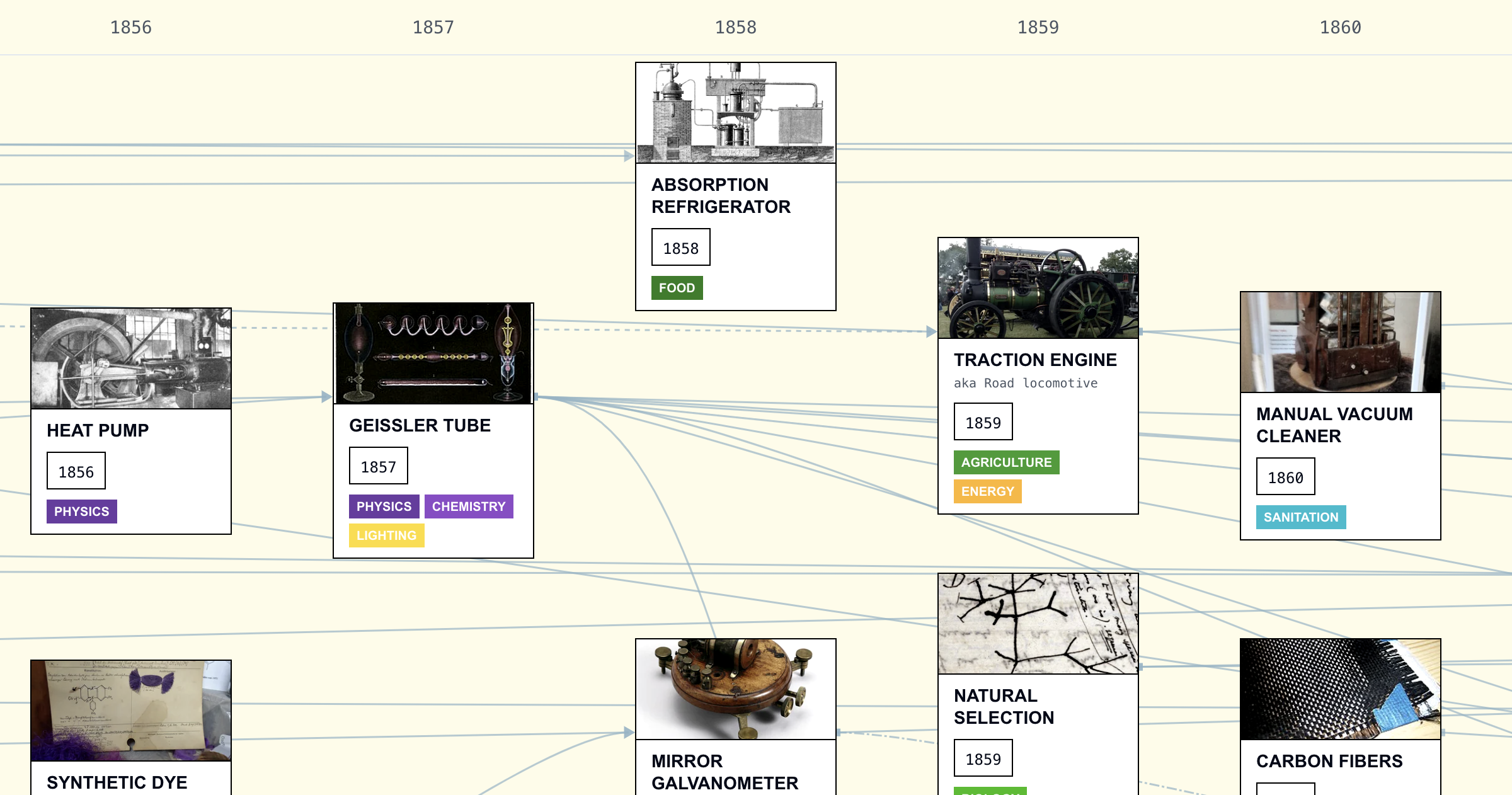
Invention Cards 3.0: Stories
Last month, after a long hiatus, I showed invention.cards to a friend in SF and came away unsatisfied. Indeed, the work was not yet done . Three things drove this revision: It felt incomplete. The experience was built around T-shaped navigation, focusing on a specific card and showing only their ancestors and descendants. It was hard to see where you were in time, hard to feel the shape of history, and ultimately was far removed from the way a tech tree should feel . The connections matter more than the nodes. What's most interesting to me was not
12 Things Everyone Should Understand About Tech
Tech is more important than ever, deeply affecting culture, politics and society. Given all the time we spend with our gadgets and apps…

The Social Construction of Facts and Artefacts: or How the Sociology of Science and the Sociology of Technology might Benefit Each Other
The need for an integrated social constructivist approach towards the study of science and technology is outlined. Within such a programme both scientific facts and technological artefacts are to be understood as social constructs. Literature on the sociology of science, the science-technology relationship, and technology studies is reviewed. The empirical programme of relativism within the sociology of scientific knowledge and a recent study of the social construction of technological artefacts are combined to produce the new approach. The concepts of `interpretative flexibility' and `closure mechanism', and the notion of `social group' are developed and illustrated by reference to a study of solar physics and a study of the development of the bicycle. The paper concludes by setting out some of the terrain to be explored in future studies.

f0lkl0r3.dev — Computer History Museum Oral Histories
The people who built the future, in their own words. Oral history interviews from the Computer History Museum, enriched with AI-generated context, visuals, and connections.
Silicon Valley has a science fiction problem | Aeon Essays
Tech titans claim the genre inspired them. But all they’ve done is graft their politics onto stories of a better future

other futures: tech, resistance & imagining otherwise
big tech wants to control our future, but there are other paths we can choose instead. on "other futures" we bring together leading tech researchers, organizers, critics, and storytellers to help us imagine what more liberatory and human-centered tech futures could look like—and how we can build them together. brought to you by DAIR and the All Tomorrows Institute.
Tech Workers Coalition
A coalition of tech industry workers, labor organizers, community organizers, and friends cultivating solidarity among all workers in tech.
The Social Meaning of the Personal Computer: Or, Why the Personal Computer Revolution Was No Revolution
This essay presents a processual model of the personal computing movement that depicts the PC's birth within the context of complex and often contradictory social strategies, each of which used the meaning of computer technology in a distinctive way. It suggests that innovators are constrained by such processes to depict new artifacts in culturally meaningful ways, so that it is difficult for them to conceive of their technologies in radical terms. The rhetoric of "revolution" aside, innovators found it expedient to draw from the stock of meanings at hand as they created new meaning-frameworks for their artifacts. The result is that the new artifacts did not express a coherent or effective political vision and failed to have the intended social effects. This study implies that new technologies frequently reproduce existing social and meaning systems; if they do bring about social change, the changes may differ from those intended by the innovators.
I got into tech six years ago because I figured I could have an outsized impact on making a less harmful, more empowering world for workers and marginalised people. Only this year, I started connecting IRL with people who think this way. Here I tried to write about the ways that's transformed me.

DWeb, Culture and Resistance
meri.garden