

The text translated here is part of the first academic book published in English on consensual non-monogamies, which marked a turning point in the prestige and visibility of academic production on this topic. Since then, debates around the subversive potential – or lack thereof – of consensual non-monogamies have intensified, especially in the aftermath of the approval of same-gender marriage in several countries. In certain ways, Eleanor Wilkinson's text summarizes, anticipates, and maps out what remain, to this day, as the major axes of political discussion about false dichotomies, ways of building community, projects of resistance against capitalism, and even the importance of considering urgent environmental concerns. Despite being published in 2010, it seems more relevant now than it was then. I hope this translation can make this paradigmatic work accessible to a much larger audience. – Daniel Cardoso.
Beyond Equality—Non-Monogamy and the Necropolitics of Marriage
‘Marriage equality’ has been a widely used slogan and mobilizing concept for LGBTQ+ rights’ movements across the globe striving for formal recognition for ‘same-sex’ or ‘same-gender’ marriages. In this article, we critically interrogate the terminology and political rationality that have given shape to ‘marriage equality’ campaigns. We demonstrate the structural erasure of non-monogamous relations and populations from the changes hoped for and envisioned in these mobilizations. The lack of any genuine and substantial concern with consensual non-monogamies (CNMs) from most of the literature in the field highlights the close entanglement of marriage with monogamy. As a result, ideas are scarce about how meaningful and adequate legal recognition and social policy provisions for a wide range of intimate, sexual, familial, and/or caring bonds or constellations on the CNM continuum could look like. We argue that the critique of the mononormativity inherent to marriage is fundamental to understanding the role of this in the 21st century. We identify the roots of the mononormativity of marriage in its governmental role as a necropolitical and biopolitical technology, evidenced by its ‘civilizing’ function in white settler colonial projects. Because of this, an expansion of the call for equality to include non-monogamous populations does not resolve but rather aggravates the problem. We conclude that any truly queer politics of CNM consequently needs to be anti-marriage.

Social Reproduction Theory: Remapping Class, Recentering Oppression
This groundbreaking collection explores the profound power of Social Reproduction Theory to deepen our understanding of everyday life under capitalism. While many Marxists tend to focus on the productive economy, this book focuses on issues such as child care, health care, education, family life and the roles of gender, race and sexuality, all of which are central to understanding the relationship between economic exploitation and social oppression. In this book, leading writers such as Lise Vogel, Nancy Fraser, David McNally and Susan Ferguson reveal the ways in which daily and generational reproductive labour, found in households, schools, hospitals and prisons, also sustains the drive for accumulation. Presenting a more sophisticated alternative to intersectionality, these essays provide ideas which have important strategic implications for anti-capitalists, anti-racists and feminists attempting to find a path through the seemingly ever more complex world we live in.
Against the Couple-Form | LIES Journal
Libidinal flows cut through the social world. Amorous and sexual relations do not exist in some domain safely taped off from the rest of society. Rather they are constituent elements of nearly every aspect of social life. Desire flows and circulates amongst places of employment, intellectual debates, political organizing, artistic circles, playgrounds, and cemeteries. The elderly patient grabs at the breast of a nurse hunched over him. A governmental official strips his newly hired intern down to her leopard print thong during an important briefing in his office. The incarcerated man holds his hand up to the glass of the visiting booth, attempting to touch his wife after twenty years of their bodily separation. These flows of libidinal desire operate within and amongst broader social mechanisms, such that they help animate the dynamics of economic and political life. Often a locus of politics, desire permeates the so-called ‘public’ terrain.
Bangladeshi Queer Manifesto A Manifesto On Queer Vigilantism by Sahara Chowdhury Rabil
The author analyses how queerphobia works as a mechanism of sexual exploitation.

De la domination masculine dans les couples adolescents
Une enquête analyse les mécanismes par lesquels la domination masculine s’impose chez les adolescents et comment certaines jeunes filles entrent dans une relation amoureuse « dévalorisante ».

Foreign Man in a Foreign Land — The Rise of Homonationalism
Gay Coonservatives are Black & Queer folk who throw their respective communities into the fire to feel some warmth. In this video, We explore the concept of strategic disavowal, Black American exceptionalism, Transmedicalism & more.

ATProto
The Paper Pilot's digital garden of thoughts on philosophy, politics, and sociology. Reading time: ~1 minute read | Published: Jun 1, 2024 | Updated: Nov 15, 2025

Ace: What Asexuality Reveals about Desire, Society, and the Meaning of Sex by Angela Chen
An engaging exploration of what it means to be asexual in a world that’s obsessed with sexual att...

AHOY! 2025 - Aendra Rininsland on Queer Resilience on the Social Web - ATProto Community
AHOY! European Social Web Day in Hamburg in 2025
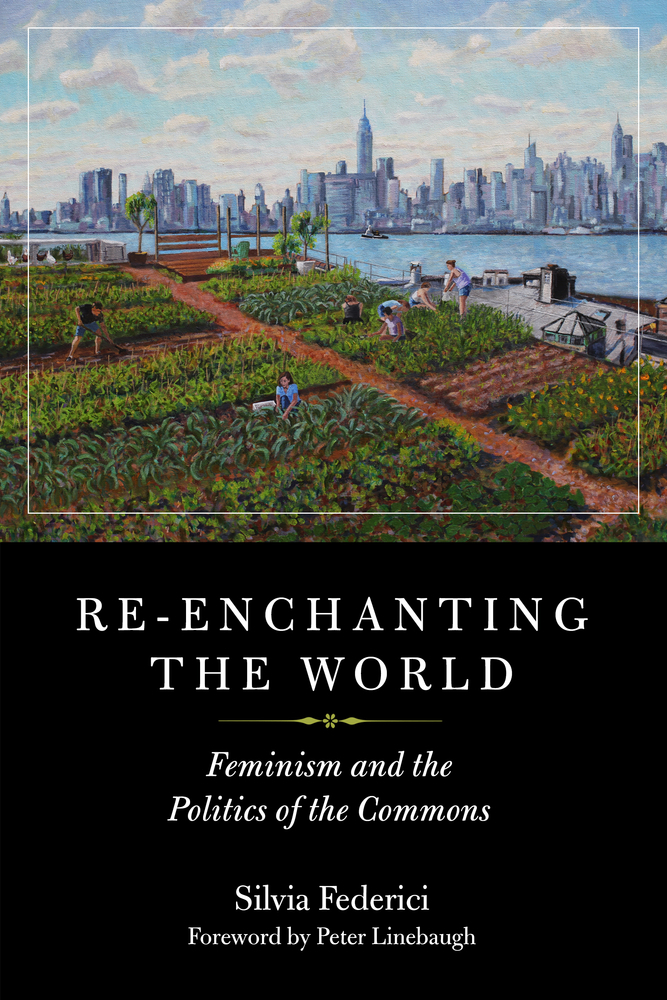
Re-enchanting the world : feminism and the politics of the commons
xviii, 227 pages ; 23 cm; "Silvia Federici is one of the most important contemporary theorists of capitalism and feminist movements. In this collection of her work spanning over twenty years, she provides a detailed history and critique of the politics of the commons from a feminist perspective. In her clear and combative voice, Federici provides readers with an analysis of some of the key issues and debates in contemporary thinking on this subject. Drawing on rich historical research, she maps the connections between the previous forms of enclosure that occurred with the birth of capitalism and the destruction of the commons and the "new enclosures" at the heart of the present phase of global capitalist accumulation. Considering the commons from a feminist perspective, this collection centers on women and reproductive work as crucial to both our economic survival and the construction of a world free from the hierarchies and divisions capital has planted in the body of the world proletariat. Federici is clear that the commons should not be understood as happy islands in a sea of exploitative relations but rather autonomous spaces from which to challenge the existing capitalist organization of life and labor"--; Foreward by Peter Linebaugh; Includes bibliographical references (pages198-216) and index; On primitive accumulation, globalization, and reproduction -- Introduction to the new enclosures -- The debt crisis, Africa, and the new enclosures -- China: breaking the iron rice bowl -- From commoning to debt: financialization, microcredit, and the changing architecture of capital accumulation -- Beneath the United States, the Commons -- Commons against and beyond Capitalism -- The University: a knowledge common? -- Feminism and the politics of the commons in an era of primitive accumulation -- Women's struggles for land in Africa and the reconstruction of the commons -- Women's struggles for land and the common good in Latin America -- Marxism, feminism, and the commons -- From crisis to commons: reproductive work, affective labor and technology, and the transformation of everyday life -- Re-enchanting the world: technology, the body, and the construction of the commons

Re-enchanting the world: feminism and the politics of the commons
Silvia Federici is one of the most important contempora…
À la recherche des lois de la vie sociale
À propos de : Bernard Lahire, Les structures fondamentales des sociétés humaines, La Découverte

« Terroir washing » : les effets sociopolitiques de l’instrumentalisation accrue des territoires français par les marques
Dans une étude pour l’Institut Terram et la Fondation Jean Jaurès, publiée vendredi 11 octobre, l’essayiste Raphaël Llorca s’intéresse au rôle prépondérant des marques commerciales dans la construction d’un « imaginaire territorial ». Selon lui, les années 2020 représentent un tournant.

The Third Web
(This text is very long. Maybe too long. You can find a PDF and an EPUB of it below.The current version of this text will always live at https://web3.tante.ccSatya has created an audio version of this essay. Eine deutsche Version findet sich hier. Una versione italiana di questo testo è qui – grazie Nebbia! En […]
The Times are Urgent: Let’s Slow Down • Writings – Bayo Akomolafe
An Open Letter to CONCORD-DEEEP, CIVICUS, GCAP, Civic Society Organizations and Activists Working for a ‘Better’ World. This article is co-authored by Bayo Akomolafe and Marta Benavides. With deep gratitude for the stories of transformation now emerging across the planet, and for the renewed hope we share for a different kind of world, we greet you from our hearts.

L’amour avant Tinder
Grâce à l’analyse d’un million de petites annonces matrimoniales en France, en Amérique du Nord et en Inde, des chercheurs en économie retracent la transformation de nos critères amoureux au
