

CP/M (Control Program for Microcomputers) is a small disk-based operating system from the 1970s. It was originally only for computers with an 8080-compatible processor (including Z80 and 8085), but there are also versions for x86, 68000 and Z8000.
stack-based
Stack machines are arguably the simplest kind of computer architecture. Their LIFO structure is quite suitable for block-oriented languages. The code size for a stack machine can be very compact because most instructions have no operand field.
P-code machine
In computer programming, a P-code machine (portable code machine[1]) is a virtual machine designed to execute P-code, the assembly language or machine code of a hypothetical central processing unit (CPU). The term P-code machine is applied generically to all such machines (such as the Java virtual machine (JVM) and MATLAB pre-compiled code), as well as specific implementations using those machines. One of the most notable uses of P-Code machines is the P-Machine of the Pascal-P system. The developers of the UCSD Pascal implementation within this system construed the P in P-code to mean pseudo more often than portable; they adopted a unique label for pseudo-code meaning instructions for a pseudo-machine.
llama.cpp with ROCm
WarningThis is a technical guide and assumes a certain level of technical knowledge. If there are confusing parts or you run into issues, I recommend using a strong LLM with research/grounding and reasoning abilities (eg Claude Sonnet 4) to assist.…

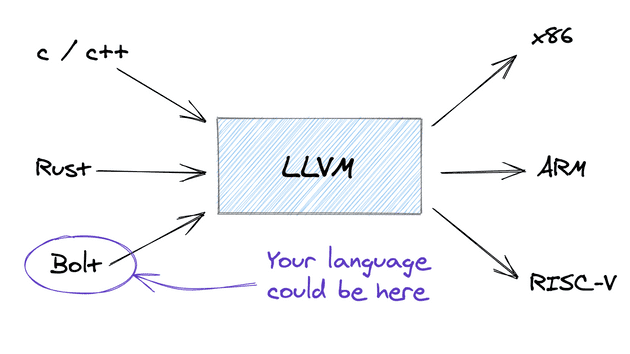
A Complete Guide to LLVM for Programming Language Creators
We'll explain the concepts underlying LLVM IR, and how you can use the LLVM C++ API in your programming language's compiler.
Andrew Kelley: A Practical Guide to Applying Data Oriented Design (DoD)
The Matter Compiler™ — Atomic Machines
A new universe of machines. Explore the Matter Compiler and a radically faster way to create.
Dirtywave M8 Tracker Model:02: Now with USB-C support
The Dirtywave M8 Tracker Model:02 is the latest version of the handheld beat creation station from Dirtywave, now available for preorder.

Memory system - Please Leave here your opinions (if you have any) · Issue #74 · code-yeongyu/oh-my-openagent
I heard many people wants that memory system- but it's really easy to be redundant from my experiences. Projects like claude-mem or many others have memory system. Want to hear your opinions re...
MemGPT
Memory-GPT (MemGPT) - Towards LLMs as Operating Systems - Teach LLMs to manage their own memory for unbounded context!
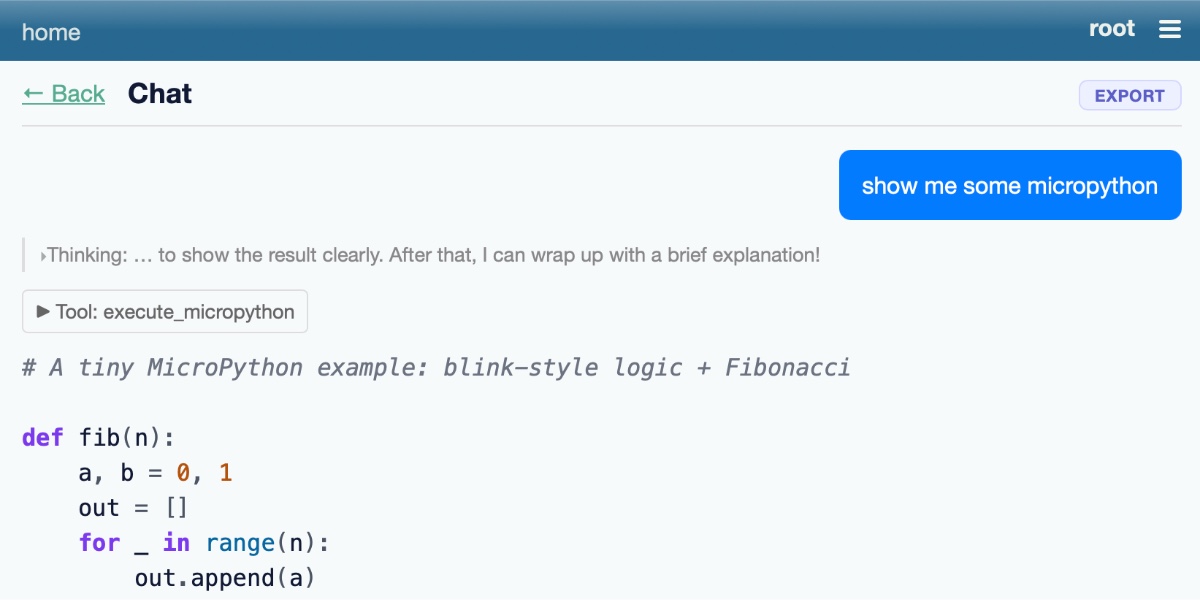
Running Python code in a sandbox with MicroPython and WASM
I’ve been experimenting with different approaches to running code in a sandbox for several years now, but my latest attempt feels like it might finally have all of the characteristics …
Linux Internals: How /proc/self/mem writes to unwritable memory - offlinemark
Introduction An obscure quirk of the /proc/*/mem pseudofile is its “punch through” semantics. Writes performed through this file will succeed even if the destination virtual memory is marked unwritable. In fact, this behavior is intentional and actively used by projects such as the Julia JIT comp

nanomem: An Extremely Simple, Inference-Time Memory Module
nanomem is an extremely simple, user-owned memory module that casts memory management as LLM calls / agent loops on a markdown file tree. You interact with the tree with natural language commands like nanomem add <fact>, nanomem retrieve <query>, and nanomem import <chatgpt>. As such, nanomem is by design interpretable, partitionable, portable, and versioned.