DOS is designed to only run one program at a time with minimal external dependencies. It is thus quite immune to many problems of more modern OSes, such as software rot. It may well be used as a bedrock platform or as a "bare-bones" system that may work for basic tasks even when everything else fails. The main compatibility issue in DOS is that a lot of hardware is commonly used by "banging the bare metal", which makes e.g. old sound applications incompatible with modern hardware.
DOS Zone | DOS games in browser
Ultimate collection of free dos games to play online in browser. No registration needed, no advertisment, just play!

Smarter Operating Systems Will Use Wasm - The Coming OS Revolution by Jonas Kruckenberg @ Wasm I/O
Why build Dusk OS?
Most modern operating systems can do whatever we want them to do. Why do we need another one? Simplicity.
Durable Execution Solutions
Build invincible apps with Temporal's open source durable execution platform. Eliminate complexity and ship features faster. Talk to an expert today!

Dusk OS
Dusk OS is a 32-bit Forth and big brother to Collapse OS. Its primary purpose is to be maximally useful during the first stage of civilizational collapse, that is, when we can't produce modern computers anymore but that there's still many modern computers around.
Extensible Software in the age of LLMs | Jeremy Morrell
Solid core + capability-based sandboxes + LLMs = Users with superpowers
smol machines — ship and run software with isolation by default
Run any workload in a fast, hardware-isolated Linux VM. The same SDK and the same .smolmachine artifact run identically:
vmware-archive/differential-datalog
DDlog is a programming language for incremental computation. It is well suited for writing programs that continuously update their output in response to input changes. A DDlog programmer does not write incremental algorithms; instead they specify the desired input-output mapping in a declarative manner.
bedrock platform
A bedrock platform is a hardware platform or a universal virtual machine that can be expected to remain compatible with any software that has ever been written for it. Bedrock platforms can be used to prevent software rot.
fencesandbox/fence
Lightweight, container-free sandbox for running commands with network and filesystem restrictions
P-code machine
In computer programming, a P-code machine (portable code machine[1]) is a virtual machine designed to execute P-code, the assembly language or machine code of a hypothetical central processing unit (CPU). The term P-code machine is applied generically to all such machines (such as the Java virtual machine (JVM) and MATLAB pre-compiled code), as well as specific implementations using those machines. One of the most notable uses of P-Code machines is the P-Machine of the Pascal-P system. The developers of the UCSD Pascal implementation within this system construed the P in P-code to mean pseudo more often than portable; they adopted a unique label for pseudo-code meaning instructions for a pseudo-machine.
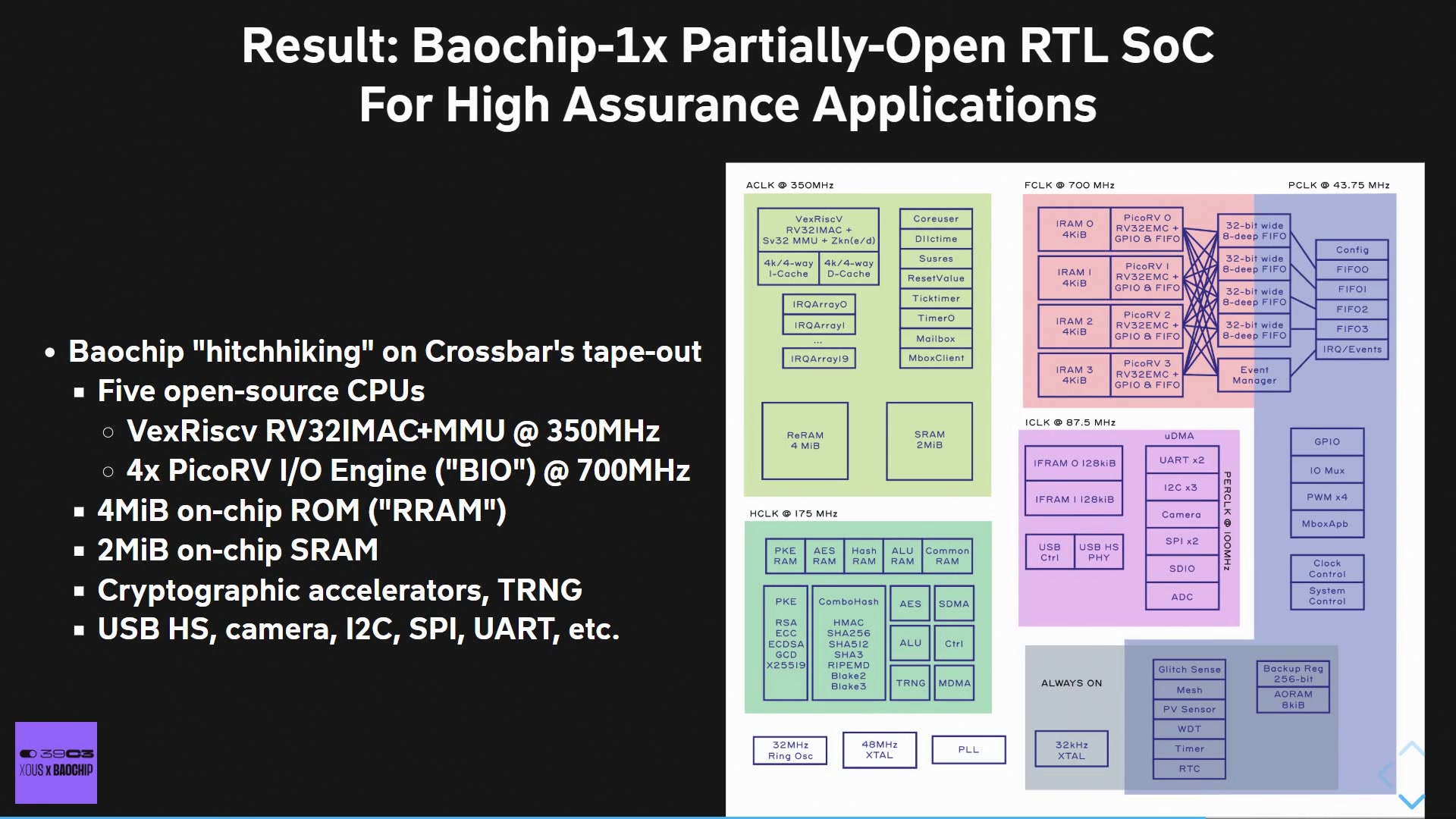
Xous: A Pure-Rust Rethink of the Embedded Operating System
Xous is a message-passing microkernel implemented in pure Rust, targeting secure embedded applications. This talk covers three novel aspe...
operating system
An operating system is a piece of software that most crucially handles the interoperability between hardware and software as well as between different software programs.
Moving Beyond Containers - Introducing Boxer by Daniel Phillips @Wasm I/O 2025
TEE.fail: Breaking Trusted Execution Environments via DDR5 Memory Bus Interposition
Breaking Trusted Execution Environments via DDR5 Memory Bus Interposition