

DOS is designed to only run one program at a time with minimal external dependencies. It is thus quite immune to many problems of more modern OSes, such as software rot. It may well be used as a bedrock platform or as a "bare-bones" system that may work for basic tasks even when everything else fails. The main compatibility issue in DOS is that a lot of hardware is commonly used by "banging the bare metal", which makes e.g. old sound applications incompatible with modern hardware.
DOS Zone | DOS games in browser
Ultimate collection of free dos games to play online in browser. No registration needed, no advertisment, just play!

Commix Project | Automated All-in-One OS Command Injection Exploitation Tool.
Automated exploitation of command and code injection flaws, from detection to full control of the underlying operating system.
Smarter Operating Systems Will Use Wasm - The Coming OS Revolution by Jonas Kruckenberg @ Wasm I/O
Introducing Mercury OS
A speculative vision of the operating system, driven by humane design principles.
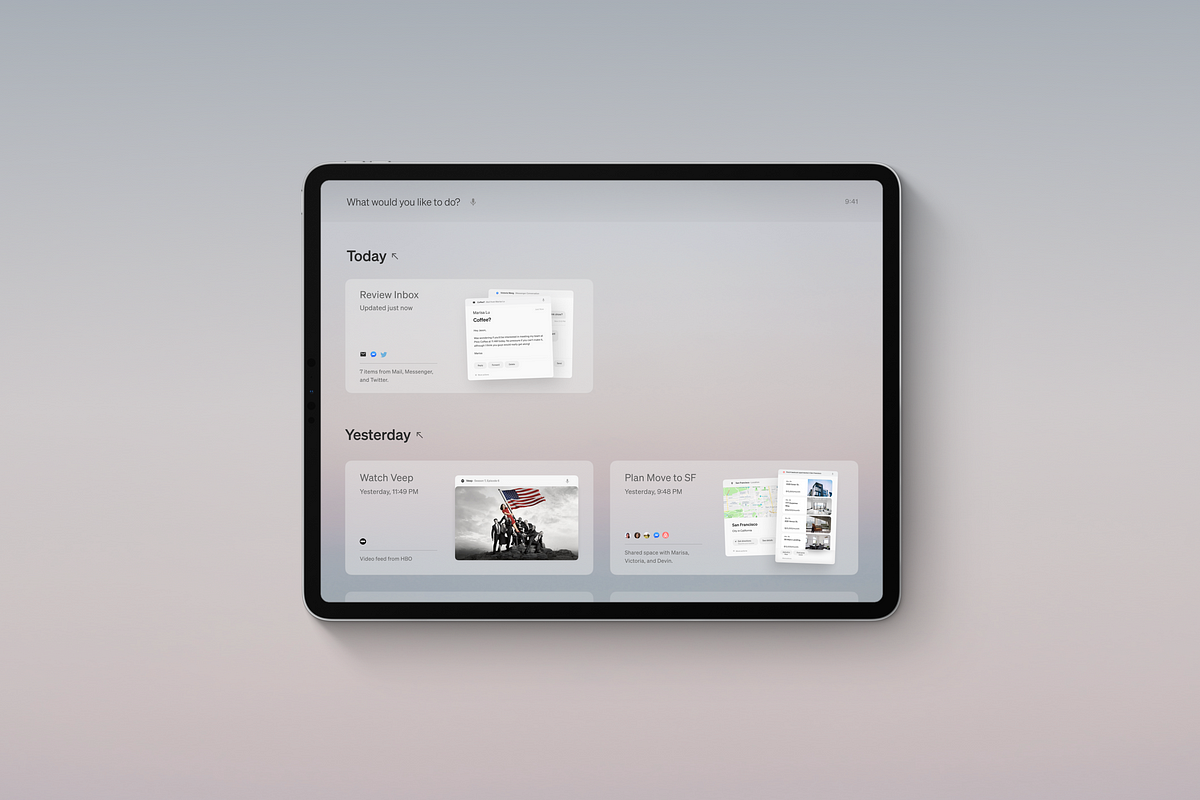
Introducing Mercury OS
A speculative vision of the operating system, driven by humane design principles.
Why build Dusk OS?
Most modern operating systems can do whatever we want them to do. Why do we need another one? Simplicity.
Durable Execution Solutions
Build invincible apps with Temporal's open source durable execution platform. Eliminate complexity and ship features faster. Talk to an expert today!

Dusk OS
Dusk OS is a 32-bit Forth and big brother to Collapse OS. Its primary purpose is to be maximally useful during the first stage of civilizational collapse, that is, when we can't produce modern computers anymore but that there's still many modern computers around.
Extensible Software in the age of LLMs | Jeremy Morrell
Solid core + capability-based sandboxes + LLMs = Users with superpowers
Is It Time to Rewrite the Operating System in Rust?
Bryan Cantrill explores Rust, explains why it has captured the imagination of so many systems software engineers, and outlines where it might best fit in the deep stack of operating system software.

smol machines — ship and run software with isolation by default
Run any workload in a fast, hardware-isolated Linux VM. The same SDK and the same .smolmachine artifact run identically:
vmware-archive/differential-datalog
DDlog is a programming language for incremental computation. It is well suited for writing programs that continuously update their output in response to input changes. A DDlog programmer does not write incremental algorithms; instead they specify the desired input-output mapping in a declarative manner.
Ideal OS: Rebooting the Desktop Operating System Experience — josh.earth
Twitter user ekse has graciously translated this blog to Chinese. Thanks! TL;DR: By the end of this essay I hope to convince you of the following facts. First, that modern desktop operating systems are anything but. They are bloated, slow, and layered with legacy cruft that still functions only thanks to Moore's Law. Second, that innovation in desktop operating systems stopped about 15 years ago and the major players are unlikely to heavily invest in them again. And finally, I hope to convince you that we can and should start over from scratch, learning the lessons of the past.
bedrock platform
A bedrock platform is a hardware platform or a universal virtual machine that can be expected to remain compatible with any software that has ever been written for it. Bedrock platforms can be used to prevent software rot.
fencesandbox/fence
Lightweight, container-free sandbox for running commands with network and filesystem restrictions