

Niklaus Wirth (born 1934 in Switzerland) is one of the most prominent computer scientists, mostly known for creating Pascal and several other programming languages.
p-code
Niklaus Wirth specified a simple p-code machine in the 1976 book Algorithms + Data Structures = Programs. The machine had 3 registers - a program counter p, a base register b, and a top-of-stack register t. There were 8 instructions:
zach lieberman on Twitter / X
Today I was able to weave a line from Myron Krueger in a talk I gave : Computation is the medium of our lifetimes - it’s not just a technical medium but a cultural medium as well. We should explore the culture of computation.— zach lieberman (@zachlieberman) April 10, 2024
The Story of C++: The World's Most Consequential Programming Language | The Official Story
The Man Who Revolutionized Computer Science With Math
Humanities in the Machine - Blain Smith
There is something quietly remarkable about the people who built the foundations of modern computing. Not their technical achievements, though those are extraordinary. What is remarkable is where they came from before they ever touched a machine.
J Notation as a Tool of Thought
Kenneth Iverson’s 1964 language, APL, won him the Turing Award. His award lecture, Notation as a Tool of Thought, argued that better notations would lead people to deeper insights about mathematics. He provided a number of examples ranging across linear algebra, arithmetic, probability, and logic. Unfortunately, most of the mathematics he covers isn’t relevant to programming. However, his core idea still applies, and changing how we describe programs changes how we think about them.
Computational statistics
Computational statistics, or statistical computing, is the study which is the intersection of statistics and computer science, and refers to the statistical methods that are enabled by using computational methods. It is the area of computational science specific to the mathematical science of statistics. This area is fast developing. The view that the broader concept of computing must be taught as part of general statistical education is gaining momentum.

The Next 7000 Programming Languages
Landin’s seminal paper “The next 700 programming languages” considered programming languages prior to 1966 and speculated on the next 700. Half-a-century on, we cast programming languages in a Darwinian ‘tree of life’ and explore languages, their features (genes) and language evolution from the viewpoint of ‘survival of the fittest’.
Phillip M. Alday
I was a struggling mathematician, then a linguist and now a (cognitive) neuroscientist, but will probably always be a hacker. I also moonlight as an applied statistician. These are some of the things I’ve done along the way.
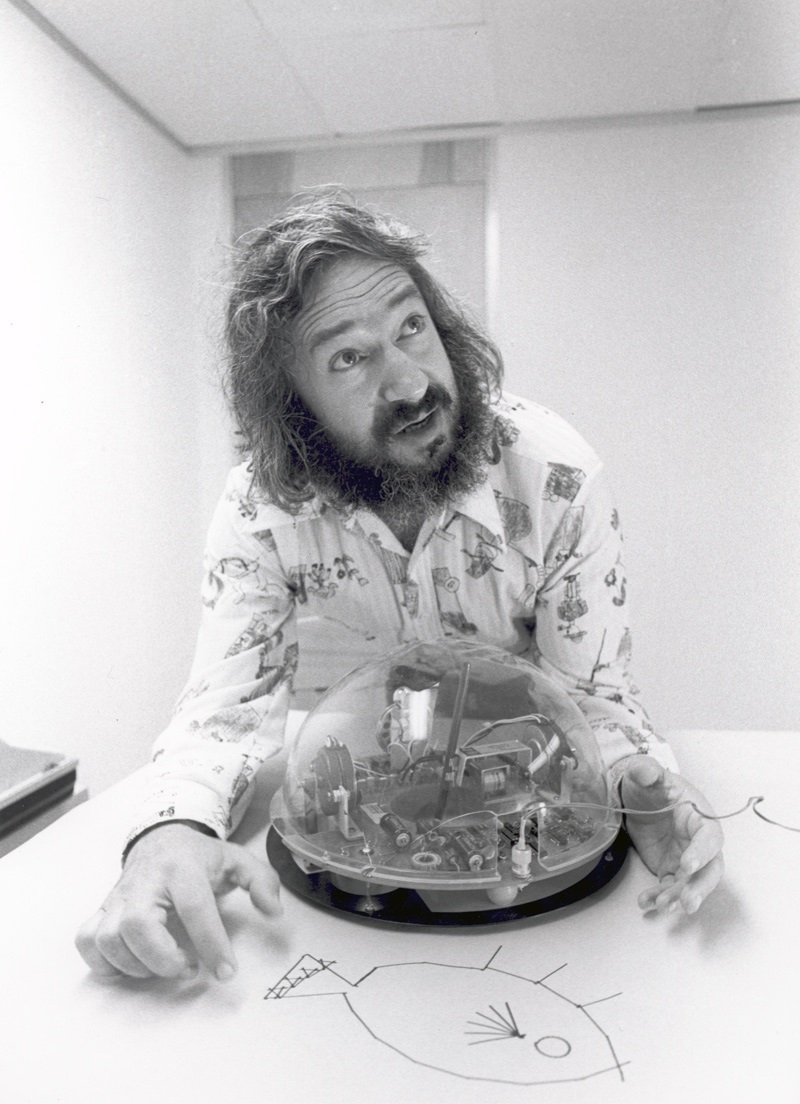
Seymour Papert
Seymour Aubrey Papert was a South African-born American mathematician, computer scientist, and educator, who spent most of his career teaching and researching at the Massachusetts Institute of Technology. He was one of the pioneers of artificial intelligence, and of the constructionist movement in education. He was co-inventor, with Wally Feurzeig and Cynthia Solomon, of the Logo programming language.
Aaron Steven White
computational semanticist. into modular synths and tiki. https://aaronstevenwhite.io
Thomas Wolf on Twitter / X
wtf is this way to handle mathematicians work and scientific communicationTLDR: Leven and Tristan worked over several months on one of the Millenium Prize Problems with various AIs to reach final interesting results. OpenAI apparently heard about it in the last days and… https://t.co/zNozwkFcFO pic.twitter.com/XcefJ17AQe— Thomas Wolf (@Thom_Wolf) September 8, 2026

computational product market fit
‘computer science is no more about computers than astronomy is about telescopes.’ — edsger dijkstra
Not only does @samaaron.bsky.social do great educational work getting kids interested in programming by live-coding music – he also does deep engineering work on the underlying audio synth engine, which now runs in web browsers!

Sam Aaron
I've made dramatic progress on Sonic Tau over the past couple of weeks. I've already managed to leap ahead of Sonic Pi in a number of areas. All the many years of deep thinking and design is really paying off. Read more in my latest Patreon post. patreon.com/posts/re-re-rerezzed-15598685…
The future of programming and computing

Trends and adjacent possibles for the future of how computers are used and programmed
Introducing System One Models and Jev - TypeSafe AI Blog

Message from our CEO: After co-inventing ChatGPT, I kept asking myself: why have superhuman chat models not led to AGI? I’ve spent the last…
On-device intelligence for every product
SaaS Isn’t Dead. Sameness Is. - The Phoenix Architecture
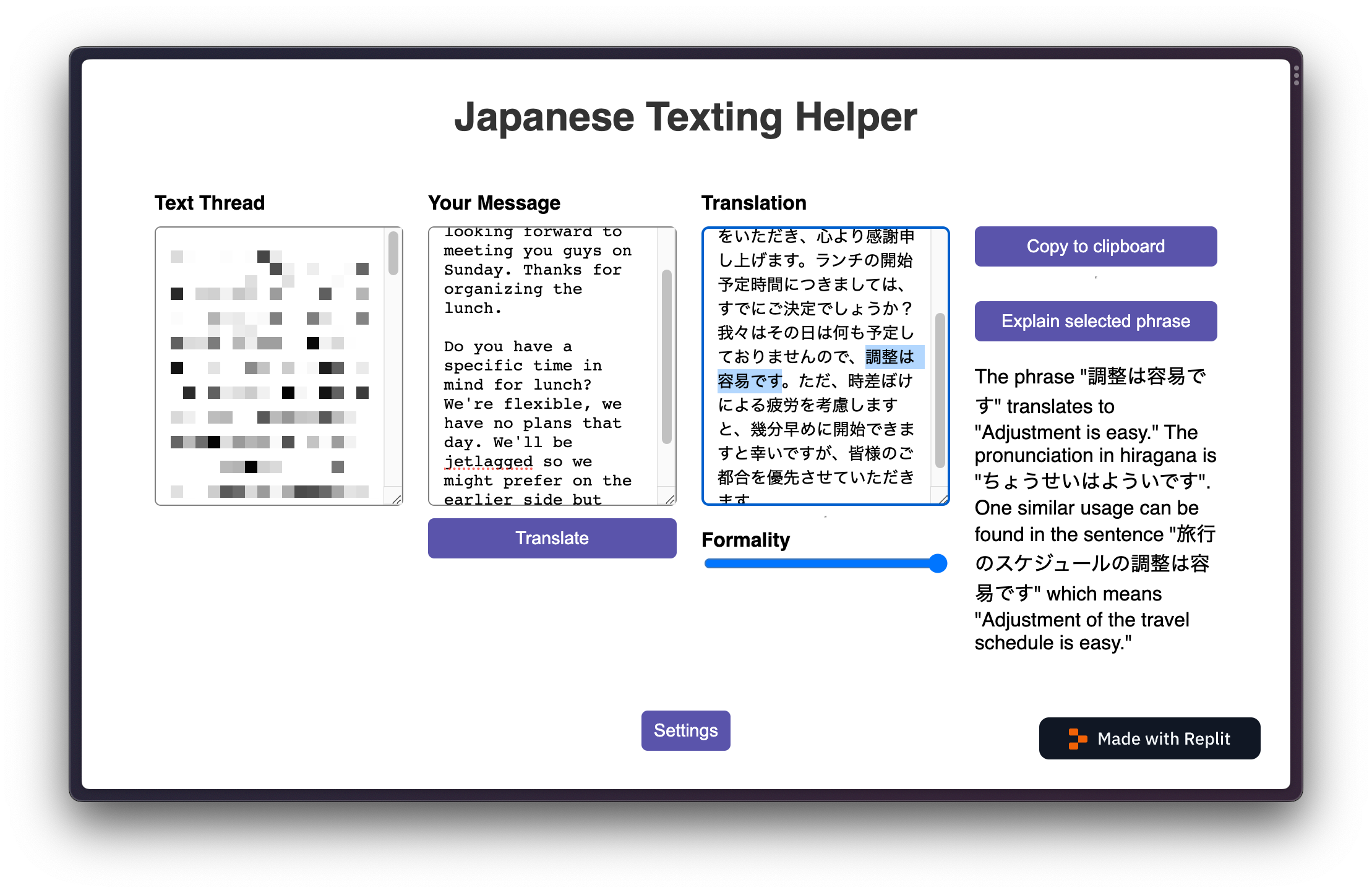
Codifying a ChatGPT workflow into a malleable GUI

MercuryOS
