

Greenwashing refers to false claims that a product or activity is environmentally friendly, especially when the claims are made by corporate PR and marketing divisions. Unintentional greenwashing may take place when an unjustified belief of environmental friendliness is actively maintained by well-intended people.
O greenwashing descarado da Ecosia — agora com IA
Alegações verdes vagas sem números concretos, repressão a trabalhadores, e a inclusão de IA — justo a IA — chamada de “verde”. O greenwashing da Ecosia, o buscador alternativo ao Google e…

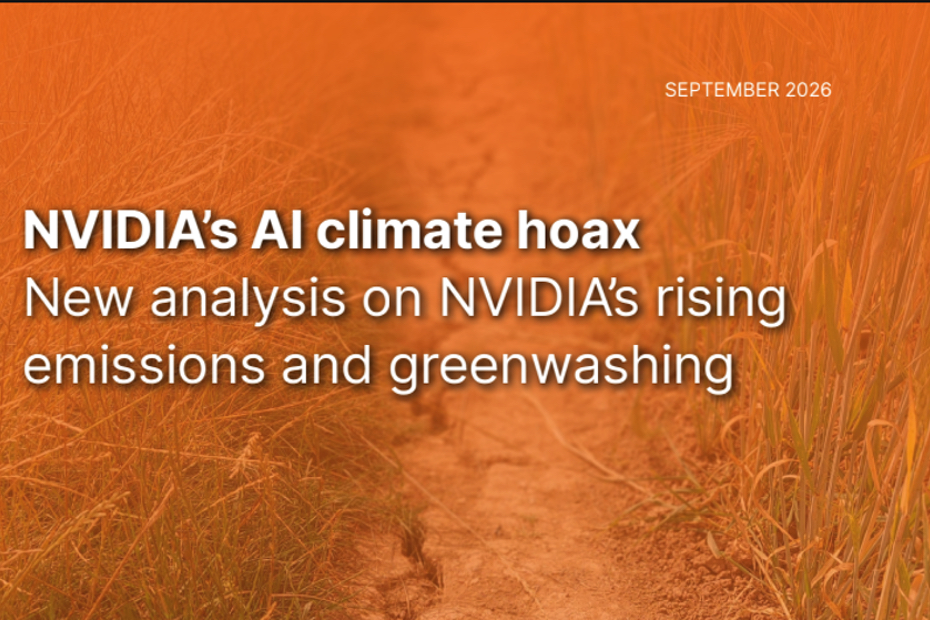
Nvidia’s Indirect Emissions Risen 725% Since 2020: greenwashing tactics and hidden emissions FROM NVIDIA revealed in new research - Green Web Foundation
NVIDIA, the world’s most valuable company by market capitalisation, has been using greenwashing tricks to misleadingly mask its staggering emissions impacts, finds a new analysis. The briefing, written by analyst and lead author Ketan Joshi and a consortium of civil society groups, including Greenpeace International, Beyond Fossil Fuels, Friends of the Earth, Green Screen Coalition,…
Green Software Foundation — Building a Sustainable Digital Future
The Green Software Foundation is a non-profit creating a trusted ecosystem of people, standards, tooling, and best practices for building green software.

Cleaning up a coal-fired mess
China’s green-industrial complex makes deep decarbonisation possible, but far from inevitable

From Redlining to Greenlining: The Political Ecology of Race, Class, and Access to Green Space in Oakland, California from 1937-2020
Author(s): Corbin, Chryl Natasha Elaine | Advisor(s): Morelli-Frosch, Rachel | Abstract: Since the 1960s, Oakland, California, has been represented as a predominantly African American, low-income, and high crime urbanity. In the 2000s, the municipality started to become recognized as a top green city, and by the 2010s the city began to emerge as a gentrification hot spot. This dissertation elucidates how the relationships between race, class, housing, and access to green spaces have changed from redlining—prior to the Civil Rights Acts of 1964, 1965, and 1968—to 2020, after Oakland adopted an environmental agenda and began to establish itself as a green city starting in the 1990s. I question how Oakland’s urban environmental “sustainable development” agenda has impacted residents’ access to green spaces, and to what extent and how are these policies and practices creating, exacerbating, and/or mitigating urban environmental (in)justice issues. I examine both sides of environmental (in)justice, uneven distribution of environmental harms and the uneven development of environmental goods in which low-income residents and communities of color are disproportionally exposed to environmental hazards while also being prevented from benefiting from environmental amenities. I interrogate Oakland as a 21st century sustainable green city while also examining the historical urban policies and practices embedded in legal residential segregation and the current green gentrification processes which influence and contribute to the environmental (in)justices being (re)produced today.


The geopolitical fight to come over green energy
The struggle for sustainable energy will soon put China, the US and Europe on a geopolitical collision course. But moving away from fossil fuels is a Herculean task, and a greener politics will not transcend tragedy.
Evaluating Sustainable Digitalization: A Carbon-Aware Framework for Enhancing Eco-Friendly Business Process Reengineering
In an era where sustainability is paramount, understanding the environmental impact of digitalizing business processes is critical. Despite the growing emphasis on sustainable practices, there is a lack of comprehensive methodologies to evaluate how digitalization impacts environmental sustainability compared to traditional processes. This paper introduces a carbon-aware methodological framework specifically designed to assess the sustainability of business process reengineering through digitalization. The Digital Green framework quantitatively analyzes the environmental costs associated with digital transformation, ensuring that truly sustainable digitalization results in lower resource consumption relative to the complexity of the process being digitalized. To demonstrate its effectiveness, the framework was applied to a case study involving the reengineering of an administrative process at a small university in southern Italy. The case study highlighted the framework’s ability to quantify the environmental benefits or detriments of digital transformation, thus guiding organizations toward more sustainable digital practices. This research contributes to the field by offering a concrete tool for aligning digitalization efforts with ecological sustainability, and by paving the way for integration with initiatives such as the Green Software Foundation’s Software Carbon Intensity (SCI) specifications.
Toward environmental liberalism
The underlying normative claim of my environmental writing

The New Geopolitics Of The Green Transition
The only path forward for tackling the climate crisis hinges on cooperative industrial strategies to coordinate clean energy investment and infrastructure development.
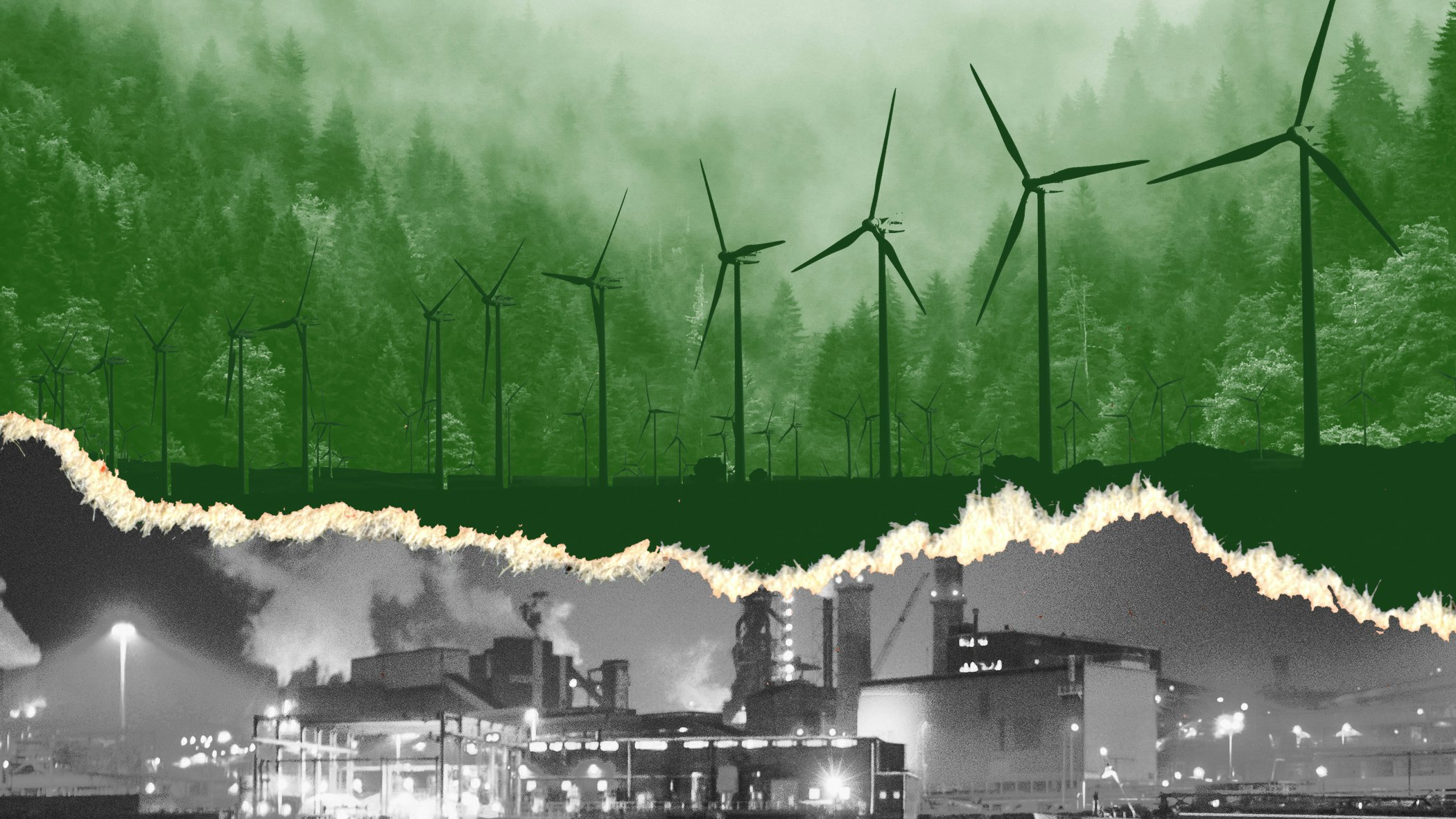
The Race to Produce Green Steel
In order to reduce its carbon footprint, the steel industry is testing new technologies that don't rely on fossil fuels.

The ‘wicked trinity’ of late capitalism: Governing in an era of stagnation, surplus humanity, and environmental breakdown
Scholars within the fields of political ecology, environmental political theory, and international political economy tend to evaluate the prospects of state-led environmental transitions in general terms – enquiring as to the capitalist state’s inherent properties and their environmental implications. Less attention has been paid to how the state’s green capacities are conditioned by contemporary evolutions in the form and pace of capital accumulation. Capitalism’s directional pattern of historical development poses unique challenges for green state projects. Its drive to raise labour productivity metabolises nature on a growing scale, while generating conditions of overproduction and rendering a progressively larger portion of the population superfluous to the production process.Thus, the question is not simply whether the state can rise to the challenge of climate change, but rather how states are scrambling to govern the intersecting crises of climate catastrophe, economic stagnation, and surplus humanity. This ‘wicked trinity’ compounds the tensions at the heart of the capitalist state, resulting in an increasing inability to perform its role while sustaining its liberal form. This governance trilemma is illustrated by the case of the solar photovoltaic boom, where the spectacular increase in the productivity and scale of solar panel manufacturing have generated oversupply and falling profitability. States have reacted by indefinitely providing subsidies, financing automation technologies thatexacerbate labour superfluity, and relocating solar panel manufacturing to places with authoritarian labour regimes. The case of photovoltaics is a microcosm of the general predicament faced by states as they struggle to govern capitalism’s secular developmental tendencies.
The Tragedy of "The Tragedy of the Commons"
The man who wrote one of environmentalism’s most-cited essays was a racist, eugenicist, nativist and Islamaphobe—plus his argument was wrong

Green economic planning for rapid decarbonisation
Sustainable futures require deep social and economic transformations to address climate change adequately. The current landscape of intergovernmental and market-based coordination is not delivering...

The Coming Ecological Cold War
How the green transition is reshaping geopolitics

GreenBuildingAdvisor
Green Building Advisor is the one-stop source for builders, remodelers, architects & homeowners looking for expert advice on green products, strategies & proven construction details.