

Niklaus Wirth specified a simple p-code machine in the 1976 book Algorithms + Data Structures = Programs. The machine had 3 registers - a program counter p, a base register b, and a top-of-stack register t. There were 8 instructions:
P-code machine
In computer programming, a P-code machine (portable code machine[1]) is a virtual machine designed to execute P-code, the assembly language or machine code of a hypothetical central processing unit (CPU). The term P-code machine is applied generically to all such machines (such as the Java virtual machine (JVM) and MATLAB pre-compiled code), as well as specific implementations using those machines. One of the most notable uses of P-Code machines is the P-Machine of the Pascal-P system. The developers of the UCSD Pascal implementation within this system construed the P in P-code to mean pseudo more often than portable; they adopted a unique label for pseudo-code meaning instructions for a pseudo-machine.
stack-based
Stack machines are arguably the simplest kind of computer architecture. Their LIFO structure is quite suitable for block-oriented languages. The code size for a stack machine can be very compact because most instructions have no operand field.
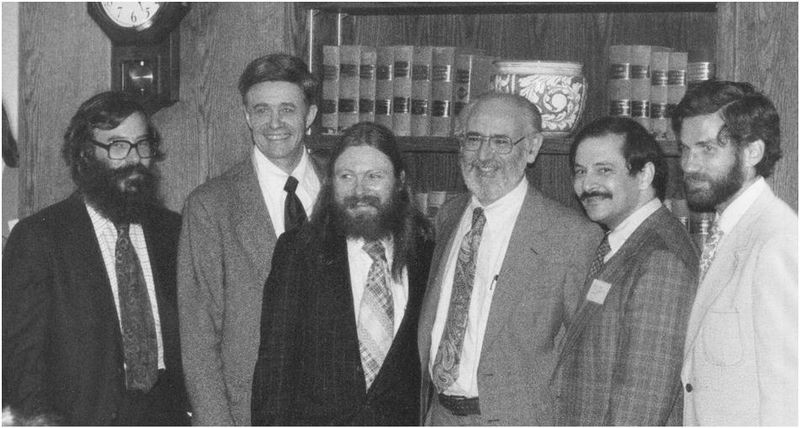
Niklaus Wirth
Niklaus Wirth (born 1934 in Switzerland) is one of the most prominent computer scientists, mostly known for creating Pascal and several other programming languages.
Coding After Coders: The End of Computer Programming as We Know It - …
archived 16 Mar 2026 15:14:04 UTC

Ivan Sutherland's Sketchpad
The APL Programming Language Source Code
Thousands of programming languages were invented in the first 50 years of the age of computing. Many of them were similar, and many followed a traditional, evolutionary path from their predecessors. What eventually became APL was first a mathematical notation, not as a computer programming language.
Simon Willison’s Weblog
On claude 300 coding-agents 239 llm 624 ai-in-china 106 meta 42 ...
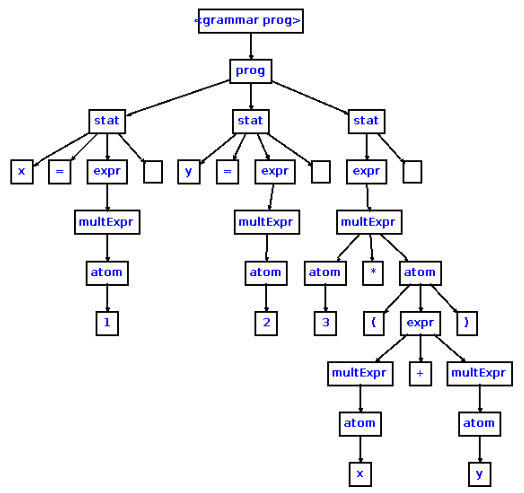
Intuiting Pratt parsing
You already know that a + b * c + d is calculated as a + (b * c) + d. But how do you encode that knowledge precisely enough for a machine to act on it?
Turing: Probabalistic Programming in Julia | Cameron Pfiffer | JuliaCon 2019
What I Found Interesting in Claude Code's Source
A breakdown of the most interesting engineering patterns in Claude Code's leaked source code: composable system prompts, runtime instruction injection, context compression, forking, prompt caching architecture, and more.
"Concatenative programming and stack-based languages" by Douglas Creager
Essentials of Compilation
Compilers are notoriously difficult programs to teach and understand. Most books about compilers dedicate one chapter to each progressive stage, a structure ...
Write code that is easy to delete, not easy to extend.
“Every line of code is written without reason, maintained out of weakness, and deleted by chance” Jean-Paul Sartre’s Programming in ANSI C.
📚 AI - Coding, Agents, & Automation

Semble-Coding

~
Semble Multi-User Graph Explorer

The Case for Software Craftsmanship in the Era of Vibes
One Developer, Two Dozen Agents, Zero Alignment
AI assisted coding (by Ronen Tamari) — Semble

AURI for Developers | AI-Native AppSec Platform | Endor La

We Got Claude to Fine-Tune an Open Source LLM
AI* and coding (by あ) — Semble