

Silver bullet is a metaphor for an effective and universal solution for any problem. In computing, the metaphor was notably used in Fred Brooks' 1986 essay "No Silver Bullet".
Is AI a Silver Bullet? — Ian Cooper - Staccato Signals
tl;dr Brooks' hypothesis in "The Mythical Man Month" is that the nature of software development means that no further "order of magnitud...

Three Observations
Our mission is to ensure that AGI (Artificial General Intelligence) benefits all of humanity. Systems that start to point to AGI* are coming into view, and so we think it’s important to...
The Land of Metaphor - Wesley's notes
Or, the second hardest thing in programming
Formalizing Fermat's Last Theorem
Anthropic is an AI safety and research company that's working to build reliable, interpretable, and steerable AI systems.
Golems, smart objects, and the file metaphor
Posted on Monday 1 Feb 2021. 2,011 words, 13 links. By Matt Webb.

Toward AGI — What is Missing?
Artificial General Intelligence (AGI) is a term for Artificial Intelligence systems that meet or exceed human performance on the broad…

AI is not superhuman
What metaphor should drive the field of AI research?
The brain is a computer is a brain: neuroscience's internal debate and the social significance of the Computational Metaphor
The Computational Metaphor, comparing the brain to the computer and vice versa, is the most prominent metaphor in neuroscience and artificial intelligence (AI). Its appropriateness is highly debated in both fields, particularly with regards to whether it is useful for the advancement of science and technology. Considerably less attention, however, has been devoted to how the Computational Metaphor is used outside of the lab, and particularly how it may shape society's interactions with AI. As such, recently publicized concerns over AI's role in perpetuating racism, genderism, and ableism suggest that the term "artificial intelligence" is misplaced, and that a new lexicon is needed to describe these computational systems. Thus, there is an essential question about the Computational Metaphor that is rarely asked by neuroscientists: whom does it help and whom does it harm? This essay invites the neuroscience community to consider the social implications of the field's most controversial metaphor.

No AI Slop: A Manifesto
The No AI Slop Manifesto, from the speakers and attendees of AIE Code Summit 2026.
II. From AGI to Superintelligence: the Intelligence Explosion - SITUATIONAL AWARENESS
AI progress won’t stop at human-level. Hundreds of millions of AGIs could automate AI research, compressing a decade of algorithmic progress (5+ OOMs) into ≤1 year. We would rapidly go from human-level to vastly superhuman AI systems. The power—and the peril—of superintelligence would be dramatic. Let an ultraintelligent machine be defined as a machine that

On the edge: the art of risking everything
"From the New York Times bestselling author of The Signal and the Noise, the definitive guide to our era of risk-and the players raising the stakes In the bestselling The Signal and the Noise, Nate Silver showed how forecasting would define the age of Big Data. Now, in this timely and riveting new book, Silver investigates "The River," or those whose mastery of risk allows them to shape-and dominate-so much of modern life. These professional risk takers-poker players and hedge fund managers, crypto true-believers and blue-chip art collectors-can teach us much about navigating the uncertainty of the 21st century. By embedding within the worlds of Doyle Brunson, Peter Thiel, Sam Bankman-Fried, Sam Altman, and many others, Silver offers insight into a range of issues that affect us all, from the frontiers of finance to the future of AI. The River has increasing amounts of wealth and power in our society, and understanding their mindset-including the flaws in their thinking-is key to understanding what drives technology and the global economy today. There are certain commonalities in this otherwise diverse group: high tolerance for risk; appreciation of uncertainty; affinity for numbers; skill at de-coupling; self-reliance and a distrust of the conventional wisdom. For the River, complexity is baked in, and the work is how to navigate it, without going beyond the pale. Taking us behind-the-scenes from casinos to venture capital firms to the FTX inner sanctum to meetings of the effective altruism movement, On the Edge is a deeply-reported, all-access journey into a hidden world of powerbrokers and risk takers"--

Is Object-Oriented Programming a Trillion Dollar Disaster? - Slashdot
Senior full-stack engineer Ilya Suzdalnitski recently published a lively 6,000-word essay calling object-oriented programming "a trillion dollar disaster." Precious time and brainpower are being spent thinking about "abstractions" and "design patterns" instead of solving real-world problems... Obj...

Planning for AGI and beyond
Our mission is to ensure that artificial general intelligence—AI systems that are generally smarter than humans—benefits all of humanity.

Stop treating `AGI' as the north-star goal of AI research
The AI research community plays a vital role in shaping the scientific, engineering, and societal goals of AI research. In this position paper, we argue that focusing on the highly contested topic of `artificial general intelligence' (`AGI') undermines our ability to choose effective goals. We identify six key traps -- obstacles to productive goal setting -- that are aggravated by AGI discourse: Illusion of Consensus, Supercharging Bad Science, Presuming Value-Neutrality, Goal Lottery, Generality Debt, and Normalized Exclusion. To avoid these traps, we argue that the AI research community needs to (1) prioritize specificity in engineering and societal goals, (2) center pluralism about multiple worthwhile approaches to multiple valuable goals, and (3) foster innovation through greater inclusion of disciplines and communities. Therefore, the AI research community needs to stop treating `AGI' as the north-star goal of AI research.

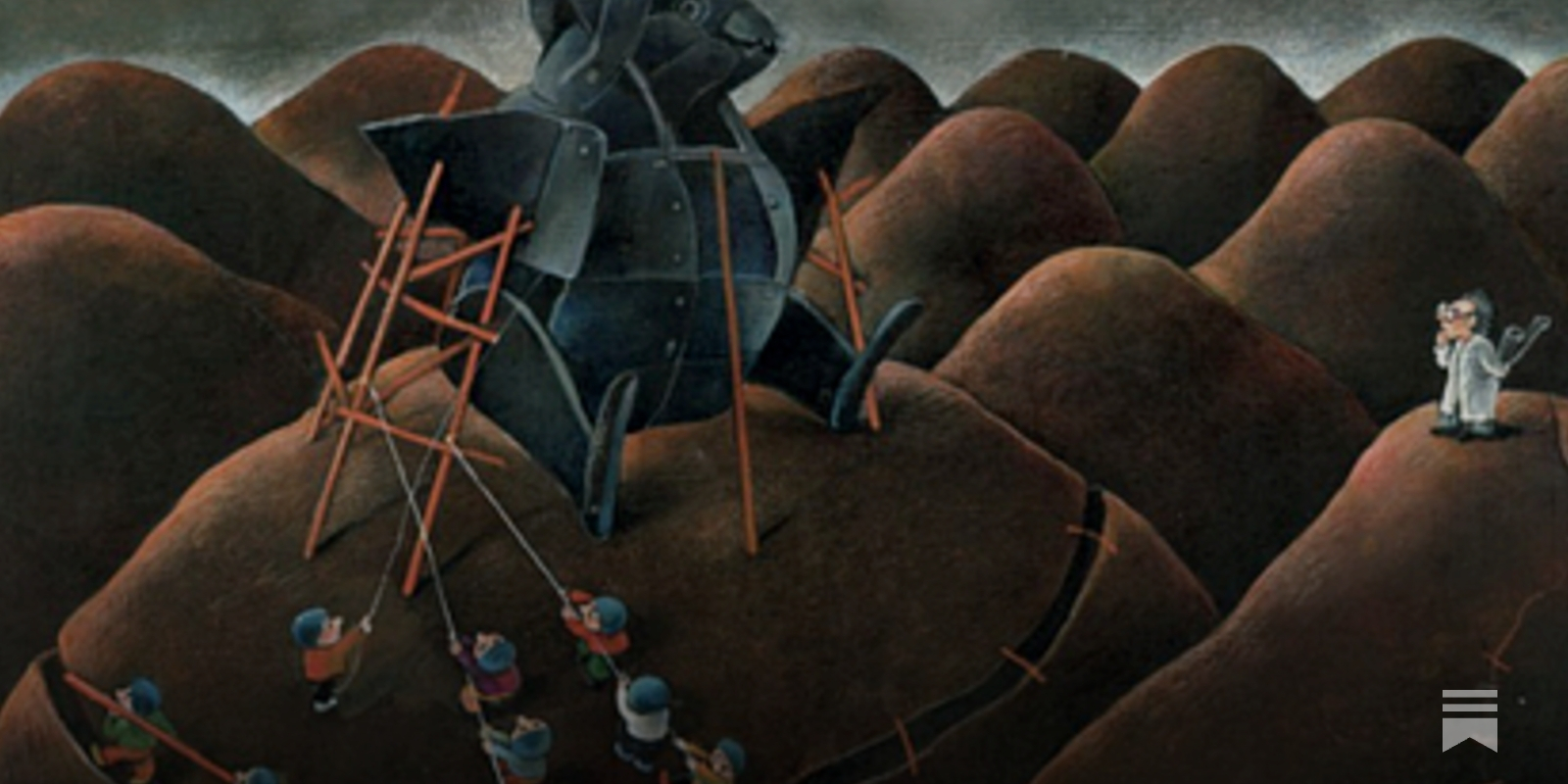
Saw this metaphor by Terence Tao floating around about one of the drawbacks of using AI to solve hard math problems, and kind of have the same feeling for “vibe science” or “fully automated science” line of research in #AI4Science. theatlantic.com/technology/2026/02/ai-math-te… #ScAISci
