

Unconventional computing, also known as alternative computing, refers to computing with unusual methods. An unusual method may be e.g. an unusual theoretical model or an unusual physical basis. The term "unconventional computing" was coined in 1998.
Weird Machines HQ
The expression "weird machines" was first used in the RSS 2009 talk. It referred to state-of-the-art exploitation as finding and programming an execution model (a machine, such as a virtual automaton) within the target via crafted inputs. It was soon extended to other methods of reliably or probabilistically influencing the target's state. A compressed version of that original talk was given at the Chaos Computing Congress 27c3 [slides], [video].
E.W. Dijkstra Archive: On the cruelty of really teaching computing science (EWD 1036)
The second part of this talk pursues some of the scientific and educational consequences of the assumption that computers represent a radical novelty. In order to give this assumption clear contents, we have to be much more precise as to what we mean in this context by the adjective "radical". We shall do so in the first part of this talk, in which we shall furthermore supply evidence in support of our assumption.
esoteric.codes
esolangs, esoplatforms, esosystems, and all that break from the norms of computing

pseudosimplicity
In mainstream computing, ease of use is usually implemented as superficial simplicity or pseudosimplicity, as an additional layer of complexity that hides the underlying layers. Meanwhile, systems that are actually very simple and elegant are often presented in ways that make them look complex to laypeople.
“Computers enable fantasies” – On the continued relevance of Weizenbaum’s warnings
“The computer has long been a solution looking for problems—the ultimate technological fix which insulates us from having to look at problems.” – Joseph Weizenbaum (1983) Trying to kee…

Yi Ma on Twitter / X
In system theory, it is called "linearization"... which has been studied and used for decades. Honestly, folks, there is no need to invent or introduce any new terminology. Remember, there is rarely anything new under the sun... https://t.co/yNLIv7Ptoh— Yi Ma (@YiMaTweets) March 14, 2026
An Introduction To Robust-First Computation
Did you know there's an entire field of computer science barely yet explored? Join me at the entrance to a deep rabbit hole as we take a look at Robust-First Computation.
The Myth of Deterministic Software
How I've come to terms with LLM non-determinism in software and abandoned the comforting lies we've been telling ourselves about traditional software.
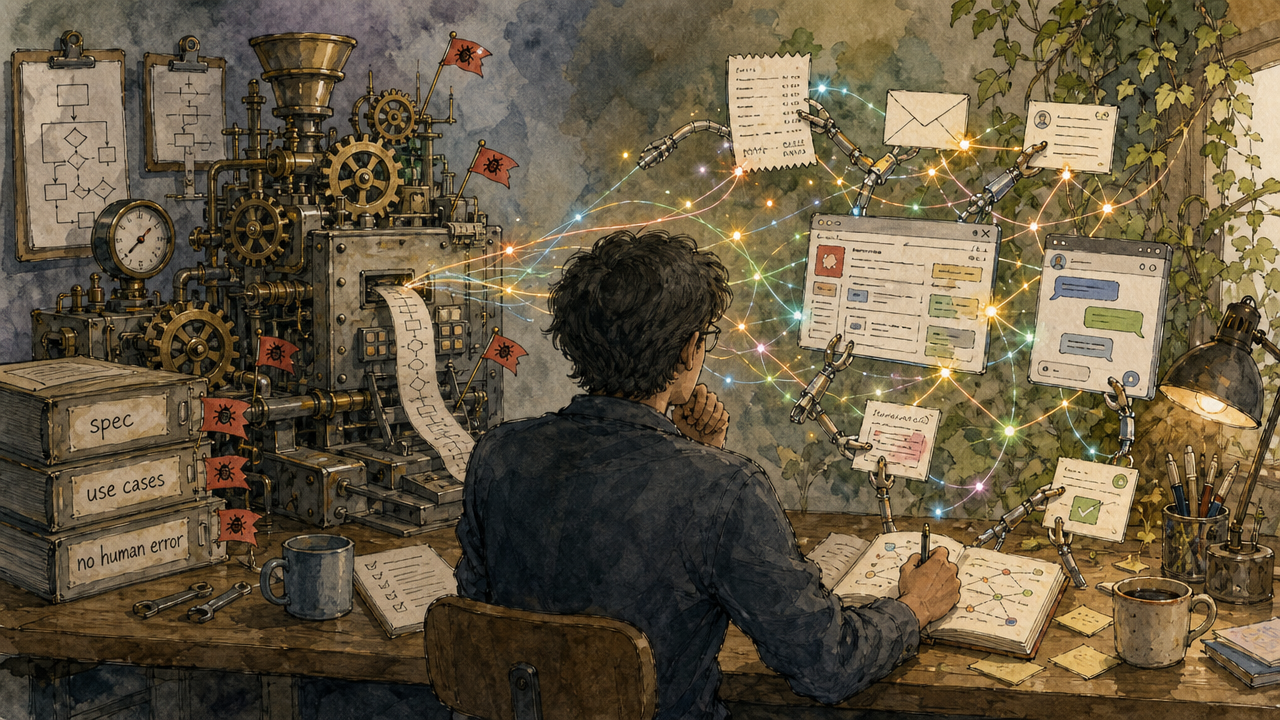
The Mythology Of Conscious AI
Why consciousness is more likely a property of life than of computation and why creating conscious, or even conscious-seeming AI, is a bad idea.

AI is doing something weird to Science
In both good and bad ways, and it won't go away.
A quote by Edsger W. Dijkstra
The question of whether a computer can think is no more interesting than the question of whether a submarine can swim.

Antikythera | Antikythera
As computation becomes planetary infrastructure, how does its acceleration of hybrid intelligences pose new challenges to fundamental philosophical questions.

Saw this metaphor by Terence Tao floating around about one of the drawbacks of using AI to solve hard math problems, and kind of have the same feeling for “vibe science” or “fully automated science” line of research in #AI4Science. theatlantic.com/technology/2026/02/ai-math-te… #ScAISci
Thinking about how computers can support intentional work. youtube.com/watch?v=Q7pbAW470qA

Attention architecture - thinking about todos, timeblocks, and calendars
www.youtube.comEsoteric Fonts

Arbitrary code can run inside a font, what was a power given to compute the complex layout of characters, can be repurposed for esoteric and even practical purposes. This collection reflects the esoteric fonts people have created and the ways to make them.
Post-app computing
Imagining computing beyond siloed, rigid apps

Nobody Wants Your Damn App

Golems, smart objects, and the file metaphor
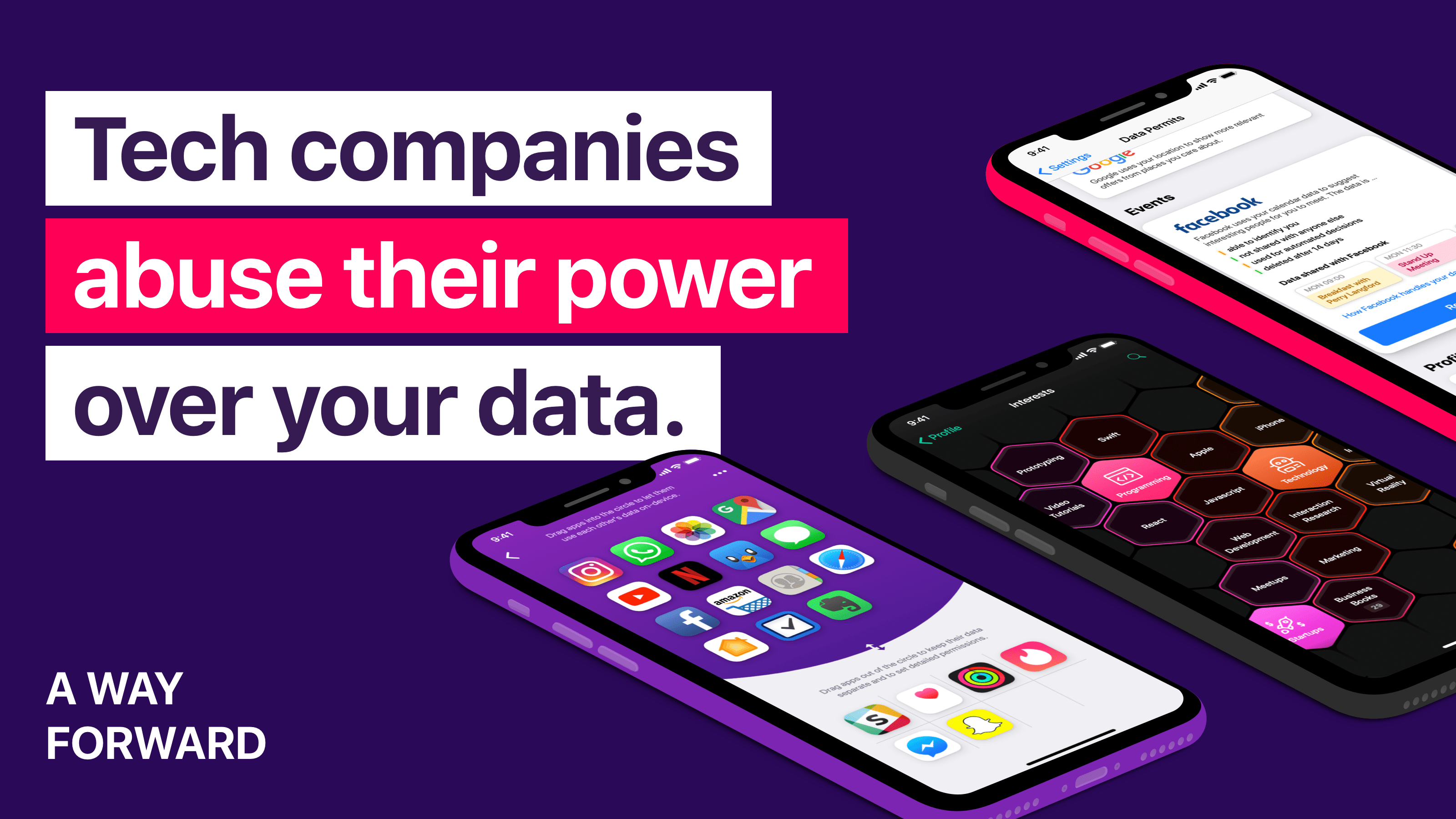
Rethinking how technology uses our personal data
User-tailorable systems: pressing the issues with buttons
everest-pipkin.com

Wesley Finck (@wesleyfinck.org)

Bastardica
coralscript
propublica/weepeople
StateFace
Hexagone · eieio.games

Decoy Font: A TTF font that hides what you type

